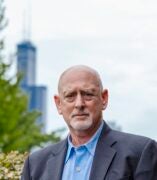
S. Jay Olshansky
Olshansky shaped debates on longevity limits and made delayed aging a public-health and economic case. His 178 works have drawn more than 13,000 citations, including major papers on healthspan and life expectancy.
59 / 100scientistentrepreneurpublichealth.uic.edu/profiles/s-jay-olshansky ↗Scoring AI engine · v0.8.0
Profile
Emeritus Professor of Epidemiology and Public Health at the University of Illinois Chicago whose work examines human longevity, mortality, population aging, and the Longevity Dividend.
Role
scientisthigh confidence
His authored research on delayed aging, longevity limits, mortality, and the Longevity Dividend is the channel through which he advanced longevity. The cited publication record and decades-long biodemographic work make this field-defining contribution clear.
also: entrepreneur
Dimension breakdown
This score rates longevity commitment only. The role tags above — scientist, investor, and the rest — say what this person is; we don't score those separately.
Future vision
7.0/ 10
Olshansky has advanced a durable, influential vision centered on slowing biological aging to extend healthspan, supported by the Longevity Dividend framework and a public-health and economic case for redirecting medical research toward delayed aging. The vision is concrete at the strategic level and has been sustained publicly, but the supplied evidence lacks a defined end state, implementation milestones, timelines, or explicit risk analysis.
medium confidence
Scientific impact
8.5/ 10
Strong, sustained scientific influence in biodemography and aging research, anchored by an h-index of 43, more than 13,000 citations, and several highly cited papers that shaped debates on life-expectancy limits, epidemiologic transition, healthspan, and the economic value of delayed aging.
high confidence
Capital deployed
N/A
Olshansky's substantial scholarly influence concerns scientific impact rather than deployed capital. The evidence provides no investments, donations, investees, funding amounts, catalytic positions, or independently corroborated outcomes attributable to his capital.
No public capital deployment activity is evidenced: zero investments and zero donations were found, so this dimension is inapplicable.
high confidence
Strategic taste
7.0/ 10
The publication record shows a sustained, unusually coherent strategy: defining longevity's limits, anticipating healthspan tradeoffs, and arguing that delayed aging could yield major health and economic returns. The early timing and later influence of these theses support strong strategic taste, although the supplied evidence does not establish catalytic deployment, investment selection, or the counterfactual impact of his organizational choices.
medium confidence
Field creation
5.0/ 10
Olshansky has credible field-building activity through co-founding Lapetus Solutions and helping develop the modern biodemographic paradigm and Longevity Dividend framing. However, the evidence does not demonstrate that these efforts created a large, durable organization, program, community, protocol, or funding pathway with broad uptake, and the company is no longer active.
medium confidence
Bravery and conviction
2.0/ 10
Olshansky has publicly and persistently advocated shifting research and policy toward slowing aging through the Longevity Dividend, including congressional testimony. However, the supplied evidence does not establish that this advocacy was contrarian at the time, attracted serious criticism, imposed career or financial costs, involved a consequential personal bet, or included self-experimentation.
low confidence
Multiplier effect
6.0/ 10
Olshansky’s highly cited body of work demonstrates substantial second-order scholarly influence, especially around longevity limits, health disparities, and the economic case for delayed aging. However, the evidence does not directly establish resulting capital flows, policy adoption, talent attraction, or follow-on organizations at field-defining scale.
medium confidence
Vision
Destination
No canonical quotes yet.
Path
Substantial Health And Economic Returns From Delayed Aging May Warrant A New Focus For Medical Research (2013)
The focus of his research is on estimates of the upper limits to human longevity, the health and public policy implications associated with individual and population aging, forecasts of the size, survival, and age structure of the population, pursuit of the scientific means to slow aging in people (The Longevity Dividend), and global implications of the re-emergence of infectious and parasitic diseases.
During the last 40 years, Dr. Olshansky has been working with colleagues in the biological sciences to develop the modern "biodemographic paradigm" of mortality – an effort to understand the biological nature of the survival and dying out processes of living organisms.
Strategy
Olshansky's documented work centers on human longevity, mortality, population aging, and the Longevity Dividend. His only identified organizational bet is co-founding Lapetus Solutions, Inc. [S1] No investments or donations were found, so a capital-allocation strategy cannot be established from the supplied evidence. Stage preference, risk appetite, geographic focus, and investment time horizon remain unknown.
UnknownUnknownHuman LongevityMortalityPopulation AgingLongevity EconomicsPublic Health
Notable bets
Portfolio
Investments
No public rows yet.
Donations
No public rows yet.
Organizations founded
Scientific output
h-index43
Citations-
Papers0
Trials0
No public rows yet.