Live·Verified funding discovery · 2026.2
874 grants · 19 open · 435 companies · 2640 concepts874 / 19 / 435 / 2640
COMPANIESCompanies rated · 435 (no change)PROJECTSProjects rated · 70 (no change)CATALOGUE874 grants in catalogue · 19 open right nowPOWERED BYOpen Longevity · 501(c)(3) · Sherman Oaks, CACOMPANIESCompanies rated · 435 (no change)PROJECTSProjects rated · 70 (no change)CATALOGUE874 grants in catalogue · 19 open right nowPOWERED BYOpen Longevity · 501(c)(3) · Sherman Oaks, CA
← Back to projectsDrug & Molecule Discovery

BioArmor

Drug & Molecule DiscoveryLast rated 5/23/2026Entity type unclearCanonical source ↗

BioArmor appears to be an early-stage, student-led longevity concept from the QuestX Incubator in Kuala Lumpur that reached XPRIZE Healthspan semifinalist status, but the public evidence does not disclose a validated therapeutic program. The clearest project-specific description is a June 25, 2025 Facebook post describing a speculative "BioArmor X" stack spanning a supplement/drink, future injection/serum, and topical gel/patch for regeneration, immunity, and age reversal, while also admitting that full age reversal, nanobots, and more extreme claims remain future-facing rather than demonstrated.

Source coverage

17 sources searched, 169 evidence rows (127 with full text)
Team project0Project page1Project page crawl0PubMed0Semantic Scholar0OpenAlex0arXiv0bioRxiv0Web search17News2YouTube27Wikipedia12GitHub0Author publications0Organization records0Patents (project-held)2Patents (field corridor)56

Scientific

Mechanism and evidence quality

15.7

Breakthrough

How much success could unlock

22.9

Investor

Deal-quality signals

26.0

Overall

Weighted composite

21.6

Where this project sits

Positioned against every public project across all sections

0255075100048121620LIFESPAN GAIN (YEARS, ESTIMATED)OVERALL SCOREmax in DB: 15 yrBioArmor
BioreplacementBioinformationDrug & Molecule DiscoveryGenetic & Cellular TherapiesAging Biology ResearchDiagnostics & BiomarkersBrain & Cognitive LongevityResearch & Funding Infrastructure
Inner ring · capital to breakeven  ·  Outer ring · best-case upside multiple

Comprehensive brief

Hypothesis

The project’s central hypothesis appears to be that a multi-component intervention combining current nutraceutical ingredients with later regenerative technologies could improve immune resilience, tissue repair, and aspects of biological aging enough to matter for healthspan.

Mechanism

The disclosed near-term mechanism is mostly inferential: the supplement concept combines ingredients such as NMN, fisetin, resveratrol, curcumin, quercetin, and collagen, while the longer-term concept adds stem-cell exosomes, telomerase, and nanotechnology. However, the provided evidence does not show a coherent, experimentally validated mechanism linking this stack to the very broad claims of rapid tissue regrowth, age reversal, or "DNA repair" at the organism level.

Approach

The project is being presented as a translational therapeutic concept rather than a basic research program. Publicly, it is framed as an XPRIZE Healthspan entrant and as a staged product-development effort with an MVP-style budget estimate, but the evidence shows no published formulation data, preclinical protocol, manufacturing plan, biomarker strategy, or trial results.

Status

Status is best described as concept-stage with publicity and competition recognition but little disclosed validation. BioArmor was publicly described in May 2025 as a semifinalist in XPRIZE Healthspan, yet the therapy itself is not technically described in those competition-related posts, and the strongest product claims come from self-authored social content rather than independent data. Brand ambiguity is also a real issue: other "BioArmor/Bio-Armor" references in the evidence refer to unrelated dental, industrial, packing-paper, and clinic-marketing products.

Success criteria

To count as a real success, BioArmor would need to narrow its scope and show reproducible evidence for one specific indication first. Practical criteria would include a locked formulation or intervention protocol, preclinical safety data, measurable improvement in a defined endpoint such as wound healing or an immune-function biomarker, and then controlled human evidence showing clinically meaningful benefit without relying on vague anti-aging language. If BioArmor is meant to align with the XPRIZE frame, it would ultimately need credible evidence of improved muscle, cognition, or immune function in older adults, not just ingredient rationale.

Near-term impact (1-3 yrs)

If the core claim were validated in the next 1 to 3 years, the most practical applications would likely be modest and specific rather than science-fictional: a recovery or wound-support product for older adults, an immune-support adjunct with measurable biomarkers, or a skin/tissue-repair formulation with demonstrable healing benefits. It could also give the team a clearer path from student competition project to a focused translational biotech program.

Future horizons (5-20 yrs)

If the project succeeded over 5 to 20 years, the broader implication would be a more integrated class of healthspan interventions that combine nutrition, regenerative biologics, and targeted delivery around concrete repair endpoints rather than single-ingredient wellness products. In the strongest case, it could contribute to a subfield of multi-modal regeneration-for-aging programs aimed at immune decline, tissue healing, and resilience after injury, but that horizon depends on moving from speculative bundling to rigorously validated mechanisms and products.

Breakthrough thesis

The upside case is that BioArmor is an unusually ambitious entry point into translational longevity: a youth-led team with enough momentum to reach XPRIZE semifinalist status and enough scope to think across immunity, regeneration, and aging. If they can reduce the current broad vision into one testable intervention with real outcome data, they could turn a promotional concept into a credible healthspan product pipeline.

Failure thesis

The downside case is stronger on current evidence: BioArmor may be mostly a narrative bundle of popular longevity ingredients plus futuristic claims that are far ahead of any disclosed proof. The evidence shows no independent efficacy data, no clear lead asset, no validated mechanism for the headline claims, and substantial brand ambiguity, so the project currently looks much more like aspirational positioning than a de-risked therapeutic program.

Risk of failure

Technical93

Technical risk is extremely high because the clearest project description is still a concept stack rather than a validated therapeutic program. The June 25, 2025 BioArmor X post describes a near-term drink or tablet combining NMN, fisetin, curcumin, collagen, quercetin and dasatinib, then extends to future exosomes, nanobot regeneration fluid, mRNA-triggered regrowth, telomerase, and self-healing protein gel. The same post also admits that accident-proof protection, full age reversal, nanobots, and 'immortal DNA repair' are not currently achievable. The evidence therefore supports ambition, but not a de-risked mechanism or demonstrated efficacy for the headline claims.

Translational91

Translational risk is very high because the public evidence shows no disclosed preclinical results, biomarker plan, or human data, while the claimed outcome space is unusually broad. The project is framed around XPRIZE Healthspan, which targets restoration of muscle, cognitive, and immune function, but the BioArmor-specific materials in the evidence only show a speculative formulation and future-facing delivery ideas rather than a defined path from ingredients to measurable human endpoints. Semifinalist status signals visibility, not proof of animal-to-human transfer.

Regulatory / jurisdictional88

Regulatory risk is high because BioArmor is presented as multiple possible product classes at once: drink or tablet, topical gel, and a future injection. The public claims also extend into tissue regeneration, age reversal, DNA repair, mRNA-based regrowth, stem-cell exosomes, telomerase, and nanotechnology, which would push the project well beyond a simple supplement pathway if pursued literally. That breadth creates major classification, safety, and claims-risk uncertainty before any jurisdiction-specific submission is even visible in the evidence.

Competitive dynamics78

Competitive risk is elevated. XPRIZE states the Healthspan competition drew more than 600 teams from 58 countries, and third-party coverage says BioArmor reached semifinalist status while competing against university labs, research institutions, and biotech firms. Against that backdrop, BioArmor's currently disclosed concept relies heavily on widely known longevity ingredients and broad futuristic claims, which weakens visible differentiation. Brand confusion is also a practical risk because unrelated 'BioArmor/Bio-Armor' products already appear in supplements, industrial materials, packing paper, and dental materials.

Team / operational86

Team operational risk is high. The strongest project-specific reporting identifies BioArmor as a 16-person high school team from the QuestX Incubator, supported by schools, a youth initiative, and early sponsorship, and school social posts frame the effort as a student research and growth journey. Reaching XPRIZE semifinalist status is a real positive signal, but on current evidence this still looks like a student-led concept team rather than an experienced therapeutic development organization with demonstrated preclinical or clinical execution.

Funding / capital85

Funding risk is high because the apparent scope spans several expensive development tracks at once: consumer supplement, topical product, and eventually advanced injectable regeneration technologies. The evidence shows school-incubator backing, support from SpaceQuest Asia, and early sponsorship from the Asia School of Business, but it does not show institutional biotech financing, manufacturing partners, or a narrowed lead asset. That mismatch between ambition and visible capitalization materially increases execution risk.

Scientific panel

Mechanism plausibility18

BioArmor's disclosed mechanism is a broad bundle of nutraceuticals, senolytics, exosomes, nanotechnology, mRNA, telomerase, and topical concepts rather than a coherent causal model. The team's own/project-specific description also labels key claims such as full age reversal, accident-proofing, nanobots, and immortal DNA repair as future or not yet possible, which materially weakens plausibility for the headline regeneration and age-reversal claims.

Evidence base14

The best project-specific evidence is recognition as an XPRIZE Healthspan semifinalist and school/press coverage that the team is working on a therapeutic solution. That supports existence and some external screening, but not efficacy. The only project-specific technical description is a proposal-style social post, not a paper, protocol, dataset, preclinical result, or clinical result. Field-context patents show surrounding activity in nutraceutical, mushroom, curcumin, and anti-aging-adjacent formulations, but they do not validate BioArmor's formulation or claims and are weighted weakly.

Methodological rigor4

No disclosed study design, controls, dosing rationale, formulation lock, endpoint definition, statistical plan, preregistration, animal model, biomarker panel, manufacturing spec, or human testing protocol appears in the project-specific evidence. The public materials emphasize milestone recognition, team experience, and concept framing rather than experimental rigor.

Reproducibility2

There is no evidence of independent replication or even replication of BioArmor's own work. The evidence shows a concept/proposal and competition-related publicity, but no repeatable protocol, raw results, lab notebook equivalent, external validation, or replicated biological endpoint.

Novelty32

The ambition and youth-led XPRIZE context are unusual, but the technical content appears mostly to recombine familiar longevity and regenerative-medicine tropes: NMN, resveratrol, fisetin, quercetin/dasatinib, curcumin, collagen, exosomes, telomerase, nanobots, and mRNA. The novelty is more in the packaging and breadth of the BioArmor X concept than in a disclosed new mechanism, molecule, delivery system, or validated platform.

Falsifiability24

Some individual subclaims could be made falsifiable if the team narrowed to a specific endpoint, such as wound healing, immune biomarkers, or XPRIZE-style muscle/cognitive/immune function. As disclosed, however, the central claim is too broad and moving-target: it spans supplement, tablet, injection, gel, age slowing, tissue regrowth, immunity, DNA repair, and future nanobot/telomerase systems without a locked intervention or defined success threshold.

Breakthrough panel

Mechanism novelty18

BioArmor is framed as a broad combination of already-familiar longevity ingredients and future-facing modalities rather than a disclosed new mechanism. The project-specific proposal lists NMN, fisetin, curcumin, collagen, quercetin/dasatinib, exosomes, nanobots, mRNA, telomerase, and gels, but does not show a coherent validated causal mechanism tying the stack to regeneration or age reversal.

Effect size+1.5 yr lifespan24

The claimed upside is very large, including instant tissue repair, age reversal, immunity boosts, and DNA repair, but the same project description concedes that full age reversal, nanobots, accident-proofing, and immortal DNA repair are not currently achieved. Because no efficacy data are disclosed, the score reflects speculative claimed magnitude rather than demonstrated effect.

Cross-domain impact12

Current cross-domain impact is mostly reputational and educational: BioArmor reached XPRIZE Healthspan semifinalist status as a high-school team, but the available project-specific evidence does not show a validated tool, therapeutic, platform, dataset, or method that adjacent fields can use now.

Future opening potential38

If BioArmor eventually narrowed the concept into a real multimodal regeneration or immune-resilience intervention, it could open a useful application class at the interface of nutraceuticals, regenerative medicine, and healthspan therapeutics. That upside is heavily discounted because the current evidence is a broad proposal rather than a demonstrated program.

Time horizon~5 yr20

A simple supplement or topical prototype could be demonstrable sooner, but a credible healthspan therapeutic result aligned with XPRIZE goals would require formulation lock, safety work, biomarkers, and controlled evidence. The public evidence shows semifinalist status and student-team progress, not a product ready for near-term clinical validation.

Paradigm shift signal22

If instant regeneration or organism-level age reversal worked, it would be paradigm-shifting. The signal today is weak because those claims are explicitly described as futuristic or not yet possible in the project-specific proposal, and no independent technical validation is disclosed.

Investor panel

Most attractive
Addressable market (68)

The target is very large if framed as healthspan/anti-aging: XPRIZE frames the category as therapies restoring muscle, cognitive, and immune function, and one fetched field source describes anti-aging products as a lucrative global industry with about $50B/year in U.S. hormone-related revenue in 2009. The score is discounted because BioArmor has not narrowed the product, indication, or buyer, so TAM is broad but weakly captured by this project.

Most concerning
Defensibility (8)

No project-owned patents, proprietary formulation, exclusive data, or hard-to-copy know-how are disclosed. The public concept is a bundle of widely known supplement/regenerative ingredients, while the fetched patent landscape shows many third-party filings around mushrooms, curcumin, antioxidants, fasting/autophagy, and related nutraceutical delivery approaches, suggesting little freedom to claim novelty from generic ingredient stacking.

Addressable market$50B68

The target is very large if framed as healthspan/anti-aging: XPRIZE frames the category as therapies restoring muscle, cognitive, and immune function, and one fetched field source describes anti-aging products as a lucrative global industry with about $50B/year in U.S. hormone-related revenue in 2009. The score is discounted because BioArmor has not narrowed the product, indication, or buyer, so TAM is broad but weakly captured by this project.

Defensibility8

No project-owned patents, proprietary formulation, exclusive data, or hard-to-copy know-how are disclosed. The public concept is a bundle of widely known supplement/regenerative ingredients, while the fetched patent landscape shows many third-party filings around mushrooms, curcumin, antioxidants, fasting/autophagy, and related nutraceutical delivery approaches, suggesting little freedom to claim novelty from generic ingredient stacking.

Team execution capacity18

The team has achieved meaningful competition recognition as a high-school team from QuestX and received public support/mentorship, which is a real execution signal at a student-project level. However, the evidence does not show comparable therapeutic development, product launch, preclinical execution, regulatory work, manufacturing, or clinical study completion.

Founder skin in the game10

The evidence shows public reputation risk from entering XPRIZE and appearing in school/incubator media, but no founder capital, low-salary commitment, full-time company formation, equity-vs-cash signal, or career-risk commitment. Sponsorship/support is mentioned, but not founder financial exposure.

Customer validation signal12

XPRIZE semifinalist status and public attention are validation of competition selection, not customer demand. There are no pilots, LOIs, paying users, patient enrollment, pharma options, regulatory designations, or end-user demand for the BioArmor therapeutic itself in the fetched evidence.

Burn to breakeven$120M22

If BioArmor stays a supplement/drink, early revenue could be relatively cheap, but the stated ambition includes injections, exosomes, mRNA, telomerase, nanobots, tissue regeneration, and age reversal. For a credible therapeutic path from concept stage, I estimate roughly $120M to break-even using the provided preclinical biotech benchmark of $80M-$300M, discounted slightly for a possible nutraceutical first product. No project-specific burn plan is disclosed.

Time to value4 yr32

A simple supplement MVP could reach early sales sooner, but the evidence-supported BioArmor value story is tied to XPRIZE-style healthspan therapeutics, and no preclinical protocol or clinical readout plan is disclosed. I estimate 48 months to a meaningful realizable value event such as a first credible clinical/competition readout, assuming the team narrows to one testable intervention.

Regulatory pathway clarity25

Regulatory route is ambiguous because the concept mixes supplement/tablet, topical gel, future injection, exosomes, mRNA, telomerase, and nanotechnology. Supplements have a clearer commercial path, but the headline therapeutic claims around regeneration and age reversal would face drug/biologic/device-like regulation with no disclosed indication or endpoint strategy.

Competitive freedom14

Competition pressure is high. XPRIZE reports over 600 teams in the Healthspan competition, and the concept relies on common ingredients and crowded nutraceutical/regenerative themes. Field patents around curcumin delivery, mushroom-derived actives, antioxidants, fasting/autophagy, and nutraceutical compositions indicate a dense prior-art environment rather than clear whitespace.

Asymmetric upside100×58

The upside is nontrivial because a real therapy improving immune, muscle, or cognitive function in aging would have platform-scale value, and XPRIZE frames the prize around major healthy-aging breakthroughs. The score is capped because BioArmor is currently concept-stage, with no disclosed lead asset, mechanism validation, safety package, or efficacy data.

Exit landscape18

The fetched evidence does not include verifiable M&A, licensing, or option comparables for BioArmor-like longevity therapeutics. XPRIZE attention can create investor visibility, but it is not an exit comparable. I therefore leave comparables empty and score the exit landscape low on evidence quality rather than assuming uncited biotech deal precedents.

Cost to commercialize$80M24

A supplement/topical launch could be relatively low-capital, but the stated therapeutic ambition includes biologics-like and advanced delivery components. I estimate $80M to first commercial product if BioArmor commercializes a focused, regulated healthspan/wound/immune product, using the provided preclinical biotech benchmark but assuming commercialization occurs before full break-even. The absence of formulation, manufacturing, and clinical plans keeps confidence low.

Authors

No authors resolved yet.

Scientific theories

Herbal antioxidant and anti-inflammatory mitigation of agingPrimarymanual entrymedium

BioArmor's stated mechanism is that herbal ingredients including Tiger Milk Mushroom (Lignosus rhinocerus TM02®), Cordyceps (Ophiocordyceps sinensis OCS02®), and Curcumin have antioxidant and anti-inflammatory properties, and that these properties can mitigate the effects of aging. The causal theory is that aging-related decline is partly driven by oxidative stress and inflammation, and that reducing these processes through these botanical ingredients should improve aging or healthspan-related outcomes. Testable predictions are that BioArmor or its component ingredients should reduce biomarkers of oxidative stress and inflammatory signaling compared with placebo, and that these biomarker changes should correlate with improvements in aging-related functional or clinical outcomes. If the mechanism is correct, formulations containing these ingredients should show stronger effects on oxidative and inflammatory endpoints than inactive controls.

Popperian evaluation
Premise plausibility6.0/10

The core biological premise is moderately plausible: oxidative stress and chronic inflammation are widely implicated in aging-related decline, and curcumin and some medicinal fungi are commonly reported to have antioxidant or anti-inflammatory activity. However, the theory makes a large inferential jump from biochemical activity of ingredients to meaningful mitigation of aging or healthspan decline. The dossier provides no direct publication evidence, dose-response data, pharmacokinetic support, or human outcome evidence for the BioArmor formulation itself.

Supporting
  • The theory identifies oxidative stress and inflammation as aging-relevant processes.
  • The stated ingredients are claimed to have antioxidant and anti-inflammatory properties.
  • The mechanism is internally coherent: reducing damaging stress and inflammatory signaling could plausibly affect some aging-related outcomes.
Counter
  • No supporting publications are provided in the evidence context.
  • Ingredient-level antioxidant or anti-inflammatory activity does not by itself establish clinically meaningful anti-aging effects.
  • The theory does not address whether active compounds reach relevant tissues at effective concentrations in humans.
Explanatory power3.0/10

The theory has limited explanatory power because the supplied evidence context contains proposed mechanisms and predictions but no observed BioArmor outcomes to explain. It could explain reductions in oxidative or inflammatory biomarkers if those were observed, but such changes could also be explained by nonspecific dietary effects, placebo-associated behavioral changes, regression to the mean, or general supplement effects unrelated to aging biology. The theory does not yet show that it explains functional or clinical aging outcomes better than alternatives.

Supporting
  • The mechanism would explain a pattern in which BioArmor reduces oxidative stress and inflammatory biomarkers and those reductions track functional improvements.
  • The causal chain links ingredients, biomarkers, and aging-related outcomes in a testable way.
Counter
  • No observed biomarker or clinical outcome data are provided.
  • Alternative explanations could account for biomarker changes without validating an aging-mitigation mechanism.
  • The theory does not distinguish BioArmor-specific effects from generic antioxidant or anti-inflammatory supplement effects.
Falsifiability8.0/10

The theory is substantially falsifiable because it makes concrete placebo-comparator predictions about oxidative stress biomarkers, inflammatory signaling, and correlations with aging-related functional or clinical outcomes. It could be weakened or refuted by well-powered trials showing no biomarker changes, no superiority over inactive controls, or biomarker changes that fail to correlate with functional benefit. Falsifiability is not perfect because 'aging-related outcomes' and 'mitigate effects of aging' remain broad unless specific endpoints, timeframes, and effect sizes are prespecified.

Supporting
  • Predictions specify reductions in oxidative stress biomarkers compared with placebo.
  • Predictions specify reductions in inflammatory signaling compared with placebo.
  • The theory predicts that biomarker changes should correlate with improvements in aging-related functional or clinical outcomes.
Counter
  • The target outcomes are broad and could be reinterpreted if some endpoints fail.
  • No specific biomarkers, trial duration, population, or minimum effect size are defined in the theory text.
Ambition6.0/10

The theory addresses an important and difficult problem: mitigating aging-related decline through intervention on oxidative stress and inflammation. That gives it moderate ambition. However, the mechanism is not especially novel or distinctive, since antioxidant and anti-inflammatory supplement claims are common, and the theory does not propose a new aging pathway, precise intervention logic, or disease-modifying framework beyond botanical modulation of familiar biomarkers.

Supporting
  • The theory targets aging and healthspan-related outcomes, which are biologically complex and clinically important.
  • It attempts to connect ingredient mechanisms to functional or clinical aging outcomes rather than only wellness claims.
Counter
  • The antioxidant and anti-inflammatory framing is conventional rather than novel.
  • The proposed mechanism is broad and does not specify a distinctive causal intervention in core aging biology.
  • The theory appears closer to an incremental supplement mechanism than a bold solution to a central unsolved aging problem.
Foundational alignment
thermodynamics · tension (4)network theory · tension (4)evolution · tension (3)cybernetics · tension (4)disease etiology · tension (3)
Theory rollup
Premise plausibility6.0/10

The core biological premise is moderately plausible: oxidative stress and chronic inflammation are widely implicated in aging-related decline, and curcumin and some medicinal fungi are commonly reported to have antioxidant or anti-inflammatory activity. However, the theory makes a large inferential jump from biochemical activity of ingredients to meaningful mitigation of aging or healthspan decline. The dossier provides no direct publication evidence, dose-response data, pharmacokinetic support, or human outcome evidence for the BioArmor formulation itself.

Explanatory power3.0/10

The theory has limited explanatory power because the supplied evidence context contains proposed mechanisms and predictions but no observed BioArmor outcomes to explain. It could explain reductions in oxidative or inflammatory biomarkers if those were observed, but such changes could also be explained by nonspecific dietary effects, placebo-associated behavioral changes, regression to the mean, or general supplement effects unrelated to aging biology. The theory does not yet show that it explains functional or clinical aging outcomes better than alternatives.

Falsifiability8.0/10

The theory is substantially falsifiable because it makes concrete placebo-comparator predictions about oxidative stress biomarkers, inflammatory signaling, and correlations with aging-related functional or clinical outcomes. It could be weakened or refuted by well-powered trials showing no biomarker changes, no superiority over inactive controls, or biomarker changes that fail to correlate with functional benefit. Falsifiability is not perfect because 'aging-related outcomes' and 'mitigate effects of aging' remain broad unless specific endpoints, timeframes, and effect sizes are prespecified.

Ambition6.0/10

The theory addresses an important and difficult problem: mitigating aging-related decline through intervention on oxidative stress and inflammation. That gives it moderate ambition. However, the mechanism is not especially novel or distinctive, since antioxidant and anti-inflammatory supplement claims are common, and the theory does not propose a new aging pathway, precise intervention logic, or disease-modifying framework beyond botanical modulation of familiar biomarkers.

Videos

[Full disclosure] How did the extremely dirty armor become so clean ...
strong
19:55154,690 views1,286 likes39 commentsnot applicableField context

Video summary pending.

LIVE CoH - ToT League LFM any !!! :) - YouTube
unwatched
2:58:3368 views2 likes0 commentsnot applicableField context

Video summary pending.

Borderlands 4 - How to Access All Bunkers Guide! - YouTube
moderate
3:461,825 views30 likes2 commentsnot applicableField context

Video summary pending.

Borderlands 4 Tipping Point Order Bunker Walkthrough, And How to ...
discussed
4:07170,931 views1,170 likes104 commentsnot applicableField context

Video summary pending.

Borderlands 4 - All 6 Order Bunker Locations - YouTube
moderate
8:1113,668 views145 likes20 commentsnot applicableField context

Video summary pending.

One Fell Swoop - How to Remove Armor from Door | Borderlands 4
moderate
0:543,537 views30 likes11 commentsnot applicableField context

Video summary pending.

City of Heroes! - Our Return to CoH (again) - May 18, 2021 - YouTube
low signal
3:18:02707 views19 likes13 commentsnot applicableField context

Video summary pending.

Guyver OST - Combat Agent Member - YouTube
moderate
3:2815,371 views102 likes8 commentsnot applicableField context

Video summary pending.

Blue Beetle Unleashed: Powers and Abilities Explained - YouTube
moderate
5:4712,608 views434 likes16 commentsnot applicableField context

Video summary pending.

Ship of Heroes - Engineering Story Arc Part 1 - No Commentary
unwatched
1:16:4425 views2 likes1 commentsnot applicableField context

Video summary pending.

Your Karate Blocks Are More Deadly Than You Think - YouTube
moderate
3:2821,003 views715 likes46 commentsnot applicableField context

Video summary pending.

Borderlands 4 | As Rafa, Walkthrough, Gameplay, No Commentary, 4K
unwatched
46:4023 views4 likes1 commentsnot applicableField context

Video summary pending.

The Studio5 Australia - YouTube
duration unknownnot applicableField context

Video summary pending.

Guyver OST - Marvelous Bio Boost Armor - YouTube
moderate
2:3028,168 views376 likes25 commentsnot applicableField context

Video summary pending.

Female Bio Armor Concepts - YouTube
low signal
11:5794 views7 likes2 commentsnot applicableField context

Video summary pending.

Omega 86'd Challenge Guide | Borderlands 4 Bio ... - YouTube
moderate
14:5321,624 views94 likes15 commentsnot applicableField context

Video summary pending.

The Guyver: The Strange Mark Hamill Movie No One Talks About
discussed
12:18297,171 views7,474 likes1,555 commentsnot applicableField context

Video summary pending.

NERI OXMAN - Bio Inspired Design - YouTube
moderate
27:4943,016 views901 likes27 commentsnot applicableField context

Video summary pending.

Bio Armor - Prix du Développement à l'International 2018 - YouTube
low signal
2:53677 views1 likes0 commentsnot applicableField context

Video summary pending.

Guyver Armor Explained - Source Of Power, Strengths, Secrets ...
discussed
17:11110,613 views3,926 likes324 commentsnot applicableField context

Video summary pending.

Design at the Intersection of Technology and Biology - YouTube
discussed
17:33901,311 views19,244 likes804 commentsnot applicableField context

Video summary pending.

How To Get Biyo Armor (Bloodlines) - YouTube
moderate
2:189,710 views58 likes18 commentsnot applicableField context

Video summary pending.

Bio Armor Beta! pt 1 - YouTube
moderate
13:355,054 views20 likes24 commentsnot applicableField context

Video summary pending.

How smallpox vaccines are informing monkeypox treatment
moderateneutral
0:591,150 views5 likes5 commentsreadyField context

This short video explains how lessons from smallpox vaccines and treatments are informing responses to monkeypox, framing the topic as broader infectious-disease context rather than a project-specific development. The speaker notes that monkeypox is a DNA virus, which is generally more stable than RNA viruses such as influenza or coronavirus, and reviews how smallpox eradication relied on vaccination. The video also discusses a drug that is FDA-approved for smallpox in the United States but approved for both smallpox and monkeypox in Europe and the United Kingdom. Overall, the message centers on public-health awareness, likely spread into additional populations, and the importance of equitable global access to vaccines and therapeutics.

Key takeaways
  • The video is field-context evidence about infectious-disease treatment and vaccine strategy, not evidence of a validated BioArmor therapeutic program.
  • Monkeypox is presented as a DNA virus that is generally more stable than common RNA viruses.
  • A smallpox-approved drug is discussed as relevant background for monkeypox treatment, with regulatory differences between the US and Europe/UK noted.
  • The speaker emphasizes awareness, preparedness, and equitable global access to drugs and vaccines.
  • The content is informational and public-health focused rather than making strong project-specific claims.
ACCOMPAGNEMENT ADHÉRENT | BioArmor | Biotech Santé Bretagne
low signalneutral
2:17361 views2 likes0 commentsreadyProject specific

This video is a short promotional-style company presentation featuring Emmanuel Duteil, technical manager at Biot Armor, describing the firm’s R&D and production work in liquid and powder products for livestock. He says the company develops biotech-based formulations for cattle and poultry focused on animal health, welfare, and usability at sensitive life stages such as birth and weaning. He also highlights ongoing support from Biotech Santé Bretagne in project design, academic collaboration, and ingredient testing. Relative to the BioArmor longevity project, the content points to a real animal-health business but does not provide evidence of a human longevity therapeutic program or validate the more speculative public claims associated with BioArmor.

Key takeaways
  • The speaker describes Biot Armor as an operating animal-health company working on biotech products for cattle and poultry.
  • The video focuses on livestock health, welfare, formulation, and manufacturing rather than human longevity or age-reversal therapeutics.
  • Biotech Santé Bretagne is presented as a long-term partner supporting project design, university links, and testing work.
  • The content is promotional and company-led, so it is weak evidence for independent validation.
  • For the BioArmor project-rating context, this video supports organizational activity but not a validated human therapeutic program.
RE5 Mercenaries Duo Ancient Ruins 1140903 Chris STARS/Wesker ...
low signal
7:56855 views47 likes19 commentsunavailableField context

Transcript unavailable.

[Nintendo Switch] EARTH WARS - Mission 1 - Part 4/5 - YouTube
unwatched
2:381 views0 likes0 commentsunavailableField context

Transcript unavailable.

WHAT...! IRON-MAN, Mark - Mosquito - YouTube
low signal
0:46121 views1 likes4 commentsunavailableField context

Transcript unavailable.

RE5 Ancient Ruins Duo 1172k (PC) - YouTube
low signal
7:37994 views61 likes14 commentsunavailableField context

Transcript unavailable.

Alpinestars Stella GP Plus R Leather Motorcycle Jacket 2014 at BikeBandit.com
low signalneutral
5:02749 views3 likes0 commentsreadyField context

This video is a promotional review of the Alpinestars Stella GP Plus R motorcycle jacket and is not actually about the BioArmor longevity project. The transcript uses the phrase "bio armor" only to describe protective padding in the jacket, such as shoulder, elbow, forearm, and back protection. As a result, it provides field-context only through a keyword collision, not through any discussion of a therapeutic, scientific, or longevity program. Overall, the video is effectively non-evidence for evaluating BioArmor as a healthspan or age-reversal project.

Key takeaways
  • The video is about motorcycle apparel, not a longevity or biotech initiative.
  • "Bio armor" refers to jacket safety padding rather than a biomedical product or platform.
  • The speaker is enthusiastic and promotional, but only about jacket features such as protection, fit, and ventilation.
  • There is no substantive mention of BioArmor as a QuestX, XPRIZE, or longevity-related project.
  • Because the video had low audience reach, it is weak evidence even as field-context signal.
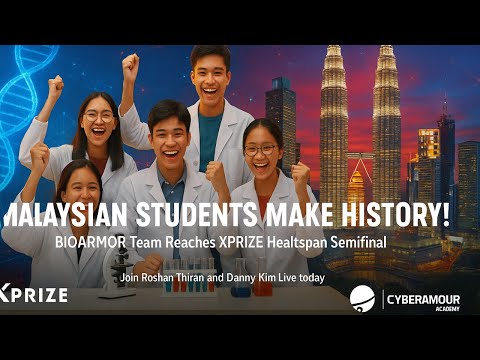
Malaysian Student team BioArmour Makes X-Prize History
low signalfavorable
28:24149 views13 likes2 commentsreadyField context

This video presents BioArmor/BioArmour as a student-led Malaysian underdog project that reached the XPRIZE Healthspan semifinals and is seeking to turn that visibility into fundraising, partnerships, and eventual clinical-trial work. The speaker describes a preclinical, multimodal concept involving tiger's milk mushroom, other natural elements, and lifestyle components, but does not provide validated therapeutic evidence or trial results. Much of the video focuses on national pride, the project's educational mission, and building a student pipeline through STEM programs and after-school activities. It also includes ambitious milestone claims about future XPRIZE progress, framed more as aspiration and promotion than demonstrated project maturity.

Key takeaways
  • BioArmor is framed as an early-stage, student-led Malaysian longevity concept that reached XPRIZE Healthspan semifinalist status.
  • The proposed approach is described as a multimodal concept using tiger's milk mushroom and other natural or lifestyle elements, but remains preclinical.
  • The speaker emphasizes that the team needs substantial outside funding, sponsors, academic partners, and government support to advance toward clinical trials.
  • The video positions BioArmor not just as a biotech project, but as a broader STEM education and youth-development platform.
  • The presentation is heavy on inspiration, prestige, and national significance, with little technical validation shown in the video.
  • Some claims about future finalist or winner status appear aspirational or speaker-asserted rather than evidenced within the video.

Evidence

news (2)
paper (1)
patent (83)
project page (1)
video (31)
web (29)
wiki (22)

★ AI estimate from available evidence — click any star for rationale.