Live·Verified funding discovery · 2026.2
874 grants · 19 open · 435 companies · 2640 concepts874 / 19 / 435 / 2640
COMPANIESCompanies rated · 435 (no change)PROJECTSProjects rated · 70 (no change)CATALOGUE874 grants in catalogue · 19 open right nowPOWERED BYOpen Longevity · 501(c)(3) · Sherman Oaks, CACOMPANIESCompanies rated · 435 (no change)PROJECTSProjects rated · 70 (no change)CATALOGUE874 grants in catalogue · 19 open right nowPOWERED BYOpen Longevity · 501(c)(3) · Sherman Oaks, CA
← Back to projectsResearch & Funding Infrastructure

FuturVille

Research & Funding InfrastructureLast rated 5/24/2026CommercialCanonical source ↗

FuturVille is a for-profit Canadian project positioning itself as a builder of "healthy longevity villages," with VulcanVille in Vulcan, Alberta presented as the first prototype: a 53-63 acre mixed-use site with 300+ dwelling units, wellness and retreat facilities, commercial space, and related development/investment offerings. The core claim is that village design, services, and community structure can add 10+ healthy years, but the current evidence is mostly self-published marketing, promotional social posts, and a single University of Calgary market-demand capstone rather than independent evidence of health, operational, or financial outcomes.

Source coverage

17 sources searched, 136 evidence rows (122 with full text)
Team project0Project page1Project page crawl3PubMed0Semantic Scholar0OpenAlex1arXiv0bioRxiv0Web search39News0YouTube21Wikipedia10GitHub10Author publications0Organization records0Patents (project-held)0Patents (field corridor)3

Scientific

Mechanism and evidence quality

23.6

Breakthrough

How much success could unlock

35.5

Investor

Deal-quality signals

34.7

Overall

Weighted composite

31.0

Where this project sits

Positioned against every public project across all sections

0255075100048121620LIFESPAN GAIN (YEARS, ESTIMATED)OVERALL SCOREmax in DB: 15 yrFuturVille
BioreplacementBioinformationDrug & Molecule DiscoveryGenetic & Cellular TherapiesAging Biology ResearchDiagnostics & BiomarkersBrain & Cognitive LongevityResearch & Funding Infrastructure
Inner ring · capital to breakeven  ·  Outer ring · best-case upside multiple

Comprehensive brief

Hypothesis

A purpose-built longevity village that combines wellness-oriented housing, proactive personalized healthcare, health programming, food and social design, and community participation can materially improve healthspan, with FuturVille repeatedly framing the target as adding at least 10 healthy years.

Mechanism

The proposed mechanism is environmental and behavioral rather than biological: healthier buildings and materials, wellness amenities, proactive healthcare access, treatments and retreats, social connection, purpose-driven community, optimized nutrition, and potentially remote "holohealth" communication together shift residents' daily exposures and habits enough to improve muscle, cognitive, immune, and broader health outcomes.

Approach

FuturVille is pursuing a real-estate-and-services model centered on VulcanVille in Alberta, using pre-approved mixed-use land, housing partnerships, retreat and treatment facilities, venture/development components, destination programming, and community-bond-style financing. The project also claims plans to test "healthy longevity village-living" in the Healthspan XPRIZE context and to track longevity, health, and ecological metrics, but no validated study results are provided here.

Status

Early commercial development and branding stage. There is evidence of public marketing, contact channels, supplier and partner outreach, site-level development claims, and founder-led promotion, but not of delivered longevity outcomes, named scientific leadership, peer-reviewed evidence, or mature operating traction. The University of Calgary capstone supports consumer interest signals, not execution.

Success criteria

Convincing success would require more than site promotion: actual build-out and occupancy of the village, documented delivery of the promised health and wellness services, transparent resident retention and uptake data, and credible longitudinal evidence showing meaningful healthspan improvement versus reasonable comparators. Claims about adding 10+ healthy years, lowering care costs, or achieving large-scale village replication would need independent validation rather than founder or partner marketing.

Near-term impact (1-3 yrs)

If the core claim is validated in the next 1-3 years, the most practical near-term applications would be replication of longevity-oriented village development in other locations, stronger demand for wellness-focused housing and retreat products, more confidence in rural or distributed proactive-care models including holographic/remote education and coaching, and a clearer basis for municipalities, developers, and suppliers to treat community design itself as a health intervention rather than a lifestyle amenity.

Future horizons (5-20 yrs)

If the model genuinely works over 5-20 years, it could open a new applied longevity subfield around healthspan-oriented community development: villages as measurable intervention platforms, integrated tracking of resident health and ecological metrics, new standards for housing-plus-health service design, and a shift from clinic-centric longevity offerings toward place-based systems that combine built environment, care access, behavior change, and social structure. The ambitious version is not a single resort or subdivision, but a repeatable development and operating model for longevity-focused settlements.

Breakthrough thesis

FuturVille's strongest upside case is that it treats longevity as a systems problem of place, behavior, access, and community, and could show that village-scale design is a practical healthspan intervention rather than just a real-estate theme.

Failure thesis

The more likely failure mode is that FuturVille remains a promotional wellness-real-estate concept with overstated health claims, weak scientific grounding, limited execution capacity, and no credible evidence that its village model adds measurable healthy years beyond standard amenity-driven community living.

Risk of failure

Technical88

FuturVille makes a strong causal claim that village design and services can add 10+ healthy years, but the cited support is promotional rather than outcome-based. The project website describes proactive healthcare, wellness programming, optimized food, and a 63-acre/300+ unit prototype, yet no validated resident health results, longitudinal data, or demonstrated operating model are shown. The University of Calgary capstone is described as a consumer perception study, which is not evidence that the intervention works at scale.

Translational84

The project is not translating from animal work, but it still faces a major human-generalization problem: even if healthier housing and programming help some residents, FuturVille has not shown that effects would generalize across ages, baseline health states, or long time horizons. The only non-marketing evidence here is a survey-based capstone reporting consumer interest in healthy longevity village features, which does not validate healthspan gains or cohort-wide reproducibility.

Regulatory / jurisdictional68

This is not a classic drug-regulatory story, but the model still touches several regulated areas at once: real-estate development, securities-law-qualified community bonds, health and treatment offerings, and potentially remote holographic health delivery. The project itself says bond access depends on securities laws in the buyer's jurisdiction, and its materials repeatedly market healthcare, treatments, retreats, and HoloHealth-style access, which could create compliance and scope-of-practice issues as the concept becomes operational.

Competitive dynamics72

The project appears easy to imitate at the concept level and does not show a strong moat in the evidence provided. FuturVille presents a package of land, wellness amenities, retreat programming, supplier relationships, and media promotion, but not proprietary science, defensible clinical data, or clear IP around the core longevity claim. The reliance on external products and partners such as Geoship and Proto Hologram further suggests integrator risk rather than durable differentiation.

Team / operational82

Execution evidence is thin relative to the ambition. The public record here is dominated by founder-led promotion, contact channels, partnership announcements, and social posts. There is evidence that Angela Faye is the founder and outward-facing driver, but little evidence of a broader operating bench, named scientific leadership, delivered village operations, or prior successful build-out of comparable communities. That makes key-person dependence and execution slippage material risks.

Funding / capital86

The capital burden looks large relative to demonstrated traction. FuturVille is marketing a 53-63 acre mixed-use development with 300+ dwellings, wellness and retreat facilities, commercial/hospitality components, and future replication ambitions, while also soliciting community bonds and seeking a builder-developer-investor partner. That combination suggests substantial financing needs with no hard evidence here of secured institutional capital or completed development milestones.

Scientific panel

Mechanism plausibility35

The proposed mechanism is broadly behavioral and environmental: wellness-oriented design, proactive personalized healthcare, nutrition, relationships, programming, and community participation. Those elements are plausible as health-supportive exposures, but the central claim that the village model can add 10+ healthy years is much stronger than the cited evidence supports. The evidence is mainly FuturVille's own project descriptions and promotional pages, not mechanistic validation or measured resident outcomes.

Evidence base15

The evidence base for feasibility is thin. FuturVille has project pages describing a 63-acre VulcanVille site, 300+ dwellings, wellness facilities, and services, plus a University of Calgary capstone that is explicitly a consumer perception/market demand study. That supports interest and concept articulation, not healthspan effects, clinical feasibility, or operational outcomes.

Methodological rigor8

No controlled study, pre-registration, statistical power plan, comparator community, longitudinal health measurement, or validated endpoint design is evidenced. The University of Calgary work is useful as a market-demand/consumer-perception capstone, but it does not test whether living in FuturVille improves healthspan.

Reproducibility3

There is no fetched evidence of independent replication, completed village operation, repeated internal results, or measured health outcomes reproduced across sites. The project describes a first prototype and future network ambition, which implies the model has not yet been replicated.

Novelty45

The integrated positioning of a healthspan-oriented village combining real estate, wellness services, proactive care, retreat facilities, venture activity, and community financing is somewhat differentiated. However, the underlying elements are familiar wellness real-estate and preventive-health concepts, and the evidence mostly asserts novelty rather than demonstrating a scientifically new intervention.

Falsifiability35

The 10+ healthy-years claim is in principle falsifiable if FuturVille defines cohorts, comparators, healthspan endpoints, timelines, and tracking methods. The fetched evidence mentions measurable goals, Healthspan XPRIZE participation, and planned village-living claims, but provides no protocol that would make the central claim cleanly testable.

Breakthrough panel

Mechanism novelty32

FuturVille combines familiar elements: wellness-oriented real estate, proactive personalized care, nutrition, social design, retreats, technology, and sustainability. The village-scale packaging is somewhat distinctive, but the evidence does not show a novel biological or clinical mechanism, only an integrated lifestyle and built-environment thesis.

Effect size+1.5 yr lifespan28

The claimed upside is large, with FuturVille repeatedly stating a goal of adding at least 10 healthy years. The evidence supporting that magnitude is promotional and project-authored or project-adjacent, with no independent health outcome data, no longitudinal resident results, and no controlled comparator. A low positive estimate is appropriate because the project is longevity-classified, but the stated effect is not yet credible as evidence.

Cross-domain impact34

If executed, the project could affect real estate development, rural healthcare access, wellness tourism, sustainability planning, and remote health communication. Current evidence is mainly site promotion, partner outreach, and hologram showcase activity, so the near-term cross-domain impact is more commercial positioning than demonstrated capability.

Future opening potential45

The strongest upside is a repeatable model where communities become measurable healthspan intervention platforms. FuturVille states plans for a network of villages and a first prototype, and the capstone evidence suggests some consumer-interest signal. Still, the future-opening case depends on build-out, occupancy, service delivery, and validated health outcomes that are not yet evidenced.

Time horizon~5 yr42

A first demonstrable result could arrive within several years if construction begins on the stated development schedule and early resident or visitor metrics are tracked. However, meaningful healthspan validation takes longer than real-estate delivery, and current evidence indicates a development-ready or partner-seeking stage rather than an operating village.

Paradigm shift signal36

If the model actually showed measurable added healthy years from village design and services, it would challenge clinic-centric longevity assumptions and elevate place-based community design as a health intervention. The evidence today does not yet invalidate any mainstream assumption; it shows an ambitious promotional thesis and early development activity.

Investor panel

Most attractive
Addressable market (62)

Large theoretical market because FuturVille targets housing, wellness tourism, proactive health services, and remote health communication, and its own mission claims 1M residents and 20M visitors across 4,000 villages by 2035. I treat that as an ambition, not validated TAM. The only numeric market-like evidence is a founder LinkedIn post citing $500B digital human avatar and $5T virtual spending forecasts, which is adjacent to HoloHealth rather than the core village product. Conservative TAM estimate: $100B, anchored to a small share of wellness real estate, destination wellness, and longevity-services spend rather than the full cited virtual-spending market.

Most concerning
Cost to commercialize (12)

Very capital intensive. The first product is not a software app or single clinic; it is a 53-63 acre mixed-use project with 300+ dwellings, hospitality/wellness center, commercial spaces, infrastructure, and service operations. I estimate $80M to reach first commercial launch and $150M to breakeven, assuming partner/developer capital funds much of the physical build.

Addressable market$100B62

Large theoretical market because FuturVille targets housing, wellness tourism, proactive health services, and remote health communication, and its own mission claims 1M residents and 20M visitors across 4,000 villages by 2035. I treat that as an ambition, not validated TAM. The only numeric market-like evidence is a founder LinkedIn post citing $500B digital human avatar and $5T virtual spending forecasts, which is adjacent to HoloHealth rather than the core village product. Conservative TAM estimate: $100B, anchored to a small share of wellness real estate, destination wellness, and longevity-services spend rather than the full cited virtual-spending market.

Defensibility18

Weak defensibility. The fetched project evidence shows branding, site control or land ownership claims, zoning/area-structure-plan claims, supplier/partner outreach, and a Proto Hologram relationship, but no project-owned patents, exclusive health data, proprietary clinical protocol, or hard-to-copy operating system. Field patents show personalized health and wellness informatics is crowded and separately owned by others, which further limits IP defensibility.

Team execution capacity26

Evidence names Angela Faye as founder and describes work around regenerative real estate, AI/hologram technology, Proto Hologram distribution, and business-advisor roles. That supports founder-led promotion and some partnership-building, but there is no fetched evidence of the team previously delivering a comparable 300+ unit mixed-use development, operating a health village, or running a validated healthspan study.

Founder skin in the game32

There is public reputational exposure: founder-linked promotion, named leadership, public event demonstrations, and a stated effort to build Canada's first Health & Longevity Village. But the evidence does not show founder capital invested, salary sacrifice, personal guarantees, meaningful equity-vs-cash signals, or other concrete financial risk.

Customer validation signal36

Some demand signal exists: a University of Calgary consumer perception study reports survey interest in healthy longevity, treatments, and community participation; the site has contact paths for bonds, leasing/purchase, services, and retreats; and the Amazon podcast episode claims 0% local vacancy, need for 217+ units, and hotel demand of 58-62%. However, this is not equivalent to paid reservations, signed LOIs, occupancy, or recurring service revenue.

Burn to breakeven$150M22

Low capital efficiency because the model depends on land development, housing, commercial space, hospitality/wellness facilities, and service operations before durable cash-flow breakeven. I estimate $150M to breakeven from current stage, using the fetched 300+ dwelling-unit mixed-use plan and a conservative real-estate development anchor rather than biotech/SaaS benchmarks.

Time to value2.5 yr42

There may be earlier real-estate value through land sale, partner financing, lot priority, or development rights. But the stronger value proposition depends on construction and service launch, and one project-specific source says FuturVille seeks a developer-investor partner to co-create a development plan by Q2 2026 with construction to begin no later than Q2 2028. Estimated time to meaningful value: 30 months.

Regulatory pathway clarity50

For ordinary real estate, zoning and municipal approvals look more legible because the project claims direct-control zoning, an approved area structure plan, and municipal support. For the longevity-health claims, the pathway is much less clear: proactive healthcare, treatments, diagnostics, and claims of adding 10+ healthy years would need careful medical, advertising, privacy, and possibly clinical validation boundaries. Score lands mid-range because the development route is clearer than the healthspan-efficacy route.

Competitive freedom28

Limited competitive freedom. The visible differentiation is a packaged longevity-village narrative plus Vulcan site positioning, but wellness real estate, retreats, proactive-health clinics, digital health, and sustainable community development are broad and copyable. Field-context evidence shows established concepts around green urbanism, eco-cities, and personalized health systems, so FuturVille must execute rather than rely on category novelty.

Asymmetric upside10×56

The upside case is real if the model becomes a repeatable, capital-partnered template for many healthspan-oriented villages and associated services. FuturVille's own mission states 4,000 villages, 1M residents, and 20M visitors by 2035. That is highly speculative, but if even a small fraction is achieved, the outcome could be meaningfully larger than a single property development. Best-case multiple set at 10x, closer to real-estate/platform-services upside than biotech-style 100x.

Exit landscape15

No fetched evidence provides directly comparable M&A, licensing, or option deals for longevity villages, wellness-real-estate platforms, or FuturVille-like operating companies. Real-estate projects can sell assets or partner with developers, but the evidence here supports development/investment outreach rather than a known acquisition market.

Cost to commercialize$80M12

Very capital intensive. The first product is not a software app or single clinic; it is a 53-63 acre mixed-use project with 300+ dwellings, hospitality/wellness center, commercial spaces, infrastructure, and service operations. I estimate $80M to reach first commercial launch and $150M to breakeven, assuming partner/developer capital funds much of the physical build.

Authors

No authors resolved yet.

Scientific theories

Integrated village environment healthspan theoryPrimarymanual entrymedium

FuturVille's proposed mechanism is that a network-owned community of specialized villages can improve healthspan and longevity by systematically shaping the major environmental and social determinants of health: optimized living environments, nutrition, relationships, beneficial technology, safety and security, and proactive customized healthcare. The causal theory is that coordinated improvements across these domains reduce chronic stressors, improve health behaviors, increase social support, lower exposure to unsafe conditions, and enable earlier detection or prevention of disease, thereby making healthy aging more accessible. Testable predictions include that residents or participants in FuturVille-style communities would show improvements in healthspan-related outcomes compared with similar non-participants, such as better cardiometabolic markers, lower preventable disease incidence, improved mental health and social connectedness, reduced injury or safety-related morbidity, higher preventive-care adherence, and potentially delayed onset of age-related disease.

Popperian evaluation
Premise plausibility7.0/10

The theory rests on broadly credible public-health premises: built environment, nutrition, social support, safety, stress exposure, and preventive healthcare can influence morbidity and healthspan-related outcomes. The main weakness is that it bundles many determinants into one community-level mechanism without specifying which components are necessary, how large the effects should be, or whether coordinated village ownership adds causal power beyond standard socioeconomic, healthcare-access, and lifestyle interventions.

Supporting
  • The proposed determinants are recognized categories plausibly linked to chronic disease risk, mental health, injury risk, preventive care, and healthy aging.
  • The causal chain from improved environment and social support to reduced stressors and better health behaviors is mechanistically plausible.
  • Earlier detection and prevention plausibly reduce some preventable disease burden.
Counter
  • The theory provides no direct evidence that a network-owned village structure can reliably change exposures enough to extend healthspan.
  • The mechanism is broad and may mainly restate known social determinants of health rather than identify a distinctive biological aging pathway.
  • Longevity effects are harder to establish than intermediate health markers and may be confounded by selection effects.
Explanatory power4.0/10

The theory could explain improved health outcomes among residents if such improvements were observed, but it does not yet explain existing evidence better than alternatives. Similar benefits could be explained by wealth, self-selection, better baseline health, higher health literacy, access to care, social class, or conventional lifestyle intervention effects. With no publications or observed outcome data in the dossier, explanatory power remains limited.

Supporting
  • The theory offers a coherent multi-domain pathway linking environmental changes to cardiometabolic, mental health, safety, and preventive-care outcomes.
  • It can accommodate several outcome types under one social-environmental framework.
Counter
  • No observed FuturVille-style outcome data are provided for the theory to explain.
  • Alternative explanations such as socioeconomic advantage, selection bias, healthcare access, and lifestyle motivation could explain the same predicted outcomes.
  • Because many intervention components are bundled, the theory has weak discriminative power among competing causal explanations.
Falsifiability7.0/10

The theory makes testable comparative predictions about residents versus similar non-participants across cardiometabolic markers, disease incidence, mental health, social connectedness, injury morbidity, preventive-care adherence, and age-related disease onset. It could be falsified by well-controlled longitudinal studies showing no meaningful improvements despite adequate implementation. However, some claims are vague, especially 'potentially delayed' aging outcomes and the lack of predefined effect sizes, time horizons, and required intervention components.

Supporting
  • The theory predicts measurable differences between participants and similar non-participants.
  • Several outcomes are operationalizable using biomarkers, disease incidence, injury records, mental health scales, social connectedness measures, and preventive-care adherence.
  • Longitudinal cohort, quasi-experimental, or randomized access designs could test the core claims.
Counter
  • Predictions do not specify expected effect sizes, minimum exposure duration, or failure thresholds.
  • The broad multi-component design creates escape routes: null results could be attributed to poor implementation, wrong village design, insufficient follow-up, or participant mix.
  • Longevity and delayed age-related disease outcomes require long time horizons and are vulnerable to confounding.
Ambition7.0/10

The theory targets the important and difficult problem of extending healthy aging by redesigning everyday living conditions rather than focusing only on clinical treatment. Its ambition is substantial because it proposes coordinated control over multiple determinants of health at community scale. It is less scientifically novel than a core aging-biology theory, because the mechanism mostly integrates established environmental, behavioral, social, and preventive-care pathways rather than proposing a distinctive new mechanism of aging.

Supporting
  • The theory addresses healthspan and longevity, a major unsolved biomedical and public-health challenge.
  • It proposes a broad, system-level intervention across living environment, nutrition, relationships, technology, safety, and healthcare.
  • It aims to make healthy aging more accessible through structural design rather than individual behavior alone.
Counter
  • The mechanism is an integration of known social determinants rather than a novel biological aging hypothesis.
  • The breadth of the intervention makes it programmatically ambitious but mechanistically diffuse.
  • The strongest claims about longevity extension are not yet backed by specific causal estimates or direct evidence.
Foundational alignment
thermodynamics · aligned (8)network theory · aligned (8)evolution · tension (6)cybernetics · aligned (7)disease etiology · aligned (8)
Theory rollup
Premise plausibility7.0/10

The theory rests on broadly credible public-health premises: built environment, nutrition, social support, safety, stress exposure, and preventive healthcare can influence morbidity and healthspan-related outcomes. The main weakness is that it bundles many determinants into one community-level mechanism without specifying which components are necessary, how large the effects should be, or whether coordinated village ownership adds causal power beyond standard socioeconomic, healthcare-access, and lifestyle interventions.

Explanatory power4.0/10

The theory could explain improved health outcomes among residents if such improvements were observed, but it does not yet explain existing evidence better than alternatives. Similar benefits could be explained by wealth, self-selection, better baseline health, higher health literacy, access to care, social class, or conventional lifestyle intervention effects. With no publications or observed outcome data in the dossier, explanatory power remains limited.

Falsifiability7.0/10

The theory makes testable comparative predictions about residents versus similar non-participants across cardiometabolic markers, disease incidence, mental health, social connectedness, injury morbidity, preventive-care adherence, and age-related disease onset. It could be falsified by well-controlled longitudinal studies showing no meaningful improvements despite adequate implementation. However, some claims are vague, especially 'potentially delayed' aging outcomes and the lack of predefined effect sizes, time horizons, and required intervention components.

Ambition7.0/10

The theory targets the important and difficult problem of extending healthy aging by redesigning everyday living conditions rather than focusing only on clinical treatment. Its ambition is substantial because it proposes coordinated control over multiple determinants of health at community scale. It is less scientifically novel than a core aging-biology theory, because the mechanism mostly integrates established environmental, behavioral, social, and preventive-care pathways rather than proposing a distinctive new mechanism of aging.

Videos

Futurville Pioneering the World's First Healthy Longevity Village
unwatchedfavorable
15:4630 views0 likes1 commentsreadyProject specific

This video presents FuturVille as a founder-led pitch for a 56-acre mixed-use "healthy longevity village" in Vulcan, Alberta, intended as the prototype for a broader village model. Angela Fay describes owned land, a pre-approved plan for roughly 300 dwellings, and a mix of residential, hospitality, commercial, and wellness uses designed to support a walkable, sustainability-oriented community. The video repeatedly frames the project around an ambition to add 10 healthy years to residents' and visitors' lives, while also highlighting development-partner, investor, and buyer interest. Across both chunks, the content is primarily promotional and aspirational, with little independent evidence on health outcomes, execution capacity, financing, or operating performance.

Key takeaways
  • Founder positions FuturVille as a 56-acre/roughly 53-63 acre prototype longevity village in Vulcan, Alberta with 300+ planned dwelling units.
  • Project is framed as a mixed-use wellness real-estate development combining homes, hospitality, commercial space, and health/wellness services.
  • Core claim is that the village model could add 10+ healthy years, but the video does not provide independent validation for that outcome.
  • Speaker emphasizes site advantages such as land ownership, local planning approvals, location near Calgary/Lethbridge, and Vulcan's tourism branding.
  • Immediate business goal appears to be securing a developer or development partner and building investor/buyer interest rather than showing delivered results.
  • Mentions of XPRIZE-related activity and testing are presented as credibility signals, but remain high-level and not outcome-backed in the video.
Retour vers le Futur 2 : Bienvenue en 2015 (CLIP HD) - YouTube
strong
3:3956,212 views469 likes43 commentsnot applicableField context

Video summary pending.

NextGen Economy Podcast Young Voices for Social Impact with ...
low signal
22:11227 views2 likes0 commentsnot applicableField context

Video summary pending.

Conjugaison des verbes chanter avancer manger au présent au futur et à l'imparfait de l'indicatif
low signalneutral
8:59477 views10 likes0 commentsreadyField context

This video is a French grammar lesson on conjugating the verbs "chanter," "avancer," and "manger" in the present, future, and imperfect indicative. The speaker explains standard endings and a few spelling or pronunciation adjustments, including forms like "mangeons" and the handling of "avancer." Nothing in the transcript discusses FuturVille, longevity villages, health outcomes, development plans, financing, or project operations. As project evidence, the video is irrelevant beyond showing that the linked content does not support or challenge the project’s claims.

Key takeaways
  • The content is purely educational language instruction and unrelated to FuturVille.
  • No claims about longevity, wellness communities, real estate development, or village operations appear in the transcript.
  • The speaker focuses on verb conjugation rules, endings, and minor spelling adjustments for regular French verbs.
  • There are no project-relevant facts, partners, metrics, financial details, or third-party evaluations in the video.
  • Audience reception is low signal, so even if the video were relevant, it would still be weak evidence.
Vivre sur Mars, c'est possible ?
viralneutral
13:371,130,456 views20,865 likes1,150 commentsreadyField context

This viral third-party explainer discusses whether humans could realistically live on Mars and concludes that it is technically imaginable but still extremely difficult. Across both chunks, the speaker emphasizes major barriers including long travel times, radiation, microgravity-related health decline, psychological confinement, and the challenge of producing oxygen, water, food, and shielding in a closed-loop environment. Technologies such as MOXIE, water extraction, recycling systems, and controlled greenhouses are presented as promising partial advances rather than proof of near-term readiness. For FuturVille, the video is only indirect field-context evidence: it reinforces the broader idea that built environments and life-support systems affect health and survivability, but it does not provide evidence for FuturVille's specific claims about adding 10+ healthy years or delivering successful longevity-community outcomes.

Key takeaways
  • The video frames extreme-environment settlement as plausible in principle but still far from operationally easy or near-term.
  • Human health risks are central, including muscle loss, cardiovascular deconditioning, pulmonary effects, radiation exposure, and psychological strain.
  • Long-duration habitation depends on integrated life-support systems such as oxygen generation, water recovery, food production, and shielding.
  • Specific Mars technologies like MOXIE and greenhouse concepts are discussed as early enablers, not validation of permanent settlement readiness.
  • Relative to FuturVille, the relevance is conceptual rather than direct: the video supports general interest in environment-health design questions, not the project's concrete longevity or business claims.
Shifting organizational culture through human-centred design
unwatchedneutral
19:2514 views1 likes0 commentsreadyField context

This video is an interview with Jocelyn Holland of Holland Licensed Interior Design about human-centred design, workplace trends, and entrepreneurship in Alberta. She describes a data-informed design approach for commercial, workplace, and healthcare interiors, emphasizing collaboration spaces, hybrid-work support, hospitality-inspired environments, and community-oriented design. The discussion is only indirectly relevant to FuturVille because it broadly supports ideas about human-centred environments, but it does not mention FuturVille directly or provide evidence about longevity, village operations, resident outcomes, or financial performance. Overall, it functions more as adjacent field context and firm promotion than as substantive evidence for the project's core claims.

Key takeaways
  • The speaker discusses a separate Alberta interior design firm rather than FuturVille itself.
  • She presents human-centred, data-informed design as important in workplace and healthcare environments.
  • The video highlights trends toward collaboration, hybrid-work flexibility, hospitality-style spaces, and community-oriented design.
  • Entrepreneurship, resilience, and work-life balance are major themes, making much of the discussion personal and promotional.
  • The video offers only indirect field-context relevance and no independent evidence for FuturVille's claimed longevity, operational, or financial outcomes.
Announcing FuturVille - How Big is the VulcanVille Project?
low signalfavorable
1:2769 views1 likes0 commentsreadyProject specific

This video presents FuturVille's VulcanVille as the first prototype of a healthy longevity village in Vulcan, Alberta, describing a roughly 63-acre mixed-use development tied to an area structure plan approved since 2008. The speaker outlines a 300+ unit residential program spanning single-family, multi-family, manufactured, and row-house housing, alongside parks and other shared spaces. The pitch also highlights wellness, retreat, commercial, co-working, and regenerative village features as central parts of the concept. The overall content is project-specific and promotional, emphasizing vision and scale rather than providing independent evidence of health, operational, or financial outcomes.

Key takeaways
  • The project is described as a 63-acre development linked to an area structure plan reportedly approved since 2008.
  • The housing plan is presented as 300+ dwellings across several formats, including single-family, multi-family, manufactured homes, and row houses.
  • Non-housing elements are a major part of the pitch, including a resort/retreat center, commercial uses, co-working, common kitchens, and social spaces.
  • The speaker frames FuturVille/VulcanVille as a purpose-built healthy longevity village intended to support longer, healthier lives.
  • The chunk provides descriptive project claims but no independent validation of the claimed health, operational, or financial benefits.
ExO Economy NextGen Podcast NFT's for Business FutureMike
low signalfavorable
22:4583 views0 likes0 commentsreadyField context

This video is primarily a promotional podcast episode tied to FuturVille/FutureVille, with most of the discussion focused on NFTs, cryptocurrency, Ethereum, and DAOs rather than the project's longevity-village model itself. Across the chunks, the speakers present crypto tools as accessible, transformative, and commercially useful for tickets, memberships, royalties, governance, and tokenized assets. FuturVille appears mainly as brand context and through direct calls to visit project-related NFT and village pages, not through evidence about health outcomes, village operations, or financial performance. As evidence for the project, the video is weak: it provides marketing context and speculative positioning, but no independent validation of the core claim that the village model can add 10+ healthy years.

Key takeaways
  • The episode is mostly about NFTs, crypto adoption, and DAO-style governance, not about measurable FuturVille project results.
  • FuturVille is presented in a favorable, sponsor-like/promotional context, including direct invitations to visit related NFT and village pages.
  • Speakers make optimistic, forward-looking claims about blockchain use cases and mainstream adoption, with limited critical scrutiny.
  • No independent evidence appears on longevity outcomes, resident health impact, operating performance, or development execution.
  • As project evidence, the video mainly shows branding, narrative, and speculative strategy rather than substantiated project performance.
de vielle vidéos de MondryanCity
unwatchedneutral
9:022 views0 likesreadyField context

This video provides no substantive, verifiable information about FuturVille beyond vague ambient context. The transcript is largely garbled, informal French commentary with technical interruptions and scattered references to city changes, decor, real estate, and plants/greenhouses, but no coherent explanation of the project. It does not offer independent evidence on FuturVille's health claims, operations, financing, or development progress. Audience reception is essentially nonexistent, so even its limited contextual value is weak.

Key takeaways
  • Transcript quality is poor and much of the content is incoherent or interrupted by technical issues.
  • No clear factual discussion of FuturVille's longevity-village model, prototype site, or claimed outcomes appears in the chunk.
  • Scattered references to buildings, decor, property, and plants/greenhouses are too vague to support project assessment.
  • The chunk provides no independent evidence, metrics, or operational/financial detail relevant to rating the project.
  • With only 2 views and 0 likes, the video is effectively unwatched and should be treated as very weak field-context evidence.
Découvrez le ROKR "The Last City" Un Parcours de Bille Lumineux DIY !
moderateneutral
13:341,046 views38 likes8 commentsreadyField context

This video is a French-language review/demo of the ROKR/Robotime DIY marble-run kit "The Last City," covering assembly, lighting effects, moving marbles, sound, and overall display appeal. Across both chunks, the speaker is enthusiastic about the product's cyberpunk look, illuminated mechanisms, and relatively simple 2-3 hour build, while noting minor drawbacks such as noise and uneven lighting. Nothing in the video discusses FuturVille, longevity villages, healthspan claims, community design, operations, or investment performance. For project-rating purposes, it provides field-context only as an example of unrelated promotional-style content and offers no direct evidence about the project.

Key takeaways
  • The content is a consumer product review of a ROKR/Robotime marble-run model, not coverage of FuturVille.
  • The speaker highlights easy assembly, included tools, USB-C power, LED lighting, mirrored effects, and moving mechanical features.
  • Minor criticisms focus on noise and limited or uneven lighting rather than major product flaws.
  • The tone is clearly positive and somewhat promotional, including discount-code style marketing cues.
  • As evidence for FuturVille, the video is effectively irrelevant and does not support or challenge the project's longevity, operational, or financial claims.
Présentation de ma ville rp partie 2
unwatchedneutral
3:0213 views1 likes0 commentsreadyField context

This video appears largely unrelated to FuturVille as an investable longevity-village project. The transcript chunk is a casual, disjointed discussion about a game or roleplay environment, including software installation, phone performance, and in-world locations like a pharmacy, store, bakery, and furniture. It does not provide substantive information about FuturVille's health-longevity claims, village operations, development progress, or financial outcomes. As evidence for project assessment, it is extremely weak and best treated as field-context noise rather than meaningful validation or criticism.

Key takeaways
  • The transcript chunk is mostly unrelated to FuturVille's real-world project claims or execution.
  • Discussion centers on gameplay/roleplay-style commentary, including installs, device limits, and virtual amenities.
  • References to a pharmacy, store, and bakery are not tied to verifiable project details or outcomes.
  • No independent evidence, metrics, or operational updates about the longevity-village concept appear in this segment.
  • Audience reception is essentially unwatched, so even its limited contextual value carries very low evidentiary weight.
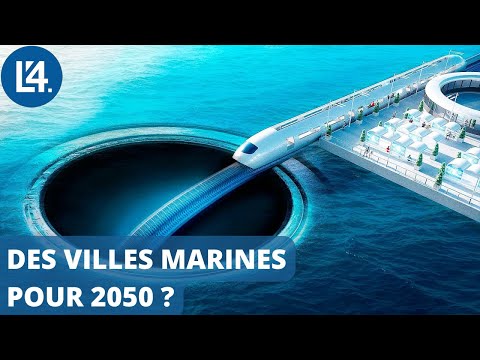
VILLES MARINES : Ces Projets pourraient voir le jour d'ici 2050
discussedneutral
10:04102,138 views3,433 likes204 commentsreadyField context

This video surveys several speculative future-habitat concepts designed in response to sea-level rise and climate displacement, including floating and underwater city proposals. It presents Oceanix as a modular floating-city concept and Aequorea as a biomimetic underwater-city vision, while also mentioning the highly futuristic Analemma Tower. The narration emphasizes imagination, design ambition, and self-sufficiency claims, but repeatedly questions whether these projects are financially or practically realistic. For FuturVille, the clip is best treated as broad field context about ambitious alternative settlement concepts rather than evidence about FuturVille itself.

Key takeaways
  • The video frames radical habitat design as a response to climate pressure, especially rising sea levels and displacement.
  • Oceanix is presented as a floating-city concept built around modular, self-sufficient urban systems.
  • Aequorea is described as an underwater-city proposal using biomimicry, 3D printing, and ocean-resource recycling.
  • Analemma Tower is included as an extreme example of speculative architecture with unclear practical value.
  • The speaker shows interest in the imagination and visual appeal of these projects but repeatedly raises feasibility and cost concerns.
  • As project evidence, this is contextual material about the broader visionary-settlement space, not direct validation of FuturVille's health, operational, or financial claims.
Masterplanning & The Creative City
low signalneutral
56:49274 views7 likes0 commentsreadyField context

This video is a field-context discussion about Berlin’s creative-city development, artist studio shortages, mixed-use space planning, and the political tools needed to preserve affordable cultural infrastructure. Across the talk and Q&A, speakers emphasize master planning, public land use, cooperative structures, and long-term governance models that can survive election cycles and resist speculative redevelopment. The content is relevant to FuturVille only in a loose contextual sense because it touches mixed-use development, community structure, and long-horizon planning. It does not provide health, longevity, operational, or financial outcome evidence for FuturVille’s core claim that its village model can add 10+ healthy years.

Key takeaways
  • The video is mainly about urban-planning governance for creative and mixed-use spaces, not about health or longevity outcomes.
  • Speakers argue that durable institutions, public policy, and long-term ownership structures are necessary to protect mixed-use community infrastructure.
  • Several segments highlight feasibility constraints such as rising land costs, limited funding, political dependence, and regulatory compliance.
  • The discussion offers adjacent context for how place-based developments can be structured, but it does not validate FuturVille’s specific model or claims.
  • Any relevance to FuturVille is conceptual rather than evidentiary: it informs planning and governance questions, not project performance.
Découvrez le ROKR "The Futur City" Le marble run Lumineux DIY
moderateneutral
8:001,210 views33 likes2 commentsreadyField context

This video is a promotional-style review of the ROKR/Walker "Future City" DIY marble-run model, not coverage of FuturVille or any longevity-village development. The speaker focuses on assembly, modular connection with another unit, LED lighting, noise, and troubleshooting for smooth operation. The tone is upbeat and sales-oriented, with discount codes and purchase links. As project evidence, it is essentially irrelevant beyond a superficial keyword overlap around "future city."

Key takeaways
  • The video is about a futuristic marble-run toy, not FuturVille or healthy longevity villages.
  • Content centers on product assembly, modularity, lighting effects, and practical use issues like leveling and noise.
  • The speaker presents the product positively and includes retail links and discount promotion.
  • Any apparent connection to FuturVille is only terminological; there is no discussion of the project’s health, community, operational, or financial claims.
  • Despite moderate audience reception, this is weak field-context evidence because it does not meaningfully address the project.
Biff's Nightmare World | Back To The Future II (1989) | Screen Bites
discussedneutral
4:1835,956 views327 likes52 commentsreadyField context

This video is a short movie clip from Back to the Future II depicting the dystopian alternate 1985 centered on Biff Tannen’s casino-driven empire and a museum-style narration celebrating his rise. The content presents Biff as a wealthy, powerful builder of a gambling-based development machine, with an intentionally propagandistic tone inside the fictional world of the film. As evidence for FuturVille, the clip is only loosely relevant as field context because it dramatizes a commercially dominated, personality-driven built environment rather than any real longevity village model. It does not provide factual information about FuturVille’s health, operational, community, or investment outcomes.

Key takeaways
  • The clip is fictional cinematic material, not a documentary or real-world review.
  • Its main theme is a celebratory in-world presentation of a powerful developer figure who reshaped a town around gambling and spectacle.
  • The tone is overtly promotional and propagandistic within the story, offering no critical or evidence-based analysis.
  • For FuturVille, the relevance is limited to broad cultural context about how master-planned or personality-led developments can be framed in media.
  • It provides no direct evidence about longevity benefits, village performance, resident outcomes, or financial viability.
FutureVille - backrooms - YouTube
moderate
2:339,099 views198 likes16 commentsunavailableField context

Transcript unavailable.

Sparks of Change 2024 (BSL)
unwatchedneutral
1:27:0046 views3 likes0 commentsreadyField context

This video appears to be a general community-change event focused on Bristol-based civic infrastructure, commons governance, community ownership, local journalism, land trusts, climate action, and repair culture rather than FuturVille specifically. Across all chunks, speakers promote community-led spaces, cooperative institutions, participatory planning, and anti-speculation approaches, but they do not discuss FuturVille, VulcanVille, or provide evidence about longevity, health outcomes, development execution, or investor results. For FuturVille rating purposes, the video is at most indirect field context about values-aligned community development ideas. It does not substantiate the project's claim that village design and services can add 10+ healthy years.

Key takeaways
  • The content is not project-specific to FuturVille and provides no direct evidence about VulcanVille, its operations, or its health claims.
  • The strongest thematic overlap is broad field context: community ownership, civic assets, land stewardship, participatory planning, and anti-speculation values.
  • Several speakers are advocating for their own initiatives, so the overall tone is mission-driven and promotional rather than evidence-oriented.
  • Some chunks acknowledge real operational burdens of running shared community spaces, which is mildly relevant as contextual caution about execution complexity.
  • There is no independent data here on longevity outcomes, resident wellbeing, financial viability, or successful delivery of a longevity-village model.
Canada's Entrepreneur - YouTube
duration unknownunavailableField context

Transcript unavailable.

Biff Ruins The Present | Back To The Future Part II | Science Fiction Station
discussedneutral
6:11771,837 views6,653 likes980 commentsreadyField context

This video clip from Back to the Future Part II depicts an alternate 1985 ruled by Biff Tannen, first through a celebratory museum-style narration and then through a domestic scene showing coercion, fear, and abuse of power. Marty discovers that Biff has used wealth, gambling, and intimidation to dominate the community and his family, and learns that George McFly has been dead for 12 years. The clip is fictional and dramatic, with no direct discussion of longevity villages, healthspan, or real-world evidence about community design. Its value for FuturVille is limited to very broad cultural context about power, image-making, and dystopian development narratives.

Key takeaways
  • The opening frames Biff as a triumphant builder and civic success story, using overtly promotional narration.
  • The main substance of the clip undercuts that narrative by showing a violent, coercive, and dystopian social order.
  • The scene centers on manipulation, wealth concentration, and abuse rather than health, wellness, or community outcomes.
  • George McFly's death and Lorraine's coerced marriage to Biff establish the timeline as harmful despite its surface prosperity.
  • For FuturVille, this is only weak field-context material and not evidence for or against longevity-village claims.
Vulcan Smart Investment or Not Time to Decide Now!
unwatchedfavorable
1:2712 views0 likes0 commentsreadyField context

This short video presents FuturVille's VulcanVille site as a business-to-business development opportunity rather than a simple retail land offering. The speaker says the roughly 53-acre site is construction-ready, has zoning and political support, and is available immediately, with a detailed development plan targeted for approval by April 2026. VulcanVille is framed as the first prototype for a broader model of scalable longevity villages that could be replicated on other sites. The clip functions primarily as a sales pitch focused on urgency, readiness, and expansion potential rather than evidence of health, operational, or financial results.

Key takeaways
  • Frames VulcanVille as a B2B development and partnership play, not just a land sale.
  • Claims the site is construction-ready and already benefits from zoning and political support.
  • States a target of April 2026 for approval of the detailed development plan.
  • Presents VulcanVille as a prototype intended to validate a scalable village model.
  • Emphasizes future replication, land acquisition, and fast-tracked development as part of the strategy.
Futur Ville: The Troops of Gentrification
unwatchedunfavorable
1:16:0240 views0 likes0 commentsreadyField context

This video is a panel discussion about gentrification, regeneration, and the role artists, cultural projects, councils, and developers can play in neighborhood change. Across the discussion, speakers repeatedly criticize top-down redevelopment that raises prices, attracts wealthier newcomers, and displaces existing residents while claiming to improve places. They argue for community-led, locally accountable development, better consultation, and approaches that preserve authentic local culture rather than commodifying it. For FuturVille, the video is relevant mainly as field context: it does not evaluate the project directly, but it frames the kind of mixed-use, investment-linked place-making narrative FuturVille uses as socially and politically contested.

Key takeaways
  • The speakers consistently frame gentrification as a harmful process tied to displacement, class exclusion, and outside capture of value.
  • Top-down regeneration led by councils, developers, or investment logic is criticized as serving newcomers and property interests more than existing communities.
  • Community-led planning, co-creation, consultation, and local ownership are presented as the more ethical alternative to commodified redevelopment.
  • Artists and cultural projects are described as sometimes unintentionally helping open neighborhoods to redevelopment, even when their original intent is community-building.
  • The discussion raises caution for projects like FuturVille whose village-building and investment narrative could be interpreted through a gentrification or financialization lens.
  • The video provides no direct evidence about FuturVille's longevity, operational, or financial claims; its value is contextual rather than project-validating.
America CAN'T Compete with China's NEW High-Speed Future!
viralneutral
12:535,121,351 views70,359 likes10,651 commentsreadyField context

This viral travel-vlog-style video presents Shenzhen as a futuristic model city, emphasizing high-speed infrastructure, automation, advanced transit, drone delivery, and tech-forward consumer services. The speaker frames China, and Shenzhen in particular, as far ahead of the US and UK in executing ambitious urban development through policy, investment, and rapid buildout. For FuturVille, the main relevance is contextual: the video reinforces audience fascination with master-planned, high-tech, future-oriented living environments. However, it does not provide direct evidence about longevity, health outcomes, village operations, or investment performance, and its claims are delivered in a promotional, impressionistic style rather than rigorous analysis.

Key takeaways
  • The video is relevant mainly as field context around public enthusiasm for futuristic urban design, mobility, and automation.
  • Its tone strongly celebrates large-scale development and innovation, which loosely aligns with FuturVille's branding as a next-generation longevity village concept.
  • The content offers no direct evidence for FuturVille's core claims about adding healthy years, community health impact, or commercial viability.
  • Because the video is a viral third-party piece, it may indicate broad audience appetite for future-city narratives, but not validated demand for longevity villages specifically.
  • The strongest usable signal is cultural and narrative alignment, not proof of outcomes.
FuturVille: The Artists Have Always Been Here
unwatchedneutral
28:3729 views0 likes0 commentsreadyProject specific

This video appears to be a broader discussion about artists, gentrification, race, and community change rather than a direct evaluation of FuturVille or its longevity-village claims. Across the chunks, the speakers argue that artists are often blamed too simplistically for displacement, while the real drivers include funding structures, class dynamics, demographic change, and development incentives. The discussion also highlights community ownership, long-term control of space, and anti-displacement strategies as better responses than using artists as short-term placemaking tools. Relative to FuturVille, the video is only loosely relevant through themes of community-building, place development, and who benefits from neighborhood transformation.

Key takeaways
  • The speakers reject simple narratives that artists alone cause gentrification, instead pointing to broader economic, racial, and institutional forces.
  • Artists are described as financially precarious themselves and often drawn to cheaper inner-city areas for survival rather than speculation.
  • Austerity, funding-model shifts, and weak organizational capacity are presented as major reasons community arts organizations decline.
  • Developers may use artists to add cultural value to an area before later pricing them out, creating a cautionary pattern for place-based development projects.
  • Community or artist ownership of buildings is framed as a more durable anti-displacement model than temporary cultural activation.
  • For FuturVille, the main relevance is indirect: it raises questions about whether community-oriented development actually protects local stakeholders or mainly supports a development narrative.
Behind The Mic: With Angela Faye One of ... - YouTube Music
duration unknownunavailableField context

Transcript unavailable.

Announcing FuturVille - What are the Health and Longevity Benefits?
unwatchedfavorable
2:5213 views0 likes0 commentsreadyProject specific

This short project-specific promo presents FuturVille as a walkable, mixed-use longevity village designed to reduce car dependence and increase everyday movement and social interaction. The speaker argues that the planned 63-acre VulcanVille site would support health and wellness through village layout, proximity of amenities, and connections to Vulcan, Calgary, and Lethbridge. The video frames these design choices as benefiting health, wealth, and community life rather than offering an isolated resort model. It does not provide independent evidence that these features produce the claimed longevity benefits, relying instead on promotional framing.

Key takeaways
  • FuturVille is presented as a deliberately walkable village intended to make daily movement easy across the full site.
  • The speaker treats reduced car dependence and increased street-level social interaction as core health and wellness advantages.
  • VulcanVille is described as a 63-acre mixed-use development linked to nearby local services and regional infrastructure.
  • Calgary and Lethbridge are highlighted as accessible urban connections supporting convenience and broader appeal.
  • The video emphasizes lifestyle and design claims rather than measured health, operational, or financial outcomes.

Evidence

news (1)
paper (1)
patent (23)
project page (4)
repo (10)
video (25)
web (53)
FuturVille – Canada's 1st Healthy Longevity Village
Project specificfetched
https://futurville.com/
direct5/22/20262,924 chars
wiki (19)

★ AI estimate from available evidence — click any star for rationale.