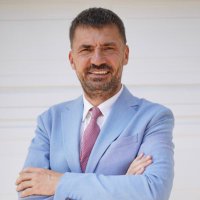
Mikhail Batin
Batin helped make aging targets easier to inspect, mainly through Open Genes and AgeMeta. The citation signal is small, so this is infrastructure work, not a field-shaking discovery.
Role
populariserhigh confidence
This is the clearest channel: he built longevity field infrastructure through organizations, conferences, political advocacy, rallies, petitions, and a patient movement around anti-aging trials. Delete that organizing layer and most of his longevity impact disappears.
also: scientist
Dimension breakdown
This score rates longevity commitment only. The role tags above — scientist, investor, and the rest — say what this person is; we don't score those separately.
Evidence is still sparse for this hero. Scores are shown with low-confidence warnings until more source material is harvested.
Future vision
2.0/ 10
The evidence shows Batin publicly identifies with life extension and points to a book on transhumanism as addressing an underestimated task in the field, but it does not provide a concrete destination, roadmap, timeline, theory of change, or consistent public vision for ending aging or materially extending healthy lifespan. His aging-related databases and publications support field engagement, but they are not vision statements under this dimension.
low confidence
Scientific impact
2.0/ 10
Scientific impact applies, but the primary citation signal is weak: OpenAlex reports h-index 3, i10-index 2, 43 total citations, and only 6 works. The publications show some direct participation in aging/longevity research and databases, but citation weight is far below field-defining impact and there is no evidence of clinical translation or highly cited foundational papers.
high confidence
Capital deployed
2.0/ 10
The dimension applies because Batin appears associated with institution-building through Open Longevity and public longevity databases, but the provided evidence contains no disclosed personal investments, donations, grantmaking, fund allocation, or quantified resources deployed. Primary/independent academic sources corroborate Open Longevity affiliations and outputs, but not capital deployment by Batin personally.
low confidence
Strategic taste
3.0/ 10
Strategic taste applies because Batin has public longevity advocacy and some evidence of choosing field-relevant knowledge infrastructure themes, especially Open Genes. However, the provided evidence is thin on thesis formation, timing, contrarianism, counterfactual importance, capital deployment, or institution-building decisions. His transhumanist framing and focus on underestimated life-extension tasks suggest some coherent agenda-setting, but not enough to support a high score.
low confidence
Field creation
3.0/ 10
Field creation applies, but the evidence shows mainly coauthorship on public longevity data resources rather than clear founding of organizations, programs, communities, protocols, or funding paths. Open Genes and AgeMeta are useful field infrastructure that can make aging targets and transcriptomic aging data more legible, but the evidence does not establish Batin as founder, lead creator, or organizer.
medium confidence
Bravery and conviction
2.0/ 10
The bravery_conviction dimension applies, but the provided evidence contains only weak signs of public pro-longevity advocacy and no documented professional downside, criticism, major personal risk, or self-experimentation. Batin publicly identifies with life extension/transhumanism and has worked on longevity databases and publications, but the evidence does not establish that these involved contrarian public risk-taking or sustained conviction under pressure.
low confidence
Multiplier effect
2.0/ 10
Multiplier effect applies, but the provided evidence shows only limited second-order leverage. Primary bibliometric evidence indicates participation in a small set of aging-related publications/databases with modest citation uptake, including collaborative work, which suggests some field contribution beyond direct advocacy. However, there is no documented evidence of founded organizations, investments, donations, policy influence, talent attraction, capital mobilization, public legitimacy gains, or major follow-on projects attributable to Batin. The self-published X profile supports an advocacy/framing role but cannot justify a higher result score by itself.
low confidence
Vision
Destination
So, I already viewed aging as an immense societal problem, and here were studies that suggested it eventually can be solved.
Our task is to run clinical trials of anti-aging therapies.
want to aim their energy in scientific track and to give everyone a chance to contribute in the fight against aging.
We don’t know when the cure for aging will be discovered, but we know where it will happen: in California.
Mikhail Batin’s Crusade Against Aging
My dream is to create a self-learning social network that can adapt itself to do an increasingly better job in convincing people.
Path
No canonical quotes yet.
Strategy
Advocates for life extension through transhumanist framing and public agenda-setting around underestimated tasks in the field.
The available evidence supports a strategy centered on life-extension advocacy and framing rather than documented capital deployment or institution-building [S1]. Batin’s public profile foregrounds the question of the “most underestimated task in life extension,” suggesting an emphasis on identifying neglected priorities in the field [S1]. His reference to the book Transhumanism indicates that his work is positioned through a transhumanist lens, but the evidence does not establish specific research programs, investments, donations, or organizations [S1]. His listed location supports a San Francisco geography signal, but no operational geography beyond that is evidenced [S1]. Stage preference, risk appetite, time horizon, and collaborators are unknown from the provided evidence.
UnknownUnknownLife ExtensionTranshumanismPublic CommunicationSan Francisco, CA
Portfolio
Investments
No public rows yet.
Donations
No public rows yet.
Organizations founded
Scientific output
h-index3
Citations-
Papers11
Trials0
Bravery and conviction
Self-experimentation
Criticisms