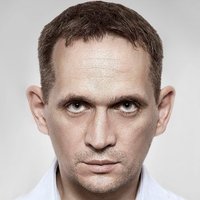
Role
entrepreneurhigh confidence
The clearest operating channel here is that he founded and built Gero/Gero.ai as a longevity drug-discovery company. If you delete that venture-building channel, a large share of his longevity impact disappears.
also: scientist
Dimension breakdown
This score rates longevity commitment only. The role tags above — scientist, investor, and the rest — say what this person is; we don't score those separately.
Future vision
7.0/ 10
Fedichev has a clear and repeated public vision around materially extending human lifespan by treating aging as an underlying biological/physical process rather than only managing age-related disease. The evidence includes a direct mission statement, multiple mechanistic claims about resilience, entropic damage, biological age, and lifespan limits, plus translational paths through biomarkers, therapeutic targets, and lifespan-extending compounds. The score is not higher because the evidence provided is mostly summarized or company/theory-aligned rather than showing a highly detailed public roadmap with milestones, timelines, or broad field-defining influence.
medium confidence
Scientific impact
7.0/ 10
Primary citation metrics show substantial scientific influence, with h-index 38, 5,533 total citations, and multiple papers above 150 citations. However, the most-cited work is largely in physics/atomic gases rather than longevity, so the aging-specific impact is meaningful but not clearly field-defining.
high confidence
Capital deployed
2.0/ 10
Capital deployment is applicable because Fedichev is described as CEO/co-founder of Gero, a longevity-focused biotech company, which is some evidence of institution-building directed at aging. However, the provided evidence contains no disclosed personal investments, donations, fund allocations, or amounts, and the founder/mission claims are largely self-published or only weakly sourced for this dimension.
low confidence
Strategic taste
6.0/ 10
Fedichev shows a coherent and plausibly contrarian strategic thesis: applying physics-informed AI and large-scale longitudinal health data to aging as a systems/resilience problem rather than only a disease-by-disease or hallmarks framework. Founding Gero is a clear deployment vehicle, and the strategy has signs of field-shaping ambition through gerophysics framing, pharma collaborations, and claims of large-scale data infrastructure. However, the evidence is mostly self-published, lacks timing for the original bet, and provides limited independent proof that his choices were early, counterfactually important, or opened paths others were not seeing.
medium confidence
Field creation
4.0/ 10
Field creation applies because Fedichev is described as founding/co-founding Gero, a longevity-focused biotech company using AI, human data, and physics-based models. However, the evidence for founding and broader field-building impact is mostly dossier/structured evidence with limited independent corroboration of the specific organizational achievement or its field-level effects, so the independence gate caps the score well below high.
low confidence
Bravery and conviction
4.0/ 10
Peter Fedichev shows some public conviction through strong, arguably controversial scientific claims about aging: framing COVID-19 as a disease of aging, asserting an intrinsic human lifespan limit tied to resilience loss, and publicly committing his founder identity to significantly extending lifespan. However, the evidence does not show major personal downside, sustained criticism, large relative financial risk, or concrete self-experimentation. This supports a modest bravery/conviction score rather than a high one.
medium confidence
Multiplier effect
4.0/ 10
Multiplier effect applies, but the evidence shows only moderate leverage: Fedichev founded Gero and appears to have built a collaborative scientific/company platform around physics-informed aging research. Bibliometrics and multi-author publications support some legitimacy and collaborator attraction, but there is little concrete evidence here of attracting major capital, policy attention, founders, broad public legitimacy, or follow-on projects beyond Gero. Independence-gate support for a higher score is limited.
medium confidence
Vision
Destination
This could lead to new ways to delay the aging process and its effects on health.
Most of human aging is thermodynamically irreversible. While it's a much disliked phrase. However, I think it's one of the most important and actionable statements in the field, because it means the goal is not rejuvenation. The goal is to stop the clock.
According to Fedichev, with current technologies, we have the potential to double our lifespan—or even live for hundreds of years—by focusing on halting aging instead, following the inspiring examples of negligibly senescent animals, including mammals such as naked mole rats and some species of bats.
According to the Gero team, with current technologies, we have the potential to double our lifespan—or even live for hundreds of years—by halting aging, as seen in negligibly senescent animals like naked mole rats and some species of bats.
With such an approach we hope to generate predictive models of aging for systematic discovery of biomarkers of aging followed by identification of novel therapeutic targets for future anti-aging interventions.
With such an approach we hope to generate predictive models of aging for systematic discovery of biomarkers of aging followed by identification of novel therapeutic targets for future anti-aging interventions.
With such an approach we hope to generate predictive models of aging for systematic discovery of biomarkers of aging followed by identification of novel therapeutic targets for future anti-aging interventions.
To defeat aging, we need to understand what aging is.
He advocated for a more pragmatic and yet comparatively radical approach to life-extension, aiming at slowing down and or even halting human aging to achieve negligible senescence of the type already known to nature and demonstrated by negligibly senescent animals.
Peter Fedichev is the CEO of Gero, a company he co-founded to combat aging and complex diseases.
On a mission to significantly extend human lifespan
provides a compelling case for the possibility of halting human aging altogether.
Path
No canonical quotes yet.
Publicly endorses Targeting aging biology can delay multiple age-related diseasesPublicly endorses Resilience loss drives human aging limitsPublicly endorses Irreversible entropic damage separates aging from reversible diseasePublicly endorses Stress response, damage, and noise form a minimal causal model of agingPublicly endorses Aging as loss of organismal resiliencePublicly endorses Irreversible aging versus reversible disease processesPublicly endorses Minimal three-variable aging modelPublicly endorses Thermodynamic entropic drift as a lifespan-limiting forcePublicly endorses Entropic damage erodes stress-response resiliencePublicly endorses Aging is separable from reversible disease processes
Strategy
Use physics-informed AI and large-scale longitudinal health data to identify therapeutics that restore resilience and slow or reverse functional decline in aging.
Fedichev's strategy centers on translating physics-informed models of aging into drug discovery, with Gero positioned as the main vehicle for that work [S1][S2]. Gero describes its platform as using 100M+ longitudinal medical records to map aging trajectories and distinguish irreversible aging from reversible disease processes [S2]. The strategic focus is therapeutics that restore resilience, delay disease, and potentially double healthy human lifespan within a generation [S2]. His public profile reinforces this thesis by framing him as a physicist in drug discovery working to significantly extend human lifespan [S1]. The collaboration signal is strongest around gerophysics, where Gero says Fedichev and Brian Kennedy are among editors of a Nature Portfolio collection connected to the field [S2].
UnknownHighGerophysicsAI Drug DiscoveryResilience RestorationAge-Related DiseaseHuman Lifespan ExtensionSingapore
Notable bets
Portfolio
Investments
No public rows yet.
Donations
No public rows yet.
Organizations founded
Scientific output
h-index38
Citations-
Papers36
Trials0
Bravery and conviction
Belief evolution
Self-experimentation
Connections
Companies
Collaborators and lineage
Criticisms