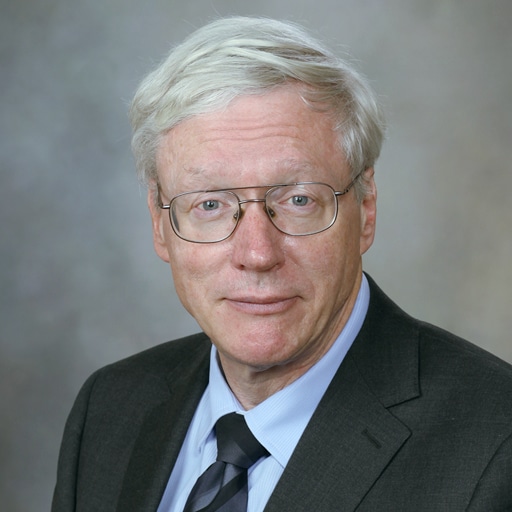
James L. Kirkland
Kirkland helped establish senolytics as a major geroscience strategy, advancing senescent-cell clearance from landmark animal studies to early human trials in kidney and lung disease.
57 / 100scientistoperatormayoclinic.elsevierpure.com/en/persons/james-l-kirkland ↗Scoring AI engine · v0.8.0
Profile
Physician-scientist and former director of the Robert and Arlene Kogod Center on Aging at Mayo Clinic whose research helped establish cellular senescence as a therapeutic target for age-related disease.
Role
scientisthigh confidence
Kirkland authored peer-reviewed research and reviews advancing cellular-senescence targeting and senotherapeutics for age-related metabolic disease. This research record is the evidenced channel through which he moved longevity forward.
James L. Kirkland — OpenAlex citation metrics ↗Translating cellular senescence research into clinical pract ↗Senotherapeutics for metabolic disease and diabetic complica ↗Endothelial senescent-cell-specific clearance alleviates met ↗
also: operator
Dimension breakdown
This score rates longevity commitment only. The role tags above — scientist, investor, and the rest — say what this person is; we don't score those separately.
Future vision
6.0/ 10
Kirkland presents a credible and moderately concrete vision in which targeting cellular senescence improves healthspan and prevents or treats multiple age-related diseases. His extensive, sustained senolytics research reinforces the durability of that vision, but the evidence does not show a clearly articulated end state, development timeline, or comprehensive strategy for ending aging or substantially extending human lifespan.
medium confidence
Scientific impact
10.0/ 10
Field-defining scientific impact is demonstrated by exceptional citation weight and multiple foundational, heavily cited papers that shaped cellular-senescence and senolytic research. The record combines an h-index of 114 and 63,474 citations with landmark work spanning target validation, senolytic discovery, animal efficacy, disease mechanisms, and early human translation.
high confidence
Capital deployed
N/A
Kirkland's documented achievements concern scientific research and clinical translation, but this dimension evaluates outcomes from capital he personally deployed. The evidence provides no qualifying deployment activity to score.
No evidence that Kirkland personally deployed capital into longevity companies or made longevity-focused donations; the sole listed item is a grant supporting his own research, not an investment by him.
high confidence
Strategic taste
8.5/ 10
Kirkland's record shows an unusually coherent and early strategic thesis: establish cellular senescence as a causal, druggable mechanism of age-related dysfunction, identify senolytics, validate them across disease models, and move them into humans. The progression from senescent-cell clearance in 2011 to senolytic discovery in 2015 and preliminary human studies in 2019 plausibly opened a major translational path for geroscience. A top-band score is withheld because the supplied evidence does not isolate his individual decision-making, demonstrate how contrarian the original choices were, or establish the counterfactual dependence of the field on his involvement.
medium confidence
Field creation
1.0/ 10
Field creation is applicable, but the supplied evidence does not show Kirkland founding an organization, program, community, protocol, funding path, or other durable field-building structure. The cited research demonstrates continued scientific participation in senolytics and gerotherapeutics, not creation of infrastructure that made the field more accessible to others.
high confidence
Bravery and conviction
1.0/ 10
The dimension is applicable, but the supplied evidence demonstrates scientific impact and clinical translation rather than public risk-taking or conviction under adversity. No evidence establishes a contrarian public stance, career sacrifice, a personally consequential bet, persistence through serious criticism, or self-experimentation.
high confidence
Multiplier effect
8.0/ 10
Kirkland's work shows substantial second-order scientific leverage: foundational senescence and senolytics publications became highly cited and were followed by numerous preclinical studies, early-phase human trials, and research spanning multiple diseases and institutions. This supports major field-building influence, although the evidence does not directly establish comparable effects on company formation, capital, policy, or public legitimacy.
medium confidence
Vision
Destination
No canonical quotes yet.
Path
Understanding these mechanisms may provide new therapeutic approaches for improving tissue composition and function in the context of aging.
Strategy
Advance senolytic therapies that target cellular senescence to improve healthspan and treat age-related disease.
Kirkland's evidenced strategic focus is senolytics research aimed at cellular senescence and improved healthspan [S1]. The documented grant connects that work specifically to diabetic kidney disease [S1]. Tamar Tchkonia is the only evidence-supported collaborator in the supplied record [S1]. The evidence does not establish a preferred development stage, geography, risk appetite, or time horizon.
UnknownUnknownSenolyticsCellular SenescenceHealthspanAge-Related DiseaseDiabetic Kidney Disease
Notable bets
Portfolio
Donations
No public rows yet.
Organizations founded
No public rows yet.
Scientific output
h-index114
Citations-
Papers27
Trials0
Connections
Companies
No public rows yet.
Collaborators and lineage
Criticisms