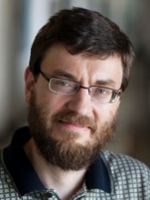
Andrei Seluanov
Seluanov helped link LINE1 transposable-element activity to age-related inflammation and traced naked-mole-rat cancer resistance to hyaluronan, a mechanism now being tested for therapeutic use.
45 / 100scientistrochester.edu/newscenter/arpa-h-funding-retrotransposons-aging-695032 ↗Scoring AI engine · v0.8.0
Profile
Professor at the University of Rochester whose laboratory uses long-lived species to investigate DNA repair, cancer resistance, and the cellular mechanisms that support longevity.
Role
scientisthigh confidence
Seluanov is an author on peer-reviewed aging and longevity-relevant papers investigating age-linked transposable-element methylation, aging proteome changes, and cancer-resistance mechanisms. His documented contribution advances longevity through primary biological research.
Dimension breakdown
This score rates longevity commitment only. The role tags above — scientist, investor, and the rest — say what this person is; we don't score those separately.
Future vision
3.0/ 10
The evidence shows a credible mechanistic research direction—linking cGAS loss, chromatin disruption, transposable-element activation, inflammation, and accelerated aging—and an example of translating comparative-biology findings toward therapy. However, it does not establish that Seluanov has publicly articulated a concrete, durable vision for ending aging, reversing biological decline, or materially extending healthy human lifespan.
low confidence
Scientific impact
9.0/ 10
Seluanov demonstrates field-defining scientific influence in genome stability, transposable elements, DNA repair, inflammation, and comparative cancer resistance. His h-index of 73 and nearly 20,000 citations are reinforced by numerous heavily cited papers, including several directly central to aging biology. The evidence supports exceptional academic impact, though not the very highest score because authorship-specific contributions and broader field-wide leadership are not independently detailed.
high confidence
Capital deployed
N/A
The evidence establishes substantial scientific activity but identifies zero investments, donations, catalytic positions, or capital-backed longevity outcomes. Scientific publications and citations do not constitute capital deployment, so this dimension is inapplicable rather than merely low-scoring.
No public investment, donation, or other capital-deployment activity is evidenced for this scientist.
high confidence
Strategic taste
6.0/ 10
Seluanov shows a coherent scientific bet on learning from unusually long-lived mammals, connecting comparative biology to genome stability, cancer resistance, and potential translation. The naked-mole-rat hyaluronan program is a particularly distinctive choice that produced an influential mechanistic finding and later a therapeutic path. However, the supplied evidence does not establish when or why he formed this thesis, how contrarian it was at inception, or whether his choices were counterfactually decisive for the field.
medium confidence
Field creation
2.0/ 10
Field creation is applicable, but the evidence shows Seluanov participating in established aging-research structures rather than creating a new organization, program, category, community, protocol, or funding path. His executive-committee role and participation in a major collaborative project indicate some field-supporting activity, but not demonstrated field-building leadership.
medium confidence
Bravery and conviction
1.0/ 10
The dimension is applicable, but the supplied evidence documents scientific productivity rather than public risk-taking or conviction. No qualifying bravery exhibit, career sacrifice, sustained stand under criticism, personally significant bet, or self-experimentation is shown.
high confidence
Multiplier effect
6.0/ 10
Seluanov demonstrates meaningful second-order leverage primarily through broad scholarly influence and extensive cross-institutional collaboration. His highly cited research has helped propagate work on genome stability, cancer resistance, and comparative longevity, while large multi-author projects show an ability to convene or participate in substantial research networks. However, the evidence does not establish organization-building, capital mobilization, policy influence, public legitimacy, or attributable follow-on ventures, limiting the score.
medium confidence
Vision
Destination
No canonical quotes yet.
Path
We propose that loss of cGAS leads to loss of chromatin organization, de-repression of transposable elements and induction of inflammation resulting in accelerated aging.
Strategy
No evidence was available to establish Seluanov's investment, donation, or organization-building strategy. His stated research centers on genome stability, DNA repair, cancer resistance, and longevity mechanisms in long-lived mammals. Stage preference, geographic focus, risk appetite, and time horizon are unknown. No notable bets or evidence-supported collaborators can be identified from the supplied material.
UnknownUnknownGenome StabilityDNA RepairCancer ResistanceComparative Longevity Biology
Portfolio
Investments
No public rows yet.
Donations
No public rows yet.
Organizations founded
No public rows yet.
Scientific output
h-index73
Citations-
Papers30
Trials0
Connections
Companies
Collaborators and lineage
No public rows yet.
Criticisms