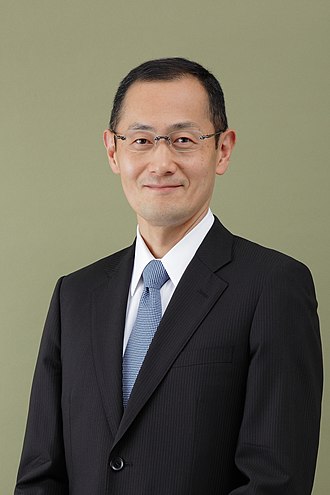
Shinya Yamanaka
Yamanaka gave longevity science its sharpest cell-level reset button: iPS reprogramming. It lets researchers rewind adult cells, model disease, and test regenerative medicine; lifespan claims can wait.
49 / 100scientistoperatorScoring AI engine · v0.4.0
Role
scientisthigh confidence
This is the channel. The evidence shows Yamanaka as an author on multiple peer-reviewed stem-cell papers, including work explicitly tied to aging and cell-fate reprogramming, which is how he moved longevity forward.
Esg1, expressed exclusively in preimplantation embryos, germ ↗Defining developmental potency and cell lineage trajectories ↗Sirt1 plays an important role in mediating greater functiona ↗miRNAs regulate SIRT1 expression during mouse embryonic stem ↗
also: operator
Dimension breakdown
This score rates longevity commitment only. The role tags above — scientist, investor, and the rest — say what this person is; we don't score those separately.
Future vision
4.0/ 10
Yamanaka has a clear translational regenerative-medicine vision around iPS cells, including clinical applications, disease modeling, stem cell therapy, and potentially inexhaustible cell-derived products. However, the provided evidence does not show that he publicly articulated a concrete, durable vision specifically for ending aging, reversing organism-level biological decline, or materially extending healthy human lifespan. The aging connection is present mainly as a research application and mechanistic implication, not as a direct longevity vision.
medium confidence
Scientific impact
6.0/ 10
The dimension applies: the evidence shows primary academic authorship in embryonic stem cell and induced pluripotent stem cell biology, including work on developmental potency mapping, iPS-derived endothelial cells, and SIRT1 regulation during reprogramming. However, no citation metrics are provided, and the supplied papers do not include clear citation-weighted evidence of field-defining impact, so the score should not rely on Yamanaka's broader reputation.
medium confidence
Capital deployed
2.0/ 10
There is limited evidence of institution-building involvement through leadership at CiRA/CiRA Foundation, but no disclosed investments, donations, personal capital deployment, fund allocation amounts, or independently corroborated catalytic funding activity. This supports only a low score for capital deployed, with low confidence.
low confidence
Strategic taste
6.5/ 10
Strategic taste applies because Yamanaka made a field-defining scientific choice around cellular reprogramming that opened major paths for regenerative medicine and aging-relevant research. The evidence supports strong counterfactual importance of the iPS/Yamanaka-factor work, but it does not document an explicit strategy thesis, early contrarian reasoning, funding bets, stage preference, or a broader pattern of thesis-driven deployment choices.
medium confidence
Field creation
8.0/ 10
Yamanaka has strong field-creation evidence through the creation of the iPSC/Yamanaka-factor reprogramming category and protocol, which independent sources describe as broadly enabling new models, regenerative medicine, drug discovery, and cellular aging research. However, the supplied evidence does not show founded organizations, donation-created programs, or funding paths.
medium confidence
Bravery and conviction
2.0/ 10
The dimension applies, but the provided evidence contains almost no direct indicators of public risk-taking, contrarian advocacy, career sacrifice, sustained conviction under criticism, or personal skin in the game. Yamanaka's iPSC discovery was highly consequential and later Nobel-recognized, but scientific importance alone does not establish bravery_conviction under this rubric. A low score is warranted because there is some implicit research conviction in pioneering iPSC work, but the evidence supplied does not document public or personal risk.
low confidence
Multiplier effect
6.0/ 10
Yamanaka shows credible multiplier-effect evidence through the iPSC discovery’s broad follow-on impact across pharmaceutical, clinical, laboratory, regenerative-medicine, cancer, epigenetics, and aging research. The provided evidence also indicates institutional leadership roles at CiRA/CiRA Foundation and advisory roles, but these are from an unknown-independence dossier item and cannot strongly raise the score by themselves. Evidence for capital attraction, founded organizations, policy attention, or documented talent/founder networks is absent.
medium confidence
Vision
Destination
The combination of robust expansion capacity and efficient platelet production means that appropriately selected imMKCL clones represent a potentially inexhaustible source of hPSC-derived platelets for clinical application.
The combination of robust expansion capacity and efficient platelet production means that appropriately selected imMKCL clones represent a potentially inexhaustible source of hPSC-derived platelets for clinical application.
“As a young doctor, I saw many patients suffering from intractable diseases, including my own father. I want to overcome those diseases with science.”
In particular, the medical applications of human iPSCs in disease modeling and stem cell therapy have been progressing rapidly.
Because it is science that could help those patients suffering from, intractable diseases. Not now, but that in the future.
His primary vision is to overcome diseases by delivering iPS cell-based innovative therapeutic options.
“As a young doctor, I saw many patients suffering from intractable diseases, including my own father. I want to overcome those diseases with science.”
Well, so, we are doing our best to expand, health span.
Because it is science that could help those patients suffering from, intractable diseases. Not now, but that in the future.
So I really hope in the next five years, ten years, many of them will be, where to go? More general. Will be approved by the government, by FDA or, PMD in Japan so that many, patients can, have those new therapies.
“As a young doctor, I saw many patients suffering from intractable diseases, including my own father. I want to overcome those diseases with science.”
Path
No canonical quotes yet.
Strategy
No strategy evidence was available for Shinya Yamanaka in the provided materials. Investment, donation, and organization-founding activity are unsupported, so stage preference, risk appetite, geography, and time horizon are unknown. No notable bets can be identified without sourced evidence. No collaborators, co-investors, mentees, mentors, or lineage links are supported by the provided evidence.
UnknownUnknown
Portfolio
Investments
No public rows yet.
Donations
No public rows yet.
Organizations founded
No public rows yet.
Scientific output
h-index-
Citations-
Papers26
Trials0
Bravery and conviction
Belief evolution
Self-experimentation
Connections
Companies
Collaborators and lineage
No public rows yet.
Criticisms