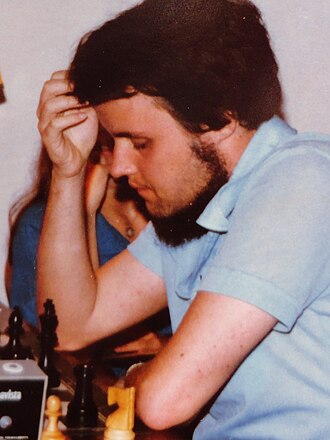
Jean Hébert
Hébert gave brain aging a harder target than pills: progressive cell replacement. In mice, his FGF work also showed old hippocampal neurogenesis could be restored to young-adult levels.
37 / 100scientistentrepreneurScoring AI engine · v0.4.0
Profile
Jean Hébert is a professor in the Departments of Neuroscience and Genetics at Albert Einstein College of Medicine, New York. His laboratory studies brain tissue and cell replacement as a strategy to counter brain aging, progressively replacing aged regions of the brain with young healthy tissue. He is a research-active academic neuroscientist who publishes peer-reviewed work in neuroscience, genetics, and aging biology. The genuine Jean Hébert is this Albert Einstein College of Medicine neuroscience and genetics faculty member, not a same-name author in an unrelated field.
Role
scientisthigh confidence
His longevity impact is plainly through authored peer-reviewed science on reversing brain aging and age-related neurogenesis decline, not through titles or reputation. The evidence shows he personally authored aging-relevant papers, including a programmatic review on cell replacement to reverse brain aging.
FGF Signaling Is Necessary for Neurogenesis in Young Mice an ↗Whole chromosome aneuploidy in the brain of Bub1bH/H and Erc ↗Cell Replacement to Reverse Brain Aging: Challenges, Pitfall ↗
also: entrepreneur
Dimension breakdown
This score rates longevity commitment only. The role tags above — scientist, investor, and the rest — say what this person is; we don't score those separately.
Future vision
7.0/ 10
Jean Hébert has articulated a concrete and ambitious vision centered on progressive brain cell/tissue replacement to reverse brain aging while preserving function. The vision is specific to the neocortex and brain aging, acknowledges technical and identity-related risks, and is supported by related experimental work on reversing age-related neurogenesis decline. However, the evidence is mostly academic rather than broad public advocacy, and there is limited evidence of a durable public theory platform beyond these publications.
medium confidence
Scientific impact
5.0/ 10
Scientific impact applies: Hébert has peer-reviewed primary research in neuroscience and aging biology, including experimental mouse work on reversing age-related neurogenesis decline via FGF signaling and a conceptual review on brain cell replacement. However, no citation metrics, h-index, total citations, most-cited works, clinical trials, or independent evidence of field-defining uptake are provided, so the evidence supports credible specialized scientific contribution but not a high impact score.
medium confidence
Capital deployed
N/A
The provided evidence supports Jean Hébert's research activity in neuroscience and brain aging, but it does not show deployment of personal capital, philanthropy, investment allocation, grantmaking, or institution-building resources toward longevity. Under the rubric, capital_deployed is therefore truly inapplicable on the supplied record.
No public evidence of capital deployment activity; evidence depicts him as an academic scientist rather than an investor, donor, funder, or institution-builder.
high confidence
Strategic taste
5.0/ 10
The evidence supports a coherent and somewhat contrarian research thesis around reversing brain aging through progressive brain cell or tissue replacement, rather than conventional druggable anti-aging targets. This shows strategic taste in choosing a difficult, underexplored longevity-relevant path, but the supplied evidence does not establish broad field-shaping influence, early counterfactual importance, institutional bets, or adoption by others.
medium confidence
Field creation
1.0/ 10
The evidence shows Jean Hebert contributing scientific ideas and peer-reviewed work relevant to brain aging and cell replacement, but it does not show creation of organizations, programs, communities, protocols, funding paths, or field infrastructure that made longevity work more legible or accessible for others. The dimension applies, but the provided evidence is sparse for field creation specifically.
medium confidence
Bravery and conviction
2.0/ 10
The dimension applies, but the evidence for bravery/conviction is thin. Hébert publicly explored a bold and potentially fringe-adjacent strategy: progressive brain cell replacement to reverse brain aging, including the difficult question of whether the brain can be replaced without altering identity. However, the evidence provided is mainly cautious academic argumentation, not clear public risk-taking, career sacrifice, sustained criticism, unusually large personal bet, or self-experimentation.
medium confidence
Multiplier effect
2.0/ 10
The multiplier_effect dimension applies, but the supplied evidence shows only limited second-order leverage. Hébert has peer-reviewed work articulating brain cell replacement as an aging-reversal research direction, which could influence scientific agendas, but there is no evidence here of founded organizations, capital formation, policy influence, public legitimacy campaigns, major collaborators beyond coauthorship, or follow-on projects attributable to him.
low confidence
Vision
Destination
Turning Old Brains Into Young
His personal mission remains unchanged: to beat aging
“I am in conversation with all these groups because, you know, not only is my brain slowly deteriorating, but so is the rest of my body,” says Hébert. “I'm going to need other body parts as well.”
“I just prefer life over this slow degradation into nonexistence that biology has planned for all of us.”
But defeating death is Hébert's stated aim.
So I think it's really important to think of if we want to beat aging, to do that at a tissue level, tissue or greater level.
Here, we consider whether progressive cell replacement is a potential approach to reverse brain aging without grossly altering function.
Here, we consider whether progressive cell replacement is a potential approach to reverse brain aging without grossly altering function.
Path
No canonical quotes yet.
Strategy
No strategy evidence was available for Jean Hébert [S0]. Investments, donations, and organizations founded were not found in the supplied evidence [S0]. Stage preference, geography focus, risk appetite, and time horizon are therefore unknown [S0]. No evidence-backed notable bets or collaborators can be identified from the provided material [S0].
UnknownUnknown
Portfolio
Investments
Donations
Organizations founded
Scientific output
h-index-
Citations-
Papers6
Trials0
Bravery and conviction
Self-experimentation
Criticisms