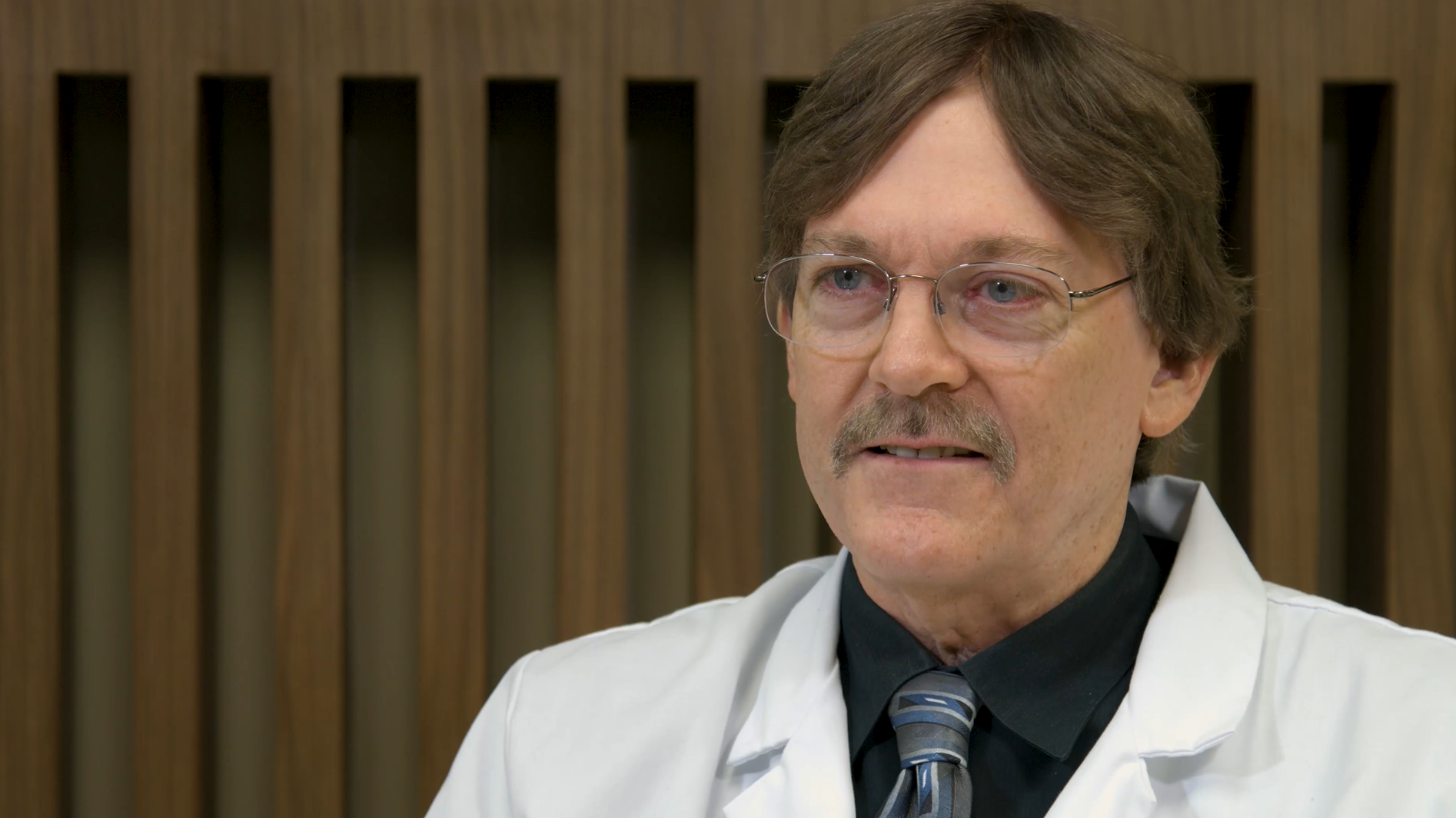
Gregory Fahy
Fahy reported early human evidence of partial thymic regeneration and identified cryopreservation as a key requirement for organ banking. The thymus result came from one informal case.
Profile
Chief Scientific Officer of Intervene Immune and a longtime cryobiology researcher who led the TRIIM study of thymus regeneration, immunorestoration, and biological-age measures.
Role
scientisthigh confidence
Fahy authored multiple peer-reviewed longevity-relevant papers, including the TRIIM human thymus-regeneration and epigenetic-aging study. His primary documented longevity contribution is this original cryobiology and immune-rejuvenation research.
Apparent induction of partial thymic regeneration in a norma ↗Identification of potential caloric restriction mimetics by ↗Cryopreservation of complex systems: the missing link in the ↗Insights on cryoprotectant toxicity from gene expression pro ↗
also: operator
Dimension breakdown
This score rates longevity commitment only. The role tags above — scientist, investor, and the rest — say what this person is; we don't score those separately.
Future vision
7.0/ 10
Fahy has articulated an ambitious, technically specific vision in which tissue engineering, stem-cell-derived organs, and organ banking could dramatically increase median life expectancy, alongside exploration of radical life extension. His sustained work on thymic regeneration, caloric-restriction mimetics, and cryopreservation gives this vision durable scientific grounding. However, the evidence does not establish a detailed timeline, comprehensive roadmap for ending aging, or repeated explicit public commitments to that ultimate goal.
medium confidence
Scientific impact
5.0/ 10
Fahy has credible scientific output spanning thymic regeneration, caloric-restriction mimetics, and cryopreservation, including early human evidence and translationally relevant research. However, no citation metrics are available to establish field-defining influence, and the thymic-regeneration evidence presented is primarily a single-subject, informal study. The record supports meaningful scientific contribution but not a high-impact score under a citation-first rubric.
medium confidence
Capital deployed
N/A
This dimension is inapplicable on the provided record. The structured facts identify zero investments and zero donations, with no independently rated investees or capital-backed longevity outcomes. Fahy's research and company affiliations do not establish that he personally deployed capital.
No public investment, donation, or other capital-deployment activity is evidenced for Fahy; the supplied sources document scientific work rather than financing outcomes.
high confidence
Strategic taste
6.5/ 10
Fahy showed early, contrarian scientific taste by pursuing human thymic regeneration in 2003 and framing cryopreservation as a critical regenerative-medicine bottleneck in 2006. These choices were thesis-coherent with extending healthy lifespan through immune restoration and organ replacement infrastructure. However, the evidence does not establish a broader selection strategy, strong validation, field-wide adoption, or a clear counterfactual showing that these bets materially redirected longevity research.
medium confidence
Field creation
4.0/ 10
Fahy helped establish a distinctive human thymus-regeneration research protocol and led the TRIIM trial, making immune rejuvenation a more concrete longevity research direction. However, the evidence does not show that he founded an organization, built a broad community or funding pathway, or achieved field-defining adoption beyond his research program.
medium confidence
Bravery and conviction
2.0/ 10
Fahy publicly pursued unconventional thymic-regeneration and organ-cryopreservation research, including reporting an informal human intervention, which provides a limited signal of scientific conviction. However, the evidence does not establish that he was the volunteer, personally accepted risk, sacrificed career or capital, faced serious criticism, or persisted despite documented opposition.
medium confidence
Multiplier effect
3.0/ 10
Fahy’s research helped articulate organ banking as an enabling technology for transplantation and regenerative medicine, and his publications demonstrate sustained collaboration across institutions. However, the evidence does not establish substantial second-order outcomes such as attracting capital or talent, building organizations or coalitions, influencing policy, inspiring founders, or generating documented follow-on programs.
medium confidence
Vision
Destination
The Future of Aging Edited by Dr. Greg Fahy, exploring pathways to radical life extension.
Path
Full development of tissue engineering and organ generation from stem cells, when combined with the ability to bank these laboratory-produced products, in theory could dramatically increase median life expectancy even in the absence of any improvements in mitigating aging processes on a fundamental level.
Publicly endorses Cryopreservation and biostasis preserve complex tissue structure and functionPublicly endorses Extended Organ Preservation Expands Transplant AccessPublicly endorses Extended organ preservation increases transplant access and outcomes
Strategy
No evidence of an investment, donation, organization-building, or project-selection strategy was provided [S1]. Consequently, no primary thesis or stage preference can be established [S1]. Risk appetite, geographic focus, and time horizon are also unknown [S1]. The supplied professional biography alone is insufficient to infer a broader strategy [S1].
UnknownUnknown
Portfolio
Investments
No public rows yet.
Donations
No public rows yet.
Organizations founded
No public rows yet.
Scientific output
h-index-
Citations-
Papers8
Trials0
Belief evolution
Connections
Companies
Collaborators and lineage
No public rows yet.