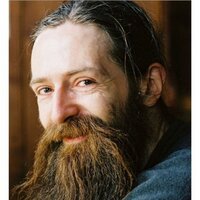
Aubrey de Grey
He made SENS-style damage repair a durable longevity agenda: 325 works, 4,733 citations, and public pushes for political attention. Not proof of therapies. Proof of agenda-setting.
Role
populariserhigh confidence
This is the clearest channel: he founded and initiated the field's public and institutional infrastructure through SENS, Methuselah, LEV, the Mouse Prize, and SENS conferences. Delete that field-building machinery and his longevity impact shrinks the most.
The Path to a 1,000-Year Lifespan with Dr. Aubrey de Grey ↗Longevity Escape Velocity (LEV) Foundation ↗
also: scientist, philanthropist, entrepreneur
Dimension breakdown
This score rates longevity commitment only. The role tags above — scientist, investor, and the rest — say what this person is; we don't score those separately.
Future vision
10.0/ 10
Aubrey de Grey has repeatedly articulated a highly ambitious, concrete, and durable vision centered on defeating aging, reversing age-related decline, and achieving longevity escape velocity. The evidence includes explicit public mission language, a named book-length vision, organizational research programs, and consistent advocacy framing over time.
high confidence
Scientific impact
7.0/ 10
Aubrey de Grey has clear scientific impact by citation-weighted evidence, but the bibliometrics indicate influential agenda-setting work rather than top-tier field-defining citation dominance. OpenAlex reports h-index 29, 4,733 citations, and several moderately cited foundational or conceptual aging/SENS works, with the most-cited work at 352 citations. This supports substantial influence on the longevity research agenda, especially through rejuvenation and mitochondrial/free-radical theory framing, but falls short of a 9-10 profile because there is no evidence here of very highly cited primary discoveries, clinical translation, or landmark experimental programs.
high confidence
Capital deployed
4.0/ 10
Capital deployment applies because the evidence indicates longevity institution-building roles, but the provided record contains no disclosed personal investments, donations, fund allocations, or high-confidence amounts. The strongest capital-related signal is founding/co-founding longevity organizations, yet that is only weakly corroborated here and does not establish scale of capital deployed.
low confidence
Strategic taste
8.0/ 10
Aubrey de Grey shows strong strategic_taste evidence through a coherent, high-risk, field-building thesis around rejuvenation biotechnology: create nonprofit institutions, promote comprehensive prevention/reversal of age-related disease, and run translational programs such as combined rejuvenation interventions in mice and organ/tissue cryopreservation. The evidence supports early, contrarian, thesis-driven bets that plausibly opened paths in longevity research and advocacy, though it is largely self-published and lacks strong independent counterfactual validation or dated evidence for some earlier institutional bets.
medium confidence
Field creation
8.0/ 10
The evidence directly attributes creation or co-creation of multiple longevity-relevant organizations to de Grey, including SENS Research Foundation, Methuselah Foundation, LEV Foundation, and Repair Biotechnologies. That is strong field-creation evidence because these are organizational vehicles and categories for rejuvenation-focused work. Confidence is limited by sparse independent corroboration of the founding roles and limited evidence about downstream scale or durability.
medium confidence
Bravery and conviction
8.0/ 10
Aubrey de Grey has strong evidence for bravery/conviction through public contrarian advocacy for treating aging as mutable and for extreme life extension, sustained defense of anti-deathist/longevity positions, and an early damage-repair strategy that later became more broadly accepted. The evidence is especially strong for public and field-level conviction, though less complete for personal sacrifice, financial downside, or self-experimentation.
medium confidence
Multiplier effect
7.0/ 10
The evidence supports substantial field-building leverage: de Grey is credited with founding four longevity-related organizations, has a sizable citation footprint, and is linked to advocacy and policy attention around biomedical gerontology. This indicates influence beyond direct research output, though the provided evidence is stronger for institution-building and intellectual visibility than for independently documented capital attraction, founder formation, or downstream project outcomes.
medium confidence
Vision
Destination
Extreme Human Longevity: The Fraught Intersection of Historical and Scientific Research.
A unified model of aging and loss of regenerative potential is emerging that may ultimately be translated into new therapeutic approaches for establishing induced tissue regeneration and modulation of the embryo-onco phenotype of cancer.
Ending Aging: The Rejuvenation Breakthroughs That Could Reverse Human Aging in Our Lifetime (2007)
Rather, he thinks that combining more treatments can target multiple aspects of age-related damage to drive further lifespan extension.
“We just have to make aging the new COVID,” said Aubrey de Grey.
Now is the time for the field to take this key step toward the medical control of aging.
Building on the success of his first two foundations, LEVF was conceived specifically to identify and address the most challenging obstacles on the path to widespread deployment of functional human rejuvenation therapies.
reversing the age-related decline in regenerative capacity
to propose an “X Prize for longevity” : a competition to demonstrate progress in rejuvenation medicine for human patients.
with the unabashed goal of supporting ambitious work on the control of aging, and the extension of healthy human lifespans.
for each category, de Grey found there appeared to be a general solution : a strategy that in principle could repair the body, restoring the resilience of youth to patients regardless of their age.
Aubrey de Grey: Rejuvenation Technology — Will "Age" Soon Cease to Mean "Aging"?
Path
No canonical quotes yet.
Publicly endorses Intracellular cholesterol clearance reverses atherosclerotic plaque
Strategy
Build and promote rejuvenation biotechnology platforms aimed at comprehensively preventing or reversing age-related disease.
Aubrey de Grey's strategy centers on institution-building for rejuvenation biotechnology, most clearly through LEV Foundation, which frames its mission as research to comprehensively cure and prevent human age-related disease [S7]. The operating model appears early-stage and translational: LEV's flagship Robust Mouse Rejuvenation study tests combinations of known therapies in rodents, while Transplants On-Demand funds cryopreservation technology for tissue and organ banking [S7]. His advocacy extends beyond research into policy conditions for experimental therapies, as shown by his comment on New Hampshire HB 1735 and follow-up legislation [S2]. The collaboration pattern is field-building rather than conventional investing, including Brian Kennedy on the Dublin Longevity Declaration and Human Longevity, Inc. on exceptional-longevity biology [S7]. Public messaging continues to emphasize a broad campaign against aging, with his X profile describing him as President and CSO of LEV Foundation and leading a global effort to defeat aging [S6].
EarlyHighRejuvenation BiotechnologyAge-Related DiseaseMouse Longevity StudiesOrgan PreservationLongevity AdvocacyUnited StatesLos Gatos, CANew Hampshire
Notable bets
Portfolio
Investments
Donations
Organizations founded
Scientific output
h-index29
Citations-
Papers9
Trials0
Bravery and conviction
Belief evolution
Self-experimentation
Connections
Companies
Collaborators and lineage
Criticisms