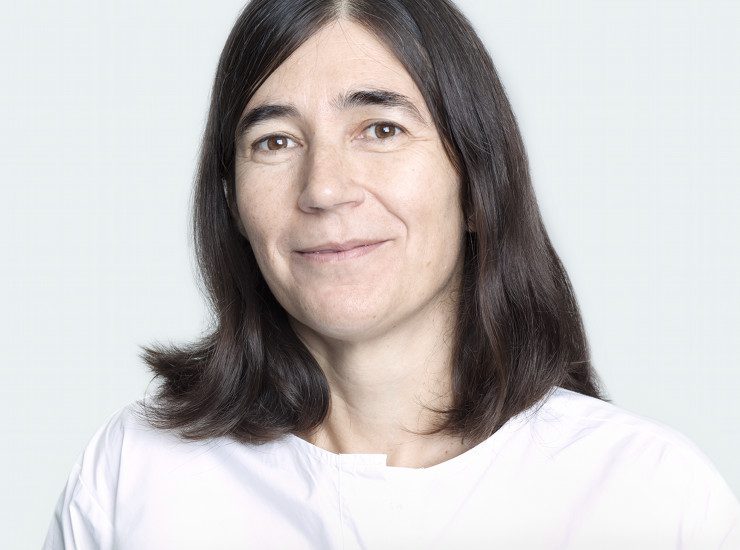
Maria Blasco
Blasco helped shape modern telomere biology. Her 508 papers have drawn more than 71,000 citations, including foundational work linking telomerase loss, aging, and cancer.
53 / 100scientistoperatorcnio.es/en/research-innovation/scientific-programmes/molecular-oncology-programme/telomeres-and-telomerase-group ↗Scoring AI engine · v0.8.0
Profile
Scientific director of the Spanish National Cancer Research Centre and leader of its Telomeres and Telomerase Group, studying how telomere biology shapes aging, cancer, and regenerative capacity.
Role
scientisthigh confidence
Her authored peer-reviewed work directly advances longevity science through telomere biology, DNA damage, and telomerase interventions for age-related disease. This is the clear channel of her longevity impact.
Maria Blasco — OpenAlex citation metrics ↗Slower rates of accumulation of DNA damage in leukocytes cor ↗The mTOR pathway is necessary for survival of mice with shor ↗Telomerase treatment prevents lung profibrotic pathologies a ↗
also: operator
Dimension breakdown
This score rates longevity commitment only. The role tags above — scientist, investor, and the rest — say what this person is; we don't score those separately.
Future vision
6.0/ 10
Blasco presents a durable and scientifically specific vision centered on targeting telomeres and telomerase to treat age-related disease and promote healthy aging. Proposed routes include telomerase gene therapy, telomerase reactivation for fibrosis, and young small-extracellular-vesicle treatment. However, the evidence does not show a clearly articulated destination for ending aging or materially extending human lifespan, nor timelines, clinical milestones, or sustained public advocacy for such an overarching goal.
medium confidence
Scientific impact
9.5/ 10
Exceptional citation-weighted impact indicates field-defining influence in aging and telomere biology. An h-index of 117, more than 71,000 citations, and multiple foundational papers exceeding 1,000 citations demonstrate influence far beyond publication volume.
high confidence
Capital deployed
N/A
The supplied evidence documents substantial scientific activity but no deployment of investment or philanthropic capital. Scientific publications, citations, and awards do not make the capital_deployed dimension applicable.
No public capital deployment activity is evidenced; Maria Blasco is presented as a scientist, with zero investments or donations found.
high confidence
Strategic taste
6.0/ 10
Blasco’s sustained focus on telomeres and telomerase represents a coherent scientific thesis connecting aging, cancer, and regenerative capacity. Her highly cited mouse studies from the late 1990s suggest an early, productive commitment to this research direction. However, the evidence does not establish that these choices were contrarian, uniquely catalytic, or counterfactually decisive for the field, so a top-tier score is not justified.
medium confidence
Field creation
2.0/ 10
Blasco contributed to field-building by locally organizing an international healthy-aging conference, but the evidence does not show that she created a new organization, program, category, community, protocol, or funding pathway.
medium confidence
Bravery and conviction
1.0/ 10
The dimension is applicable, but the supplied evidence documents scientific productivity and recognition rather than public risk-taking or conviction. No evidence establishes a contrarian stance, career sacrifice, a personally significant bet, persistence under serious criticism, or self-experimentation.
high confidence
Multiplier effect
7.0/ 10
Blasco demonstrates substantial scholarly multiplier effects: a large, highly cited body of work has influenced aging and telomere research well beyond her direct experiments, while multi-institutional publications indicate broad collaboration. However, the evidence does not establish comparable leverage through organization-building, capital deployment, policy influence, or founder formation.
medium confidence
Vision
Destination
No canonical quotes yet.
Path
We propose that young sEV treatment can promote healthy aging.
These findings suggest that short telomeres associated with physiological aging are at the origin of IPF and that a potential treatment for IPF based on telomerase activation would be of interest not only for patients with telomerase mutations but also for sporadic cases of IPF associated with physiological aging.
Establishing reactivation of telomerase activity as a unified therapeutic approach for fibrosis.
Study the role of telomeres and telomerase as therapeutic targets for cancer and age-related diseases.
Telomerase gene therapy in telomere syndromes and age-related diseases.
Strategy
Blasco’s research focus spans telomeres, telomerase, aging, cancer, and regenerative capacity, but no evidence establishes an investment or philanthropic strategy [S# unavailable]. No investments, donations, or founded organizations were identified [S# unavailable]. Her preferred stage, geography, risk appetite, and time horizon are therefore unknown [S# unavailable]. No evidence-backed notable bets or collaborators can be attributed [S# unavailable].
UnknownUnknownTelomere BiologyTelomeraseAgingCancerRegenerative Capacity
Portfolio
Investments
No public rows yet.
Donations
No public rows yet.
Organizations founded
No public rows yet.
Scientific output
h-index117
Citations-
Papers29
Trials0
Criticisms