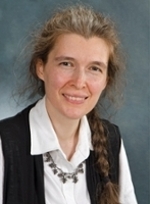
Vera Gorbunova
Gorbunova used long-lived mammals as natural experiments, helping identify links between naked-mole-rat cancer resistance, SIRT6-driven DNA repair, genome stability and longevity.
57 / 100scientistpopulariserurmc.rochester.edu/news/publications/rochester-medicine/aging-reimagined-a-new-view-of-old-age ↗Scoring AI engine · v0.8.0
Profile
Professor at the University of Rochester whose comparative biology research studies exceptionally long-lived mammals to uncover mechanisms of genome stability, cancer resistance, and longevity.
Role
scientisthigh confidence
Her authored peer-reviewed papers directly investigate mechanisms of ageing, DNA repair, cancer resistance, and geromedicine; primary research is plainly her dominant longevity channel.
SIRT5 slows skeletal muscle ageing by alleviating inflammati ↗From geroscience to precision geromedicine: Understanding an ↗Limited cell-autonomous anticancer mechanisms in long-lived ↗Longevity steps on the cGAS. ↗
also: populariser
Dimension breakdown
This score rates longevity commitment only. The role tags above — scientist, investor, and the rest — say what this person is; we don't score those separately.
Future vision
8.0/ 10
Gorbunova presents an ambitious and relatively concrete vision of translating longevity biology into therapies that restore whole-body function and extend healthy lifespan. Multiple roadmap and research-building activities demonstrate durable commitment, although the evidence lacks a defined development timeline and clear proof that every quoted roadmap statement reflects her individual position.
medium confidence
Scientific impact
9.0/ 10
Field-defining scientific influence is strongly supported by an h-index of 82, more than 27,000 citations, and several heavily cited foundational papers on transposable elements, cellular senescence, DNA repair, SIRT6, and naked-mole-rat cancer resistance. These metrics and topic-relevant landmark works demonstrate impact well beyond publication volume.
high confidence
Capital deployed
N/A
The evidence documents substantial scientific activity but identifies no investments, donations, or other capital deployments attributable to Vera Gorbunova. Scientific publications and citations are not evidence of capital deployed, so this dimension is inapplicable on the supplied record.
No public capital deployment activity is evidenced for this research-focused scientist.
high confidence
Strategic taste
7.0/ 10
Gorbunova demonstrates a coherent and scientifically productive strategy: treating exceptionally long-lived mammals as natural experiments for identifying mechanisms of genome stability, cancer resistance, and longevity. The influential naked mole-rat hyaluronan and SIRT6/DNA-repair work suggests that this thesis opened valuable research paths. However, the evidence does not establish when these bets were made, how contrarian they were at inception, or a strong counterfactual showing that the field would have missed these paths without her.
medium confidence
Field creation
3.0/ 10
Gorbunova is credited as co-founder of the Rochester Aging Research Center, a community intended to coordinate basic and translational aging researchers. This is relevant field-building, but the supplied sources do not independently attest the center's existence, activity, reach, durability, or outcomes, and the structured facts list it as inactive. The academic papers demonstrate scientific participation rather than creation of field infrastructure.
low confidence
Bravery and conviction
0.0/ 10
The dimension applies, but the supplied evidence establishes scientific productivity and impact rather than public risk-taking or conviction. No evidence demonstrates a contrarian stance, career sacrifice, a consequential personal bet, persistence under serious criticism, or self-experimentation.
high confidence
Multiplier effect
7.0/ 10
Gorbunova demonstrates substantial field-building leverage through co-founding an aging-research center and producing research that has influenced a large body of subsequent work. Independent bibliometrics corroborate unusually broad scholarly reach, while major multi-institutional collaborations show network effects beyond her laboratory. However, the evidence does not establish the center's scale, talent-development outcomes, capital attracted, policy influence, or downstream ventures.
medium confidence
Vision
Destination
We propose a roadmap to guide research and innovation integrating replacement and next-generation damage-removal therapeutics to modulate the ageing process in the whole body, restore biological function, and extend healthy lifespan.
Path
Overall, this work highlights current key research questions in ageing biology and offers a roadmap for fostering future progress in biogerontology.
The first workshop dedicated to replacement as an ageing intervention at the Aging Research & Drug Discovery 2025 conference helped prioritise key challenges, opportunities, and future directions to address the need for preventive replacement and bioengineering technologies capable of inducing systemic and sustained rejuvenation across cells, tissues, and regulatory networks.
We provide guidance for the development of gerotherapeutics, which will rely on the technological progress of the diagnostic toolbox to measure residual risk in elderly individuals.
Vera Gorbunova , PhD , and Andrei Seluanov , PhD , formed RoAR, Rochester Aging Research Center, bringing together investigators in basic and translational research at the Medical Center and River Campus through seminars, an Aging Research Day, pilot grants to advance the work, and ways to collaborate.
Publicly endorses SIRT6 suppresses liver fibrosis in MASHPublicly endorses Centenarian SIRT6 improves genome maintenance
Strategy
Use comparative biology of exceptionally long-lived mammals to identify natural mechanisms of genome stability, cancer resistance, and longevity.
Gorbunova's research strategy uses exceptionally long-lived mammals as natural models for discovering mechanisms of longevity and cancer resistance [S1]. Her stated scientific focus connects comparative biology with genome stability, cancer resistance, and aging biology [S1]. She co-founded the Rochester Aging Research Center, indicating an organizational commitment to building an aging-research community [S1]. No evidence establishes an investment stage preference, geography, risk appetite, time horizon, or specific collaborators [S1].
UnknownUnknownComparative BiologyGenome StabilityCancer ResistanceLongevity Mechanisms
Notable bets
Portfolio
Investments
No public rows yet.
Donations
No public rows yet.
Organizations founded
Scientific output
h-index82
Citations-
Papers26
Trials0
Belief evolution
Connections
Companies
Collaborators and lineage
No public rows yet.
Criticisms