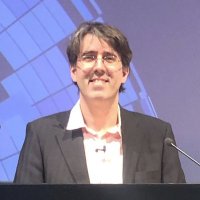
João Pedro de Magalhães
Magalhães helped build aging biology’s plumbing: genomic and longevity databases that became highly cited tools, not just another pile of anti-aging slogans.
60 / 100scientistphilanthropistentrepreneur@jpsenescencejp.senescence.info ↗Scoring AI engine · v0.4.0
Role
scientisthigh confidence
The evidence shows repeated, direct authorship of peer-reviewed aging papers, including Nature, Science, Nature Genetics, Aging, and Ageing Research Reviews. His longevity impact plainly runs through producing aging science and aging datasets, not through title inflation.
João Pedro de Magalhães — OpenAlex citation metrics ↗Distinguishing between driver and passenger mechanisms of ag ↗Somatic mutations in human ageing: New insights from DNA seq ↗Evidence of a pan-tissue decline in stemness during human ag ↗
also: philanthropist, entrepreneur
Dimension breakdown
This score rates longevity commitment only. The role tags above — scientist, investor, and the rest — say what this person is; we don't score those separately.
Future vision
8.0/ 10
João Pedro de Magalhães has unusually explicit and durable public future-vision evidence: he frames aging biology as manipulable, connects that to interventions preserving health and combating disease, publicly identifies with transhumanist ambitions to exceed current human limits, and has repeated path-level scientific statements about mechanisms, biomarkers, cancer trade-offs, stemness loss, and cryotechnology. The vision is ambitious and public, though somewhat split between broad futurist/transhumanist framing and research-program statements rather than a single detailed roadmap for ending aging.
medium confidence
Scientific impact
8.0/ 10
Primary citation metrics show substantial field-level scientific influence: h-index 74, 18,946 citations, 298 works, and multiple heavily cited papers/databases in aging genomics and longevity resources. The most-cited works indicate both direct scientific contributions and enabling infrastructure for the field, especially Human Ageing Genomic Resources and longevity-record databases. Impact appears strong and agenda-shaping, though not at the very highest field-defining tier because the top-cited works are influential but mostly in the hundreds to low-thousands of citations and there is no clinical/translational trial evidence provided.
high confidence
Capital deployed
1.0/ 10
There is no credible evidence of João Pedro de Magalhães deploying personal capital, philanthropy, fund allocations, or disclosed institutional funding toward longevity. The evidence shows scientific, academic, entrepreneurial, CSO, advisory, and database-building activity, but not capital deployment amounts or funding control. Thin evidence supports only a very low score rather than N/A because some institution-building or company roles are present.
low confidence
Strategic taste
7.0/ 10
The evidence supports a strong strategic_taste score: de Magalhães appears to have pursued a coherent, early, infrastructure-oriented thesis around aging as a manipulable biological process, combining academic lab-building, public aging databases, and later biotech-facing roles. His Human Ageing Genomic Resources and longevity-record database work are especially relevant because they suggest field-enabling knowledge infrastructure rather than only individual papers. However, the evidence is mostly self-published or bibliometric, with limited independent detail on timing, contrarian nature, counterfactual importance, or the specific impact of commercial bets, so the score should not be field-defining.
medium confidence
Field creation
5.0/ 10
The dimension applies: the evidence indicates Magalhães founded aging/longevity-oriented entities and maintained Senescence.info-related infrastructure, which supports some field-building credit. However, the usable evidence is mostly self-published or weakly sourced, and the independent sources provided do not corroborate the specific field-creation achievements, so the independence gate caps the score at 5.
low confidence
Bravery and conviction
6.0/ 10
The evidence shows repeated public conviction on contested longevity-adjacent positions: ethical defense of longevity research, burden-shifting against critics of anti-aging work, public transhumanist positioning, and serious engagement with structural brain preservation. This supports contrarian stance and sustained public defense, but the record provided does not show major personal sacrifice, severe backlash endured, large personal financial risk, or direct self-experimentation, so the score should be moderate rather than high.
medium confidence
Multiplier effect
7.0/ 10
Strong bibliometric evidence and repeated highly cited aging-database/resource papers indicate substantial second-order leverage through field infrastructure and follow-on scientific use. His lab and Oxford Cryotechnology add organization-building evidence, but the record here is thin on capital attraction, policy influence, founder creation, or public-legitimacy effects, so this is not field-defining across the full multiplier rubric.
medium confidence
Vision
Destination
Technology will allow us to 'hack' biology and evolve beyond our current human limits, a philosophy known as transhumanism.
The moral baseline must flip: the burden now falls on defenders of forced ageing to explain why preventable suffering should continue.
I think we need to be honest about what the ultimate goal is: to completely abolish age-related diseases.
I think we need to be honest about what the ultimate goal is: to completely abolish age-related diseases.
The moral baseline must flip: the burden now falls on defenders of forced ageing to explain why preventable suffering should continue.
The moral baseline must flip: the burden now falls on defenders of forced ageing to explain why preventable suffering should continue.
I argue that curing aging is scientifically possible and not even the most challenging enterprise in the biosciences.
The scientific quest for lasting youth: prospects for curing aging
I would like our work to contribute to the development of interventions that preserve health and combat disease by manipulating the ageing process.
Curing aging would be a transformative shift in how human societies work, in everything.
I would like our work to contribute to the development of interventions that preserve health and combat disease by manipulating the ageing process.
Scientist planning to live forever (so far so good!), professor decoding the genome @unibirmingham, geek, entrepreneur, speaker, writer, keen footballer.
Path
No canonical quotes yet.
Publicly endorses Epigenetic aging is reversible by partial reprogrammingPublicly endorses Novel cryoprotectants reduce preservation injuryPublicly endorses Transient Yamanaka factor expression rejuvenates without full identity lossPublicly endorses Brain-targeted rejuvenation can treat Alzheimer's disease
Strategy
Build foundational aging knowledge infrastructure and academic-commercial platforms to enable interventions that manipulate aging and preserve health.
João Pedro de Magalhães’ strategy centers on aging biology as an intervention point, with an explicit aim to manipulate the aging process to preserve health and combat disease [S2]. He appears to combine academic platform-building with public knowledge infrastructure, including his University of Birmingham lab and senescence.info [S2]. His self-description as a scientist, futurist, entrepreneur, and professor decoding the genome supports a strategy that spans basic biogerontology, data resources, and translational biotech [S1][S2]. The evidence also points to a UK-centered operating base, especially Birmingham and Oxford [S1][S2]. His roles at YouthBio Therapeutics and as founder of Oxford Cryotechnology suggest commercial engagement, but the available evidence does not support specific investment or donation patterns [S2].
EarlyMediumAging BiologyLongevity DatabasesMolecular BiogerontologyHealthspan InterventionsBiotech TranslationBirminghamOxfordEngland
Notable bets
Portfolio
Investments
No public rows yet.
Donations
Organizations founded
Scientific output
h-index74
Citations-
Papers32
Trials0
Bravery and conviction
Belief evolution
Self-experimentation
Connections
Companies
Collaborators and lineage
Criticisms