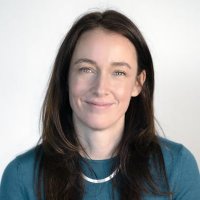
Kristen Fortney
Fortney helped drag aging biology toward drug development: BioAge plus 50 papers, 1,614 citations, and work on aging biomarkers and drug networks. Not a miracle claim; a real translational footprint.
46 / 100entrepreneurscientistScoring AI engine · v0.4.0
Role
entrepreneurhigh confidence
The clearest longevity contribution in front of us is that she founded and built BioAge/BioAge Labs, an operating company developing therapies by targeting the biology of aging. If you delete that venture-building channel, her demonstrated longevity footprint shrinks the most.
also: scientist
Dimension breakdown
This score rates longevity commitment only. The role tags above — scientist, investor, and the rest — say what this person is; we don't score those separately.
Evidence is still sparse for this hero. Scores are shown with low-confidence warnings until more source material is harvested.
Future vision
7.0/ 10
Fortney has a clear and consistent translational geroscience vision: use human aging biology, multi-omics data, biomarkers, longevity studies, and drug-development protocols to identify interventions for age-related disease and potentially slow aging. The vision is concrete and durable, but the evidence is more platform/pathway-oriented than a field-defining public manifesto for ending aging or reversing decline.
medium confidence
Scientific impact
6.0/ 10
Kristen Fortney has credible direct scientific impact in longevity and computational biology, anchored by primary OpenAlex metrics: h-index 20, 1,614 citations, 50 works, and several aging/longevity-related papers with meaningful citation counts. This indicates solid influence on biomarkers of aging, longevity genetics, and drug/network biology, but the citation profile is moderate rather than field-defining.
high confidence
Capital deployed
3.0/ 10
There is limited evidence of longevity-relevant institution building through Fortney's role as co-founder and CEO of BioAge, but no disclosed personal capital, donations, fund allocations, investment amounts, or independently corroborated capital deployment are provided. The dimension applies, but the evidence supports only a low score.
low confidence
Strategic taste
3.0/ 10
Strategic taste applies because Fortney founded/co-founded a longevity-related biotech company, BioAge, and her earlier work shows a coherent technical orientation toward aging biomarkers, computational biology, drug repurposing, and translational aging biology. However, the provided evidence does not establish a clear public thesis, timing, contrarianity, stage/risk preferences, or counterfactual importance of her strategic choices. The strongest case is pattern coherence from computational aging biology into company-building, but the evidence is too thin to support a high score.
low confidence
Field creation
6.0/ 10
Fortney has credible field-creation evidence through founding/co-founding BioAge/BioAge Labs, a company aimed at developing therapies for age-related conditions by targeting human aging biology. Independent academic sources corroborate BioAge's role in longevity-relevant translational research, including age-specific COVID-19 therapeutic work and aging biomarker validation. However, the evidence is sparse, partly duplicative, and does not show broader field-defining infrastructure, community creation, protocols, or funding pathways.
medium confidence
Bravery and conviction
2.0/ 10
The dimension applies, but the provided evidence shows mainly longevity-sector leadership and research involvement, not clear public risk-taking, contrarian advocacy, sacrifice, criticism endured, or personal risk. Co-founding and leading BioAge suggests some conviction in translating aging biology into therapies, but the evidence does not establish meaningful downside or bravery under the rubric.
low confidence
Multiplier effect
5.0/ 10
Fortney has credible multiplier-effect evidence through company-building around BioAge/BioAge Labs and a moderately cited scientific record that likely contributes public legitimacy and follow-on translational activity. However, the provided evidence does not document concrete second-order outcomes such as capital attracted, major talent networks, policy influence, collaborator ecosystems, founder spinouts, or field-wide institutional leverage, so the score should not exceed the midrange.
medium confidence
Vision
Destination
Broad implementation of such protocols could support the development of safer and more effective therapeutics for chronic diseases, while opening new avenues for discovery of substances that could slow down the rate of aging, known as geroprotectors.
Advances in aging research hold out hope for greatly slowed aging with associated good health.
Kristen Fortney is the co-founder and CEO of BioAge, a clinical-stage biotechnology company developing a pipeline of treatments to extend healthy lifespan by targeting the molecular causes of aging.
BIOAGE discovers and develops drugs to treat aging and associated diseases. ... Kristen Fortney CEO & Co-Founder.
Kristen Fortney is the co-founder and CEO of BioAge, a clinical-stage biotechnology company developing a pipeline of treatments to extend healthy lifespan by targeting the molecular causes of aging.
BioAge Labs, a clinical-stage biotechnology company developing a pipeline of treatments to extend healthy lifespan by targeting the molecular causes of aging.
Kristen Fortney is the co-founder and CEO of BioAge, a clinical-stage biotechnology company developing a pipeline of treatments to extend healthy lifespan by targeting the molecular causes of aging.
Path
No canonical quotes yet.
Publicly endorses Human multi-omics aging mediators drive age-related diseasePublicly endorses Aging is a modifiable primary risk factor for diseasePublicly endorses Metabolic healthspan requires mechanisms beyond weight loss
Strategy
No direct strategy evidence was available, so Fortney's investment, donation, stage, geography, risk, and time-horizon preferences are unknown [S1]. The structured facts only support that she founded or co-founded BioAge or BioAge Labs [S1]. That makes company-building the only evidence-backed strategic pattern, but the available record does not support a more specific thesis about mechanisms, markets, or intervention types [S1]. No collaborators, co-investors, scientific lineage links, or mentees are supported by the provided evidence [S1].
UnknownUnknown
Notable bets
Portfolio
Investments
No public rows yet.
Donations
No public rows yet.
Organizations founded
Scientific output
h-index20
Citations-
Papers33
Trials0
Bravery and conviction
Belief evolution
Self-experimentation
Connections
Companies
Collaborators and lineage
No public rows yet.
Criticisms