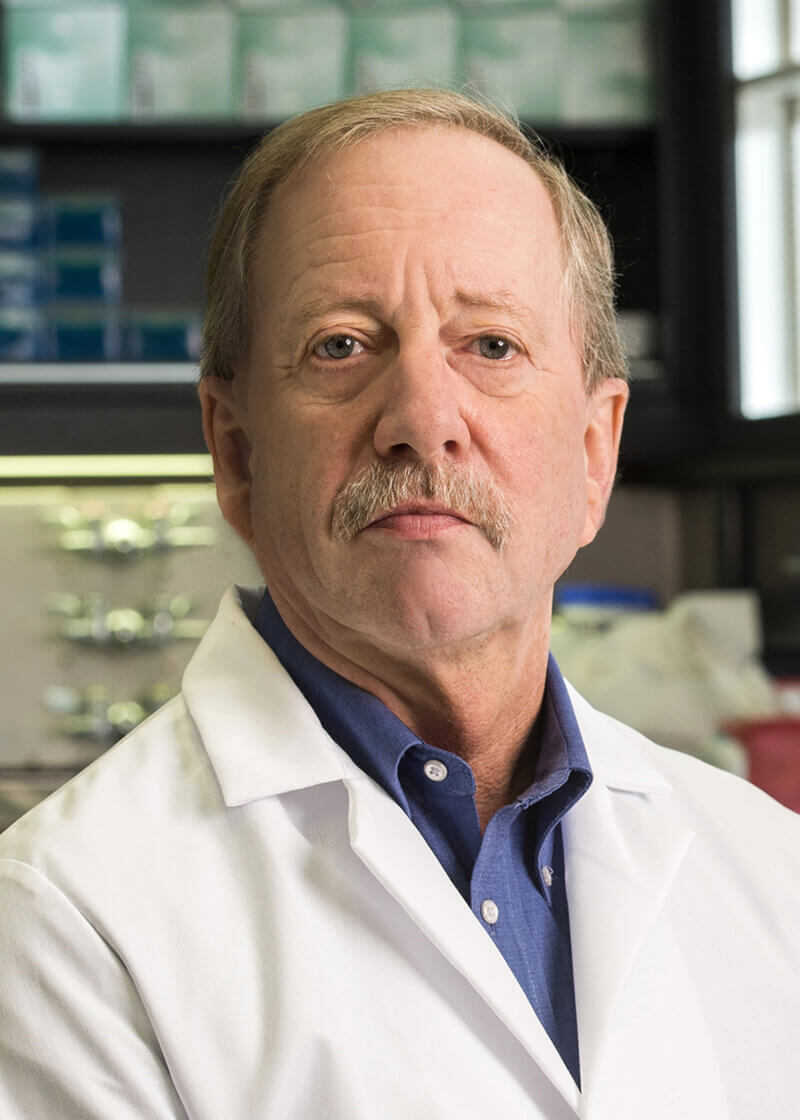
Steven Austad
Austad made comparative biology a major tool for aging research, using long-lived mammals to probe why species age differently. His 313 papers have drawn more than 16,000 citations.
Profile
Distinguished Professor and Protective Life Endowed Chair in Healthy Aging Research at the University of Alabama at Birmingham, known for comparative studies of aging and the biological determinants of healthspan and lifespan.
Role
scientisthigh confidence
Austad authored multiple peer-reviewed aging and longevity papers, using comparative biology and intervention research to advance understanding of aging and healthspan.
Dimension breakdown
This score rates longevity commitment only. The role tags above — scientist, investor, and the rest — say what this person is; we don't score those separately.
Future vision
6.0/ 10
Austad articulates a credible, durable geroscience vision centered on understanding aging well enough to develop interventions that slow age-related health decline. He also identifies practical requirements for progress, including reliable health assays, standardized outcome measures, and separate evaluation of lifespan, healthspan, and morbidity. However, the evidence does not show a specific development roadmap, timeline, intervention target, or consistent commitment to ending aging or reversing decline.
medium confidence
Scientific impact
8.8/ 10
Strong, independently corroborated scientific influence in comparative biology and aging. An h-index of 66, more than 16,000 citations, and multiple papers with several hundred to nearly 1,800 citations indicate sustained agenda-setting impact across aging evolution, sex differences in lifespan, telomeres, and comparative mammalian longevity.
high confidence
Capital deployed
N/A
The evidence establishes Austad's scientific output but identifies no investments, donations, investees, disclosed capital, catalytic positions, or capital-backed longevity outcomes. Capital deployed is therefore genuinely inapplicable on the supplied record.
No public capital deployment activity is evidenced for this academic scientist.
high confidence
Strategic taste
6.0/ 10
Austad shows a sustained, thesis-coherent commitment to comparative and evolutionary biology as a way to uncover determinants of aging. His early studies of unusually long-lived mammals and populations plausibly represented a distinctive research bet and became influential. However, the supplied evidence does not establish explicit counterfactual importance, unusual risk-taking, precise strategic choices among alternatives, or that his work opened paths others were not pursuing.
medium confidence
Field creation
1.0/ 10
Field creation is applicable, but the supplied evidence establishes scholarly contributions rather than the creation of organizations, programs, categories, communities, protocols, or funding paths. The structured facts explicitly report no founded organizations or donation-created programs.
high confidence
Bravery and conviction
1.0/ 10
The dimension is applicable, but the supplied evidence documents a substantial conventional research career rather than public risk-taking or costly conviction. None of the five qualifying bravery flavors is established.
high confidence
Multiplier effect
5.0/ 10
Austad shows meaningful second-order influence through a large, highly cited research portfolio and collaborations spanning multiple institutions and comparative-aging topics. This suggests his work has shaped subsequent scholarship and attracted collaborators, but the supplied evidence does not demonstrate organization-building, talent pipelines, capital mobilization, policy influence, public legitimacy gains, or identifiable follow-on initiatives at a scale supporting a higher score.
medium confidence
Vision
Destination
Dr. Austad’s current research seeks to understand the underlying causes of aging with a long-term goal of developing medical interventions that slow the age-related decay in human health.
Path
No canonical quotes yet.
Strategy
Use comparative biology to study the biological determinants of healthspan and lifespan.
Austad's documented approach centers on comparative studies of aging and the biological determinants of healthspan and lifespan [S1]. The available evidence does not establish an investment, donation, or organization-building strategy [S1]. His preferred intervention stage, risk appetite, geographic focus, and time horizon are unknown [S1]. No evidence-backed notable bets or collaborators can be identified from the supplied record [S1].
UnknownUnknownComparative BiologyBiology Of AgingHealthspanLifespan
Portfolio
Investments
No public rows yet.
Donations
No public rows yet.
Organizations founded
No public rows yet.
Scientific output
h-index66
Citations-
Papers27
Trials0
Belief evolution
Connections
Companies
Collaborators and lineage
No public rows yet.
Criticisms