Direction
Causes of ageing
DNA damage, failing mitochondria, chronic inflammation: ageing has many interacting parts. The challenge is to find which changes drive the others, and where an intervention can make a difference.
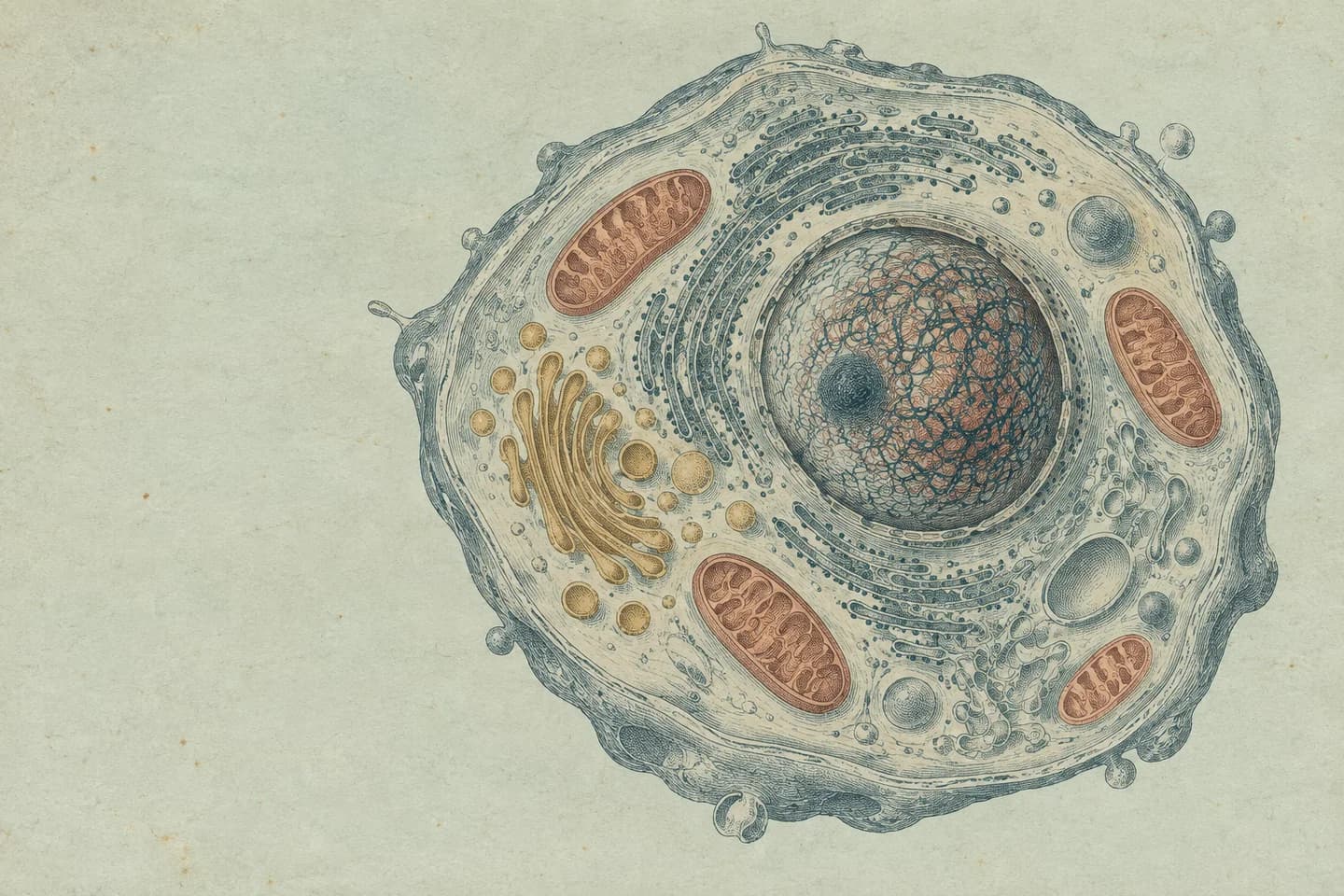
Which changes are causes, and which are consequences?
Inside the researchResearch review
The 2023 Hallmarks of Aging review organizes the field around twelve interconnected processes. Its key test for a mechanism goes beyond association: making it worse should accelerate ageing, and targeting it should help.
What this leaves open. This is a framework for research, not twelve independent switches or a finished explanation of ageing.
Read the paper ↗Hallmarks of aging: An expanding universeLópez-Otín et al. · Cell · 2023Side by side
The rated projects, compared
| Project▲ | Promised effect▲ | Evidence▲ | Stage▲ | Strongest case against▲ |
|---|---|---|---|---|
| Axxium Life | +3 years of life | The evidence base is meaningful but not decisive. | Status is mixed. | The strongest failure case is that the platform mainly produces immunogenicity and promising preclinical signals without enough human efficacy, specificity, or safety for prevention use. |
| LiGHT Team (Lithium as a | +1 year of life | The admissible evidence base is mostly patents and broad field context, not controlled clinical efficacy data for this project. | Early and weakly validated. | The likely failure case is that the apparent promise is mostly patent breadth and preclinical overreach: doses low enough to be broadly safe may be too weak to matter, while doses high enough to work may recreate lithium’s familiar toxicity and monitoring burden. |
| Mitochondrial Bioenergetics and Ketone | +1 year of life | The broader ketone and mitochondrial-energy field has substantial review, animal, cell, patent, and mechanistic literature, plus some clinical-diet context. | Early translational/commercial stage. | The skeptical case is stronger on current evidence: most support here is patents, background reviews, animal or cell studies, and a company-linked announcement. |
| OpenDrugs | +1 year of life | not stated | Status appears to be an operating software platform rather than a concept-stage idea: evidence cites a 'v2.4 stable' release dated 2026-05-07, named team members and collaborating institutions, on-prem enterprise deployment claims, and a live feature set. | not stated |
| Selective aging in Acomys cahirinus: linking regenerative biology to healthy aging mechanisms | +0.5 years of life | The central project evidence is an internal project description reporting behavioral preservation and outlining planned RNA-seq/cell-stress work, but it lacks authorship, publication date, sample sizes, raw results, or peer-reviewed outcome data. | Early-stage and pre-mechanistic. | The project could fail if the apparent phenotype is narrower than advertised, species-specific, or non-causal: preserved behavior may not replicate robustly, regenerative advantages may erode with age in meaningful tissues, transcriptomic differences may be descriptive rather than actionable, and any Acomys-specific programs may not map cleanly onto conserved human intervention targets. |
| VITA (Hospital del Mar Research | +1.5 years of life | The evidence base shows real institutional activity: XPRIZE semifinalist selection, $250,000 funding, a one-year preliminary-data phase, prior PENSA reporting around about 100 volunteers, and an active VITA volunteer study recruiting January-June 2026. | As of May 27, 2025, VITA had been selected as an XPRIZE Healthspan semifinalist and awarded $250,000 for a one-year first phase. | The strongest failure case is that VITA is a bundled intervention whose apparent benefits come mainly from the lifestyle program or from EGCG alone, while lamivudine adds little, adds risk, or is too weak to matter. |
Companies
Companies in this direction
Ambition is what a company claims. Independent replication is what others have confirmed. Read the two columns together: the gap between them is where a promise runs ahead of a result.
| Company▲ | Ambition▲ | Independent replication▲ | Stage▲ | Headquarters▲ |
|---|---|---|---|---|
| AgeCurve AgeCurve is building an AI-driven multiomics aging drug platform to decode aging cell by cell. | 8 | 3 | – | Cambridge, United Kingdom |
| Arrive Bio Arrive applies in-vivo target screening with machine learning to age-related diseases. | 7 | 1 | – | San Francisco, California, United States; Singapore |
| Calico Calico studies aging biology and age-related diseases to develop interventions that help people live longer, healthier lives. | 7 | 4 | – | South San Francisco, Calif. |
| Cosmica Biosciences Cosmica builds precision longevity intelligence tools that make aging measurable, understandable, and actionable. | 8 | 2 | – | United States |
| Genescient Genescient develops therapeutics targeting chronic diseases of aging using evolutionary genomics and massive selective screening. | 7 | 2 | – | Los Angeles, California, United States |
| Gero Gero develops therapeutics targeting the physics of aging using real-world medical data and physics-informed AI models. | 8 | 3 | – | Singapore |
| Gordian Biotechnology Gordian discovers therapies for complex age-related diseases using a proprietary in vivo drug discovery platform. | 8 | 2 | – | United States |
| Insilico Medicine Insilico Medicine uses generative AI and automation to transform drug discovery and development for longevity and sustainability. | 8 | 4 | public | Boston 1000 Massachusetts Avenue, Suite 126, Cambridge, MA 02138 |
| Integrated Biosciences Integrated Biosciences uses optogenetics, chemistry, and AI for small molecule therapeutic discovery in age-related diseases. | 7 | 3 | – | Redwood City, California, United States |
| Lyceum Pharmaceuticals Lyceum uses evolutionary genomics and experimental evolution to discover drugs for chronic diseases of aging. | 8 | 2 | seed | Los Angeles, California, United States |
| OccamzRazor OccamzRazor uses digital science for drug discovery targeting brain aging, starting with Parkinson’s disease. | 8 | 0 | – | New York City, New York, United States |
| Rejuvenate BioMed AI-enabled clinical-stage biotech developing combination therapeutics to delay the onset of multiple age-related diseases. | 7 | 4 | series b | Belgium |
| Yuva Biosciences Yuva Biosciences develops AI-discovered compounds that improve mitochondrial health for aging and aging-related diseases. | 7 | 2 | – | Birmingham, Alabama, United States |
Projects
Projects in this direction
| Project▲ | Stage▲ | Strongest case against▲ |
|---|---|---|
| Axxium Life Axxium Life presents itself as a developer of AI-powered active immunotherapy biologics aimed first at Alzheimer’s prevention and other chronic diseases, using peptide-based vaccines intended to induce patients’ own antibodies against targets such as amyloid-beta and alpha-synuclein. | Status is mixed. | The strongest failure case is that the platform mainly produces immunogenicity and promising preclinical signals without enough human efficacy, specificity, or safety for prevention use. |
| LiGHT Team (Lithium as a LiGHT Team appears to center on low- or trace-dose lithium as a neuroprotective strategy for dementia, Parkinson’s disease, and related brain-aging conditions. | Early and weakly validated. | The likely failure case is that the apparent promise is mostly patent breadth and preclinical overreach: doses low enough to be broadly safe may be too weak to matter, while doses high enough to work may recreate lithium’s familiar toxicity and monitoring burden. |
| Mitochondrial Bioenergetics and Ketone Mitargos appears to be a US startup commercializing an R-1,3-butanediol ketone drink, MiDR1V3, and linking it to a UC San Diego-led XPRIZE Healthspan semifinalist project that plans to test whether ketone-based interventions can improve mitochondrial function and physical, cognitive, and immune outcomes in older adults; however, the supplied evidence is mostly patent/IP and review literature plus a company-linked press release, so project-specific efficacy remains unproven. | Early translational/commercial stage. | The skeptical case is stronger on current evidence: most support here is patents, background reviews, animal or cell studies, and a company-linked announcement. |
| OpenDrugs OpenDrugs appears to be an AI-enabled, evidence-first longevity compound database and research workspace built by OpenLongevity for researchers, with search, comparison, visualization, research boards, and candidate-generation workflows across aging-related substances rather than a therapeutic program of its own. | Status appears to be an operating software platform rather than a concept-stage idea: evidence cites a 'v2.4 stable' release dated 2026-05-07, named team members and collaborating institutions, on-prem enterprise deployment claims, and a live feature set. | – |
| Selective aging in Acomys cahirinus: linking regenerative biology to healthy aging mechanisms This project argues that the Cairo spiny mouse, Acomys cahirinus, may be a useful mammalian model for healthy aging because older animals reportedly retain spatial memory and motor learning better than conventional lab mice while also showing unusual regenerative traits. | Early-stage and pre-mechanistic. | The project could fail if the apparent phenotype is narrower than advertised, species-specific, or non-causal: preserved behavior may not replicate robustly, regenerative advantages may erode with age in meaningful tissues, transcriptomic differences may be descriptive rather than actionable, and any Acomys-specific programs may not map cleanly onto conserved human intervention targets. |
| VITA (Hospital del Mar Research VITA is a Barcelona-based, XPRIZE Healthspan semifinalist project from Hospital del Mar Research Institute, CRG, and IrsiCaixa that proposes a multimodal healthy-aging intervention centered on lamivudine, EGCG, and lifestyle change for older adults at risk of cognitive decline. | As of May 27, 2025, VITA had been selected as an XPRIZE Healthspan semifinalist and awarded $250,000 for a one-year first phase. | The strongest failure case is that VITA is a bundled intervention whose apparent benefits come mainly from the lifestyle program or from EGCG alone, while lamivudine adds little, adds risk, or is too weak to matter. |
People
People in this direction
- Cynthia Kenyonscientist · through Calico
Her C. elegans daf-2 longevity work helped establish aging as genetically regulable and catalyzed modern aging-biology research; later led aging research at Calico.
- George Churchscientist · through Cosmica Biosciences
Led and founded major synthetic biology and genomics efforts with public work on aging reversal, gene therapy, and longevity biotechnology companies including Rejuvenate Bio.
- Alex Zhavoronkovpopulariser · through Insilico Medicine
- Matt Kaeberleinscientist · through NeuroAge Therapeutics
- Andrea Maierscientist · through Rejuvenate BioMed
Physician-scientist advancing precision geromedicine and healthy longevity
- Jamie Justicescientist · through Cosmica Biosciences
Clinical geroscientist accelerating trials that target biological aging
- Anne Brunetscientist · through Calico
Geneticist uncovering the molecular mechanisms of longevity
- Vadim Gladyshevscientist · through Gero
Redox biologist mapping the mechanisms and signatures of aging
- Eric Verdinscientist · through Rejuvenate BioMed
- Peter Fedicheventrepreneur · through Gero
Gero founder applying physics to aging.
- Nir Barzilaiscientist · through Cosmica Biosciences
- Jim Mellonentrepreneur · through Relation Therapeutics
Co-founded Juvenescence and publicly framed longevity as an investable biotechnology thesis through the book Juvenescence and substantial company-building activity.
- Martin Borch Jensenentrepreneur · through Gordian Biotechnology
Chronology
What happened, and when
- Oct 28, 2024Funding roundRejuvenate BioMed
grant · Wellcome Leap
- Jul 6, 2024Funding roundYuva Biosciences
grant · Southern Research
- Feb 26, 2024Funding roundYuva Biosciences
other · $7.5M
- Oct 18, 2023Funding roundGero
series a · $6M · Melnichek Investments
- Oct 12, 2021Funding roundRejuvenate BioMed
series b · Rejuveron
- Jun 22, 2021Funding roundInsilico Medicine
series c · $255M · Warburg Pincus, Sequoia Capital
- Feb 11, 2015Funding roundInsilico Medicine
convertible · Deep Knowledge Ventures
Hypotheses
Hypotheses under test in this direction
Published by the Omega Point engine and tagged to this direction by a classifier; the gap each one attacks is named under it
- Regulatory partners determine whether a signal sustains or ends fibroblast contractionSep 21, 2026In fibroblasts, regulatory partners determine whether Yes-associated protein (YAP) sustains or ends contraction. Changing those partners at fixed matrix tension and matched nuclear YAP must reverse force and mobility outcomes; regulatory scores must predict the reversal in held-out conditions.
- Sweat can leave lasting chemical damage in aged skin after conditioning breaksSep 21, 2026In susceptible photoaged human skin, sweat-derived urea may chemically modify extracellular proteins, leaving damage despite restored sweating. Labelled urea in aged human skin explants would test whether realistic exposure creates persistent damage that removing urea prevents.
- Suppressing substance P speeds loss of a vessel-relaxing peptide and reduces pressure toleranceSep 21, 2026In innervated skin models, lowering substance P is proposed to accelerate loss of vasoactive intestinal peptide (VIP) through competition for chymase. Preserving VIP would restore pressure tolerance without changing detection or movement timing; absent competition or failed rescue would reject the claim.
- Aged skin depends on mast cells to warn of pressure injurySep 21, 2026In aged, photoexposed skin, mast cells must release adenosine triphosphate (ATP) to trigger protective nerve warning. The claim requires blocking this route to remove warning and activating mast cells to restore it when nerves cannot directly sense mechanical force but remain electrically responsive.
- Spatial inflammatory signals sustain recurring damage in aged skin despite restored clearanceSep 21, 2026In aged skin, local interleukin-1 (IL-1) amplification and wider antagonist spread could sustain inflammation despite restored corpse clearance. Measured reaction and diffusion parameters must predict recurring focus spacing, while an evenly mixed system remains stable.
- Mismatched measurements can create the apparent benefit of reducing sweatSep 21, 2026In skin, combining sweat measurements from a dry-air capsule with nearby clothed-skin measurements may create an apparent benefit of reducing secretion. If reduced secretion preserves directly measured cooling and improves barrier recovery on minimally instrumented skin, this explanation is rejected.
- Aligned cellular clocks cause local skin repair failuresSep 21, 2026In epithelial microtissues, repeated heat–friction–barrier demands are proposed to align cellular clocks, leaving repair contributors unavailable together. Restoring staggered phases should rescue local repair without speeding up any contributor.
- Competition among skin cells drives collagen crosslinking beyond what tissue can withstandSep 21, 2026In aged human dermal constructs, competition among fibroblasts may favor collagen crosslinking that weakens tissue after filler resorption. Reciprocal invasion assays test whether stronger crosslinkers spread despite equal collagen secretion and exceed the level best for tissue fatigue resistance.
- Poor energy dissipation lets ordinary loading restart skin damage at vulnerable phasesSep 21, 2026In excised older human skin, followed by viable organotypic testing, the hypothesis links renewed damage to temporary loss of energy dissipation. Changing loading frequency should shift the vulnerable phase; restoring dissipation should suppress defect growth and bring the recovery multiplier below one.
- Repair-driven genome doubling preserves wound closure but disables later hair regenerationSep 21, 2026In aged, lineage-traceable mice, repeated repair is proposed to double follicular progenitors’ genomes while preserving their identity. Persistent doubling with failed serial regeneration—and preserved later hair output when doubling is prevented—would distinguish this mechanism.
- Uneven red blood cell arrivals cause oxygen shortages despite increased blood flowSep 21, 2026In repair-site capillaries, clustered red blood cell arrivals would impair oxygenation and repair despite adequate average delivery. Restoring regular arrivals while preserving mean flow and vessel recruitment would test whether delivery gaps cause the failure.
- Widespread regional heat signals trigger compensatory sweating elsewhereSep 21, 2026In regional thermoregulation, persistent local heat signals are discounted until enough regions agree. A reproducible threshold in sweating elsewhere, despite matched overall temperatures and heat flux, would support this proposed mechanism and explain when local sweat suppression stops saving fluid.
Forecasts
What the forecasts expect here
This month
Reported recently
- In planarians, flatworms capable of regrowing an entire brain after injury, researchers found genes that separately control what type of neuron a new cell becomes and where in the body it integratesSep 22, 2026Biologists identified genes that separately control neuron type and body position during brain regeneration in planarians, with implications for Parkinson's cell transplants.
- Five dissimilar ways to extend mouse lifespan (two drugs, a diet, and two genetic disruptions) converge on the same metabolic switch in the liver: it stops burning glucose and starts breaking down three amino acids, with glucagon giving the commandSep 22, 2026Five lifespan-extending interventions in mice converge on a single liver metabolic shift: less glucose burning, more amino acid catabolism, with glucagon as the hormonal switch.
- Preprint: two distinct biological pathways protect cognitively intact centenarians from Alzheimer's disease, a study of 112 brains findsSep 22, 2026A study of 112 centenarian brains identifies two protective pathways: low amyloid accumulation, or high amyloid where tau fails to invade key memory regions.
- The World's Largest Atlas of Cancer Cell Drug Responses Passes Peer Review and Appears in CellSep 22, 2026Tahoe-100M — 100 million single-cell drug-response profiles across 50 cancer lines — passes peer review in Cell and benchmarks AI models for drug-response prediction.
- A hypothesis-free AI screened the medication histories of nearly a million patients and identified varenicline, a smoking cessation drug, as a candidate for dementia prevention. Validation in an independent cohort of 9584 people showed a dementia risk reduction of nearly half compared with nicotine replacement therapySep 22, 2026An AI screened ~1 million patient records and found varenicline, a smoking cessation drug, reduces dementia risk by nearly half versus nicotine replacement therapy.
- In APOEε4 carriers, estradiol use is associated with a healthier brain than no hormone therapy, while non-carriers show no such association: a large study explains why evidence on menopausal hormone therapy and the brain has been contradictory for decadesSep 22, 2026A study of 8741 women found estradiol—unlike conjugated equine estrogens—is associated with thicker cortex, larger hippocampus, and better memory specifically in APOEε4 carriers.
- MIT identifies a shared chemical fingerprint of cellular aging: a lipid signal identical in mouse lung and skin yields a precise barcode for detecting senescent cells without destroying tissueSep 22, 2026MIT's RamanOmics method detected a shared lipid signal in aging mouse lung and skin, producing a non-destructive barcode that identifies senescent cells more accurately than p21 or p16 alone.
- A preprint analyzing 30,000 MRIs from the UK Biobank identifies choroid plexus calcification as a new radiation-free marker of brain aging, distinct from plexus volume and most strongly linked to diabetes, obesity, and hypertension in the understudied third ventricleSep 22, 2026A 30,000-MRI UK Biobank study identifies choroid plexus calcification via QSM as a radiation-free brain aging marker distinct from plexus volume, most strongly tied to diabetes, obesity, and hypertension.