Direction
Replacing cells and organs
Engineered tissue, donor organs, cell replacement and xenotransplantation all approach the same problem: restoring a function that has been lost. A working replacement must also become part of a living body.
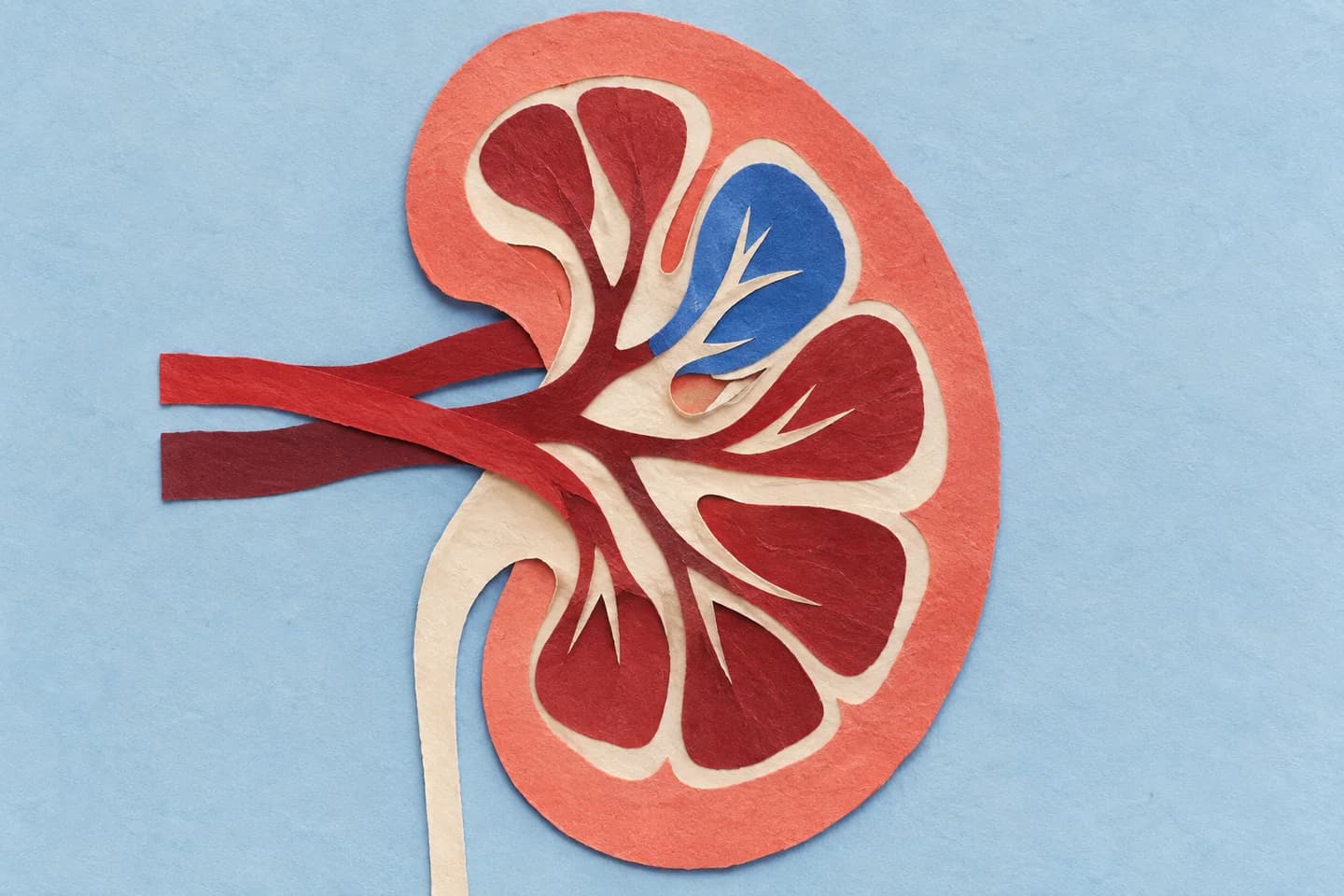
Can a new organ function for years and be accepted by its host?
Inside the researchTransplantation in monkeys
A 2023 study tested kidneys from genetically engineered pigs in monkeys. Donor changes that included human genes improved graft survival compared with a more limited set of edits.
What this leaves open. This experiment concerned pig-to-monkey transplantation. It did not show that replacing organs reverses whole-body ageing.
Read the paper ↗Design and testing of a humanized porcine donor for xenotransplantationAnand et al. · Nature · 2023Side by side
The rated projects, compared
| Project▲ | Promised effect▲ | Evidence▲ | Stage▲ | Strongest case against▲ |
|---|---|---|---|---|
| Frontier Bio | +1.5 years of life | The evidence base is early and mostly promotional. | Status appears preclinical and early commercial rather than clinically de-risked. | The strongest bear case is that the project is long on vision and short on independently verified evidence. |
| Kind Bio | +15 years of life | The evidence base is thin for Kind Bio itself: a company page, patent filings, and secondary reporting. | Status is preclinical and highly unvalidated in the provided evidence. | The project may be much easier to describe than to make real. |
| Wearable regenerative bioreactor for controlled wound healing | +0.3 years of life | The broader literature supports that biomechanical, biochemical, and bioelectronic wound-environment cues are biologically relevant, including cytoskeletal remodeling, wound-healing cell coordination, and flexible wound-monitoring/treatment systems. | This is a proof-of-concept stage academic project, not a clinical program. | The main risk is that the concept is mechanistically appealing but biologically weak in mammals: sealing the wound and adding short-term cues may not produce meaningful regenerative benefit beyond standard dressings or local drug delivery, while introducing added complexity around sterility, attachment, tolerability, and animal-to-animal variability. |
Companies
Companies in this direction
Ambition is what a company claims. Independent replication is what others have confirmed. Read the two columns together: the gap between them is where a promise runs ahead of a result.
| Company▲ | Ambition▲ | Independent replication▲ | Stage▲ | Headquarters▲ |
|---|---|---|---|---|
| Aelan Cell Technologies Aelan researches, discovers, develops, and commercializes biomedical technologies for human health and longevity. | 7 | 3 | – | San Francisco, California, United States |
| Aspen Neuroscience Aspen develops iPSC-derived autologous cell replacement therapies for Parkinson’s disease and other high-unmet-need CNS disorders. | 7 | 2 | series c plus | San Diego, California, United States |
| BE Therapeutics BE Therapeutics develops stem cell-derived replacement brain and spinal cord tissue to reverse CNS damage. | 9 | 0 | – | United States |
| Betalin Therapeutics Betalin is developing a stem-cell based micro-pancreas intended to reduce diabetic patients’ dependence on daily insulin. | 7 | 2 | – | Jerusalem, Israel |
| Blue Rock Therapeutics (owned by Bayer) BlueRock is a clinical-stage cell therapy company investigating replacement of cells damaged or lost to disease. | 7 | 4 | – | Boston, Massachusetts, United States; New York City, New York, United States; Toronto, Canada |
| Cellino Cellino develops AI-driven optical bioprocesses for personalized regenerative medicine and patient-specific living medicines. | 7 | 5 | – | United States |
| cellvie cellvie develops Therapeutic Mitochondria Transplantation medicines targeting cellular energy metabolism and mitochondria-linked disease processes. | 8 | 3 | – | Switzerland |
| Celularity Celularity develops and commercializes placenta-derived biomaterials and allogeneic cryopreserved cell therapies for age-related diseases. | 6 | 3 | public | New York City, New York, United States |
| eGenesis eGenesis advances human-compatible organs for patients with organ failure using genome engineering and transplantation. | 8 | 6 | series c plus | United States |
| FibroBiologics FibroBiologics develops fibroblast cell-based therapies and fibroblast-derived treatments for chronic diseases. | 7 | 2 | public | Houston, Texas, United States |
| Frontier Bio Frontier Bio creates tissue-engineered blood vessels and human-based tissue models for vascular grafts and preclinical testing. | 7 | 2 | – | – |
| Gameto Gameto develops cell-engineering technologies for reproductive health, including IVF, egg freezing, ovarian disease, and menopause. | 8 | 0 | – | United States |
| HepaTx HepaTx develops off-the-shelf stem cell-based regenerative therapies for late-stage liver disease as an alternative to liver transplant. | 7 | 2 | – | Palo Alto, California, United States |
| HexemBio HexemBio is developing scalable rejuvenated hematopoietic stem cell therapy to reverse aging-related decline in blood stem cells. | 8 | 1 | seed | New York City, New York, United States |
| Immorta Bio Immorta Bio develops longevity therapeutics to reverse aging, eliminate cancer, and rejuvenate organs. | 8 | 2 | – | Aventura, Florida, United States |
| Lineage Cell Therapeutics Lineage is a clinical-stage biotechnology company developing off-the-shelf allogeneic cell therapies for serious medical conditions. | 8 | 2 | public | San Diego, California, United States |
| Lionheart Health, Inc. Leonhardt Ventures develops regenerative medtech innovations focused on bioelectrics and biologics for healthspan, longevity, and healing. | 8 | 2 | – | Leonhardt’s Launchpads by Cal-X Stars Business Accelerator, Inc. @ University Lab Partners UCI Cove, 5270 California Avenue, Irvine, CA 92617 |
| Longeveron Inc Longeveron develops cell-based regenerative therapies for life-threatening and chronic aging-related conditions. | 7 | 4 | public | Miami |
| Luca Science Pre-clinical biotechnology company developing functional mitochondria as therapeutic agents to treat damaged tissues and organs. | 8 | 3 | – | Tokyo, Japan |
| LyGenesis LyGenesis develops cell therapies that use lymph nodes as bioreactors to grow functioning ectopic organs. | 8 | 1 | – | Pittsburgh, Pennsylvania, United States |
| Medipost MEDIPOST develops stem cell therapeutics, regenerative medicine products, cord blood banking services, CDMO services, and nutritional supplements. | 7 | 5 | public | South Korea; Boston, Massachusetts, United States |
| Micregen Micregen develops cell-free stem cell-derived secretome therapeutics for degenerative and underdevelopment conditions. | 7 | 1 | – | Reading, United Kingdom |
| Minovia Minovia develops mitochondria-based therapies using mitochondrial transplantation for diseases linked to mitochondrial dysfunction. | 8 | 3 | – | – |
| Muse Cell Innovations Muse Cell Innovations licenses Dezawa MuseCells, MuseSecretomes, and MuseExosomes for regenerative medicine, longevity, aesthetics, orthopedics, and related applications. | 6 | 2 | – | Singapore |
| NeuroNascent Inc (NNI) NeuroNascent develops oral small-molecule neuron regenerative therapies for chronic neurological disorders including Alzheimer's, Parkinson's and developmental delay. | 8 | 3 | – | Clarksville, Maryland, United States |
| Regeneration Biomedical Regeneration Biomedical develops Wnt-activated autologous stem cell therapies for neurodegenerative diseases. | 8 | 0 | – | Newport Beach, California, United States |
| Rejenevie Therapeutics Rejenevie Therapeutics develops immune restoration treatments targeting age-related diseases using stem cell restoration and parabiosis-inspired cell culture technology. | 8 | 3 | – | Houston, Texas, United States |
| Sana Biotechnology Sana creates engineered cells as medicines to repair and control genes or replace missing or damaged cells. | 8 | 5 | public | Seattle, Washington, United States; Cambridge, Massachusetts, United States; South San Francisco, California, United States |
| Thymmune Therapeutics Thymmune develops a machine learning-driven thymic cell engineering platform to restore immune function in aging and disease. | 8 | 1 | seed | United States |
| Tolerance Bio Tolerance Bio develops thymus-based therapies to preserve, restore, and manipulate immune tolerance for increased healthspan. | 8 | 1 | seed | San Diego, California, United States |
| Treefrog Therapeutics TreeFrog Therapeutics develops iPS-derived regenerative cell therapies using its proprietary C-Stem biomimetic technology platform. | 7 | 3 | – | France |
Projects
Projects in this direction
| Project▲ | Stage▲ | Strongest case against▲ |
|---|---|---|
| Frontier Bio Frontier Bio is a U.S. tissue-engineering startup pursuing two linked product lines: a patient-seeded, bioresorbable vascular graft intended for implantation and remodeling into a living blood vessel, and human tissue models such as lung and blood-brain-barrier/neural systems for preclinical testing. | Status appears preclinical and early commercial rather than clinically de-risked. | The strongest bear case is that the project is long on vision and short on independently verified evidence. |
| Kind Bio Kind Bio is a U.S. startup pursuing an "integrated organ network" platform: genetically engineered animal systems designed to grow transplantable peripheral organs while lacking higher CNS function and a normal body plan. | Status is preclinical and highly unvalidated in the provided evidence. | The project may be much easier to describe than to make real. |
| Wearable regenerative bioreactor for controlled wound healing BioDome-R is an early-stage academic proof-of-concept for a small wearable regenerative bioreactor that creates a sealed local wound microenvironment and delivers short-term pro-regenerative cues in small-animal models. | This is a proof-of-concept stage academic project, not a clinical program. | The main risk is that the concept is mechanistically appealing but biologically weak in mammals: sealing the wound and adding short-term cues may not produce meaningful regenerative benefit beyond standard dressings or local drug delivery, while introducing added complexity around sterility, attachment, tolerability, and animal-to-animal variability. |
People
People in this direction
- George Churchscientist · through GC Therapeutics
Led and founded major synthetic biology and genomics efforts with public work on aging reversal, gene therapy, and longevity biotechnology companies including Rejuvenate Bio.
- Shinya Yamanakascientist · through FibroBiologics
- Jim Mellonentrepreneur · through LyGenesis
Co-founded Juvenescence and publicly framed longevity as an investable biotechnology thesis through the book Juvenescence and substantial company-building activity.
- Jean Hébertscientist · through BE Therapeutics
Whole-brain emulation researcher.
- Peter Diamandisentrepreneur · through Celularity
Chronology
What happened, and when
- May 15, 2026Funding roundSana Biotechnology
post ipo · $69M
- Apr 13, 2026Funding roundSana Biotechnology
strategic · $25M · Mayo Clinic
- Jan 8, 2026Funding roundNeuroNascent Inc (NNI)
grant · $1M · Alzheimer's Association Part the Cloud
- Nov 20, 2025Funding roundAspen Neuroscience
series c · $115M · OrbiMed, ARCH Venture Partners
- Aug 27, 2025Funding roundMinovia
grant · $350K · Countdown for a Cure Foundation
- Oct 16, 2024Funding roundTolerance Bio
seed · $20.2M
- Sep 4, 2024Funding roundeGenesis
series d · $191M · Lux Capital
- Feb 9, 2024Funding roundLineage Cell Therapeutics
post ipo · $14M
- Oct 4, 2023Funding roundMedipost
grant · Ministry of Trade, Industry, and Energy
- Aug 22, 2023Funding roundNeuroNascent Inc (NNI)
grant · National Institute on Aging
- Mar 1, 2023Funding roundThymmune Therapeutics
seed · $7M
- Feb 24, 2023Funding roundBE Therapeutics
seed · $100K · VitaDAO
- Mar 2, 2021Funding roundeGenesis
series c · $125M
- Nov 7, 2019Funding roundeGenesis
series b · $100M · Fresenius Medical Care Ventures
- Mar 16, 2017Funding roundeGenesis
series a · $38M · Biomatics Capital, ARCH Venture Partners
- Apr 6, 2015Funding roundNeuroNascent Inc (NNI)
other · $1.2M
Hypotheses
Hypotheses under test in this direction
Published by the Omega Point engine and tagged to this direction by a classifier; the gap each one attacks is named under it
- Living replacement cells can sustain tissue injury by releasing toxic histonesSep 20, 2026In linked human microphysiological gut, clearance, and replacement modules, living replacement cells could sustain injury by exporting histones. Selective neutralization of replacement-derived extracellular histones would restore clearance without changing graft viability or structure.
- Changes in muscle enzyme clustering cause harmful swings in blood glucoseSep 20, 2026In restored muscle, reversible clustering of glycogen synthase 1 with NONO could abruptly change glucose storage despite stable hormone–liver feedback. Preventing clustering while preserving enzyme activity would decide whether this mechanism causes the harmful swings.
- Restored muscle can generate harmful glucose rhythms independently of liver and pancreasSep 20, 2026The hypothesis proposes that restored insulin-responsive muscle drives harmful glucose swings through internal metabolic rhythms. Sustained oscillations under constant inputs, abolished by suppressing those rhythms while preserving mean uptake, would distinguish this explanation.
- Broken reaction routes hide retained nitrogen despite normal blood ammoniaSep 20, 2026In coupled liver–kidney preparations, then aged graft and sham models, normal blood ammonia could conceal retained nitrogen. Tracing nitrogen across challenges would test whether restoring a complete disposal route rescues elimination more than added enzyme activity elsewhere or potassium replacement.
- Potassium loss after muscle restoration causes failure during the next bout of activitySep 20, 2026In aged graft recipients and sham animals given activity-matched paired challenges, tissue potassium loss is proposed to impair ammonia disposal despite normal plasma potassium. Replacing measured potassium losses would prevent next-episode failure without accelerating prior nitrogen elimination.
- Confinement makes replacement tissue sustain injury and impair waste clearanceSep 20, 2026Repair growth inside a constrained replacement region could sustain injury after exposure ends. Changing enclosure flexibility or shape should shift injury onset; verified stress release should reduce injury and restore clearance.
- Replacing small, distributed support-cell patches in the thymus is enough to slow agingSep 20, 2026The hypothesis says replacing thymic mesenchymal organizer microdomains—small support-cell patches—with young, compatible cells can preserve function and improve survival. Distributed replacement must outperform the same cell number in one depot and protect nonimmune functions without peripheral matrix replacement.
- Better oxygen delivery to restored muscle triggers signals that harm brain and lung circulationSep 20, 2026In an aged-animal graft model, improved muscle oxygen delivery at fixed work is proposed to increase sensory nerve output, reducing brain blood flow and raising lung filling pressure. Independent oxygen-delivery changes and reversible sensory interruption would test this proposed reversal.
- Replacement preparation can leave lasting mutations that cancel the graft’s benefitsSep 18, 2026For replacement strategies requiring preparation that damages DNA, lasting mutations in retained blood-forming and epithelial stem cells could offset restored reserve. Matched graft success with fewer new mutations, less delayed disease and better functional survival after non-damaging preparation would support this claim.
- Apparent benefits of timing alignment after partial tissue replacement are measurement artifactsSep 18, 2026Timing alignment does not reproducibly rescue reduced-fraction tissue replacement under equivalent exposure. Comparisons that control testing and selection biases would show no clinically meaningful fluid-recovery or cognition benefit, and independently fitted stability models would fail held-out prediction.
- Can replacing biased blood-forming stem cells alone deliver lasting benefits against aging?Sep 18, 2026Replacing 90% of myeloid-biased long-term hematopoietic stem cells—blood-forming cells biased toward myeloid output—with balanced-output cells is proposed to suffice through year 20. Stable balanced donor–host output without multidomain and survival benefit would falsify the claim.
- Replacing fat reserves and complete movement units is enough to prevent lasting declineSep 18, 2026Replacing 20% of age-60 gluteofemoral fat and complete motor units, with associated tendon replacement, would preserve recovery after illness or inactivity. The combined set must meet the full clinical outcome pattern; isolated strength or insulin-sensitivity gains reject it.
Forecasts